|
Cornell University Press
- Available June 2005
- 376 pages
- 5 maps
- 18 halftones (photos)
- Cloth cover
- ISBN 0-8014-4242-7
- $49.95 retail
- $34.95
discounted
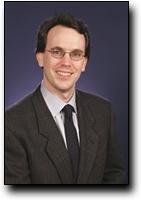
Nicholas B. Breyfogle
is Associate Professor of History
at The Ohio State University. He
did his Ph.D. while at the
University of Pennsylvania.
He is Canadian-born and never
met Molokans or Doukhobors
until after his thesis. His research
interests include Russian
colonialism, inter-ethnic contact,
peasant studies, religious belief
and policy, environmental
history, and the history and
culture of Armenia, Azerbaijan,
and Georgia. See 2 more photos
at the Doukhobor
Centenary
in
Canada
Conference, 1999.
|
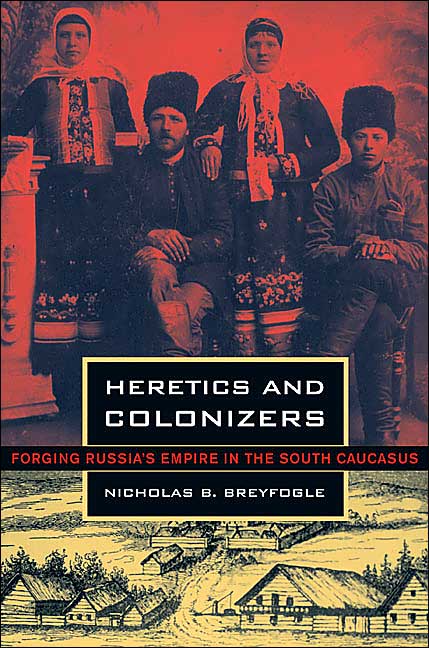
Heretics and
Colonizers:
Forging Russia's Empire in the South Caucasus
by Nicholas Brenton Breyfogle, Ph.D. (history)
Winner of the Outstanding
Publication Award 2006, Ohio Academy of History
This new book is based on his 1998 Ph.D. thesis: Heretics and Colonizers:
Religious dissent and Russian colonization of
Transcausasia, 1830-1890 (Azerbaijan, Armenia, Georgia),
University of Pennsylvania, 387 pages. Abstract and Introduction.
Download the original 1998
Ph.D. thesis in .PDF format. It's very large =
18,423 KB. You need Acrobat Reader.
In Old Russia, "sect" refers to Russians who rejected
their Orthodox faith, also called "heretics" and
"dissenters". By law all Russians must obey the Orthodox
Church, which meant that sectarians were criminals.
Breyfogle explains how these heretics were "tolerated,"
given more land, no taxes, no military and limited
religious freedom if they settled the newly acquired
territories in south Russia.
Though he never met a sectarian (Molokan, Doukhobor,
Sabbatarian), Breyfogle spent 2 years in the 1990s in
Russian archives investigating why and how about a fourth
of them were moved into the Caucasus. He reports that in
early 1800s they were feared as the "most infectious
heresy" and "quarantined" in the Caucasus, but at the end
of that century were praised as "ideal colonists" —
patriots and model citizens for the 1900s.
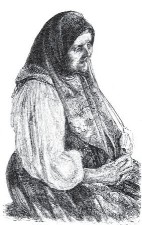 "In Heretics and Colonizers,
Dr. Breyfogle explores the dynamic intersection of Russian
borderland colonization and popular religious culture. He
reconstructs the story of the religious sectarians
(Dukhobors, Molokane,
and Subbotniks) who settled, either voluntarily or by
force, in the newly conquered lands of Transcaucasia in
the nineteenth century. By ordering this migration in
1830, Nicholas I attempted at once to cleanse Russian
Orthodoxy of heresies and to populate the newly annexed
lands with ethnic Slavs who would shoulder the burden of
imperial construction. "In Heretics and Colonizers,
Dr. Breyfogle explores the dynamic intersection of Russian
borderland colonization and popular religious culture. He
reconstructs the story of the religious sectarians
(Dukhobors, Molokane,
and Subbotniks) who settled, either voluntarily or by
force, in the newly conquered lands of Transcaucasia in
the nineteenth century. By ordering this migration in
1830, Nicholas I attempted at once to cleanse Russian
Orthodoxy of heresies and to populate the newly annexed
lands with ethnic Slavs who would shoulder the burden of
imperial construction.
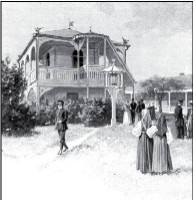 "Breyfogle focuses
throughout on the lives of the peasant settlers, their
interactions with the peoples and environment of the South
Caucasus, and their evolving relations with Russian state
power. Breyfogle draws on a wide variety of archival
sources, including a large collection of previously
unexamined letters, memoirs, and other documents produced
by the sectarians that allow him unprecedented insight
into the experiences of colonization and religious life.
Although the settlers suffered greatly in their early
years in hostile surroundings, they in time proved to be
not only model Russian colonists but also among the most
prosperous of the Empire’s peasants. Banished to the
empire’s periphery, the sectarians ironically came to play
indispensable roles in the tsarist imperial agenda. "Breyfogle focuses
throughout on the lives of the peasant settlers, their
interactions with the peoples and environment of the South
Caucasus, and their evolving relations with Russian state
power. Breyfogle draws on a wide variety of archival
sources, including a large collection of previously
unexamined letters, memoirs, and other documents produced
by the sectarians that allow him unprecedented insight
into the experiences of colonization and religious life.
Although the settlers suffered greatly in their early
years in hostile surroundings, they in time proved to be
not only model Russian colonists but also among the most
prosperous of the Empire’s peasants. Banished to the
empire’s periphery, the sectarians ironically came to play
indispensable roles in the tsarist imperial agenda.
"The book culminates with the dramatic events of the
Dukhobor pacifist rebellion, a movement that shocked the
tsarist government and received international attention.
In the early twentieth century, as the Russian state
sought to replace the sectarians with Orthodox settlers,
thousands of Molokans and
Dukhobors immigrated to North America, where their
descendants remain to this day."
30
surnames appear in his thesis, some with extensive
reports explaining how they changed our history.
See Table of Contents of new
book.
In the late 1990s Breyfogle spent at least 2 years
researching Russian history archives, including Canada,
St. Petersburg, Moscow, and the Caucasus. Then he returned
in the early 2000s. His expenses were covered by at least
4 grants — a 1997 "short-term
grant" from the Kennan Institute, a $24,000
fellowship grant from the National Endowment for the
Humanities for university teachers awarded September 1999
(also in the NEH
2000 Annual Report), $3,075 IREX
Travel Grant for research in Georgia and Azerbaijan,
and a short-term
grant
from the NEH awarded April 2000.
Addressing diaspora Dukhizhizniki
- 2000 Aug 12 — Los Angeles, California
— Cemetery
chapel (chasovnya : часовня), 7201
E Slauson Ave, City of Commerce. "Molokan
History in Russia", a lecture by Dr. Breyfogle. Listed
in Recognitions:
Presentations. The meeting was organized by skazatel
Jack Valov who first approached the UMCA for room
use, but was denied, outsiders are forbidden to speak
there and the UMCA ordered no more theses were
allowed. All presvitery were invited, but
half appeared. Most questions were about the origins
of Pryguny and anything about M.G.
Rudomyotkin. The thesis inspired George Mohoff to
write The True Molokan.
- 2005 July 23, Saturday, Noon —
Los Angeles, California — Cemetery
chapel (chasovnya : часовня), 7201
E Slauson Ave, City of Commerce. Dr. Breyfogle
presented his new book and addressed questions. Jack
Valov invited all Dukhizhiniki and The
Heritage Club. Cemetery director Al Thomas purchased 2
cases of books to sell at cost.
- 2015 March 7, Saturday, 5 pm — Kerman,
California — Sixth
Annual BBQ Chicken Appreciation Dinner, Kerman
Senior Center, 850 South 8th Street, hosted by Grace
for Hurting Hearts. Keynote speaker Dr.
Breyfogle summarized his research and answered
questions.
Book
promotion and purchasing
- Google
Books. Preview the book, search for key words,
table of contents, links to ordering, reviews,
references to book, 54 related books, map and list of
27 places mentioned in book, ...
- Cornell University Press 20% discount.
$34.95 (with shipping) Download order form (540k PDF, need
Adobe reader)
- Barnes
& Noble — $50 (shipping
included)
- Amazon.com
— $40 (shipping
included) $34
Used
- Cornell University
Press, Fall 2004 catalog, page 22. (2,897 KB,
.PDF file. Read with Acrobat Reader.)
- Cornell
University Press. Online bookstore. (You pay
extra for shipping.)
- You can also order and/or buy it at your local
bookstore.
|
Q
& A (January 2005
answers to questions sent in August 2004):
S novym godom! My apologies for
the slow reply to all of your questions.
When is your book coming out?
Can you get discounted copies? Will it get published in
paperback?
The book should be out in the next couple of months. [June] Thanks to
you and others who have purchased copies already. I'm
sorry for the very high price [$50] — obviously not my choice
at all. The publisher will wait to see how many
hard-copies are sold before deciding on whether to publish
a paperback. Thank you very much for spreading
the news about the book. I'm of course delighted that
Molokans, Dukhizhizniki and
Dukhobors will read it and I look forward to hearing the
community's thoughts and responses. E-mail Dr. Breyfogle.
How much is different from the
thesis? Did you add sections about the Crimean War,
Russo-Turkish War, and Church building?
The book includes some revised chapters from the
dissertation as well as four completely new chapters which
deal with things like economic life in Transcaucasia, the
Dukhobors' pacifist movement, and Molokan and Dukhobor
emigration. It also includes all sort of new information
based on my archival research in Tbilisi that was not in
the dissertation. Information from my article on the
Crimean and Russo-Turkish Wars is included (although not
all since it is already published in Kritika [on list below])
but the information from the Church-Building
article is not. It will be published next year as a
separate article in an edited volume of essays on Russian
religious history (more on this later). The book
also includes 5 maps (one of the South Caucasus, and one
each of Molokan and Dukhobor villages in Tilfis, Erivan,
Elisavetpol and Baku provinces). I was sorry not to be
able to use the maps you have, but for a variety of
reasons the maps I have here were the only option. There
are also 19 images in the book. 6 of which are of
Molokans. There are so many excellent Dukhobor photos
easily available in the British Columbia Archives that we
went with many of those.
In
comparison, Molokan photos are rarer?
There are so many excellent Dukhobor photos easily
available in the British Columbia Archives that we went
with many of those. Molokan photos are not so much rarer —
although there are fewer Molokan photos from pre-1900 than
Dukhobors, at least that I've been able to see — but less
accessible. As you know, Koozma Tarasoff donated thousands
of Dukhobor photos to the BC archives for preservation.
Since they are now in a public place, they are easily
accessible for researchers like me. I gather that there
are photographs of Molokans and Molokan villages in Russia
pre-emigration but they are hard to find since they are
held by individual families and the Heritage Center [at the LA-UMCA].
Will
you be coming to LA? Several presbyters would like to
arrange a larger meeting with you.
I have no plans at the moment to come to LA, but I'd
certainly be happy to meet with the Dukhizhiznik Molokan
community there again. I was very impressed and energized
by my first visit (can it already be 4 years ago??).
Updated
June 7, July 12 — Dr. Breyfogle has
accepted an invitation to speak on Saturday July 23 at
noon at the new LA Cemetery chasovnya (chapel), 7201
E Slauson Ave (east of Garfield Ave), City of
Commerce. He will talk about about how Molokans
got
religious
freedom
200 years ago and why a fourth of all Molokans (with
other sects) moved to the Caucasus, the subject of his PhD
thesis and book (above); and his recent research about
Molokan Church Building (below).
Keep looking for an outline of his talk and a pictorial
report about his lecture afterward.] Updated
July 11
Correspondence
continued June 17
(My copy of Heretics
and Colonizers arrived a few days ago, I pointed out an error — the old website address
was published.)
Your
Table
of Contents seems brief, but great bibliography and
index. Where's the detail map of Kars oblast?
... The table of contents is standard in format for this
type of book. The bibliography is something I compiled,
but shorter than I'd like. The Press only gave me a
certain number of pages, so it is by no means complete and
only represents about half of the books and articles I
read during my research. The index was done by a
professional indexer, so I had no part in it. Of course,
the index is designed for a more general audience and
obviously won't do all the things that you as a Molokan
might want it to do. I'm unhappy not to have the Kars map,
but again this was a decision of the publisher. Maps are
expensive to publish and had they included a sixth map the
book would have been even more expensive to buy. So, they
decided in the interest of keeping the price below $50
(already very expensive, as you well know) to give me only
5 maps. No possibility of an error correction slip at this
point. If the book is reprinted in paperback then I can
make the change then. I'm really glad they included Jon's [Kalmakoff]
comments. Again, this was something that the press did
that I had no control over. Of course, your mention in the
acknowledgements was my choice and I was glad to be able
to thank you publicly for all your help over the years
with the project. Looking forward to seeing
you in LA, Nick
More about Heretics
and Colonizers later.....
Most
of Breyfogle's works are listed
here by date:
- 1995 — "Building Doukhoboriya: Religious
Culture, Social Identity and Russian Colonization in
Transcaucasia, 1845-1895." Canadian
Ethnic
Studies XXVII: 3 (1995): 24-51. A historical
study which examines the reasons why the Russian
government sent the Doukhobors to Transcaucasia in the
nineteenth century.
- 1998 — Heretics and
Colonizers, Abstract and Introduction from 1998
Ph.D. thesis.
- 1998 —Heretics and
Colonizers: Religious dissent and Russian
colonization of Transcausasia, 1830-1890s.
Download the original 1998 Ph.D. thesis in .PDF
format. It's very large = 18,423 KB. You need Acrobat
Reader to open it. If your last name is on the list below. Breyfogle may have
reported about your relative.
- 1998 — Heretics
and
Colonizers:
Thesis
Comments and Corrections. 14 pages of my notes
to Breyfogle. (.RTF = rich text format)
- 2000 — Notes
on Breyfogle's Ph.D. thesis about Molokans, by
Morris M. Pivovaroff, January 7, 2000
- 1999 Oct — "Re-thinking the origins of
the Doukhobor arms burning, 1886-1895". Presented at The
Doukhobor
Centenary in Canada, University of Ottawa,
Canada , 22-24 October 1999.
- 1999 — "Religious Dissent and Russian
Empire-Building in Transcaucasia, 1830-1900", a 2000
NEH fellowship grant announced November, 1999.
- 1999 — "The Ecology of Colonization: Russian
Settlers and the Transcaucasian Environment in the
Nineteenth Century",
- 2000 Mar 16 — "Colonial
Contact
as Creation: Relations between Russian Settlers and
the Peoples of Transcaucasia, 1830-1900"
Thursday, March 16, 2000, 7-9 pm.. Also announced in
the CREES
newsletter (Centre for Russian and East European
Studies, University of Toronto).
- 2000 Aug. 12 — "Molokan History in
Russia", a lecture presented at the [Dukhizhiznik]
Molokan Cemetery Association, Los Angeles, Aug. 12,
2000. Listed in Recognitions:
Presentations.
- 2000 Sep 10 — "Swords into Plowshares:
Opposition to Military Service among Religious
Sectarians, 1770s to 1874", an unpublished paper presented at the
Davis Center of Russian Studies, Harvard University,
Cambridge, Mass., Sept. 10, 2000. Listed in Recognitions:
Presentations.
- 2000 Oct 20 — "Empire and
Ecology: Russian Colonists and the South Caucasian
Environment in the 19th Century", an unpublished paper
presented at the Midwest Russian History Workshop,
University of Chicago, Oct. 20, 2000. Listed in Recognitions:
Presentations.
- 2000 Oct — "At the Edge of Empire: The
Terek Cossacks and the North Caucasus Frontier,
1700-1860" pp. 459. Author(s): Barrett, Thomas M;
Breyfogle, Nicholas. The Russian Review,
Volume 59, Issue 4, Page 677, October 2000.
- 2001 Jul 27 — "The
Historical
Parameters of Russian Religious Toleration" —
The National Council for Eurasian and East European
Research, July 27, 2001.
- 2001 Fall — "Caught in the
Crossfire? Russian Sectarians in the Caucasian
Theater of War, 1853-56 and 1877-78". Kritika: Explorations in
Russian and Eurasian History. Volume 2,
Number 4, Fall 2001, p. 713. ["Molokan" cited 48
times, "Dukhobor" 182 times, "Subbotniks" 17 times.]
- 2001 Sep 29 — "Peopling
the
'Periphery':
Russian
Settlers in Eurasia". September 29-30, 2001. The
Ohio State University, Columbus, Ohio.
- 2001 Nov 8 — "Russian Sectarian
Antimilitarist Before the Introduction of Universal
Military Service (1874)", presented at "2001:
A Peace Odyssey", November 8-10, 2001, Hofstra
Cultural Center, Hofstra University, Hempstead NY.
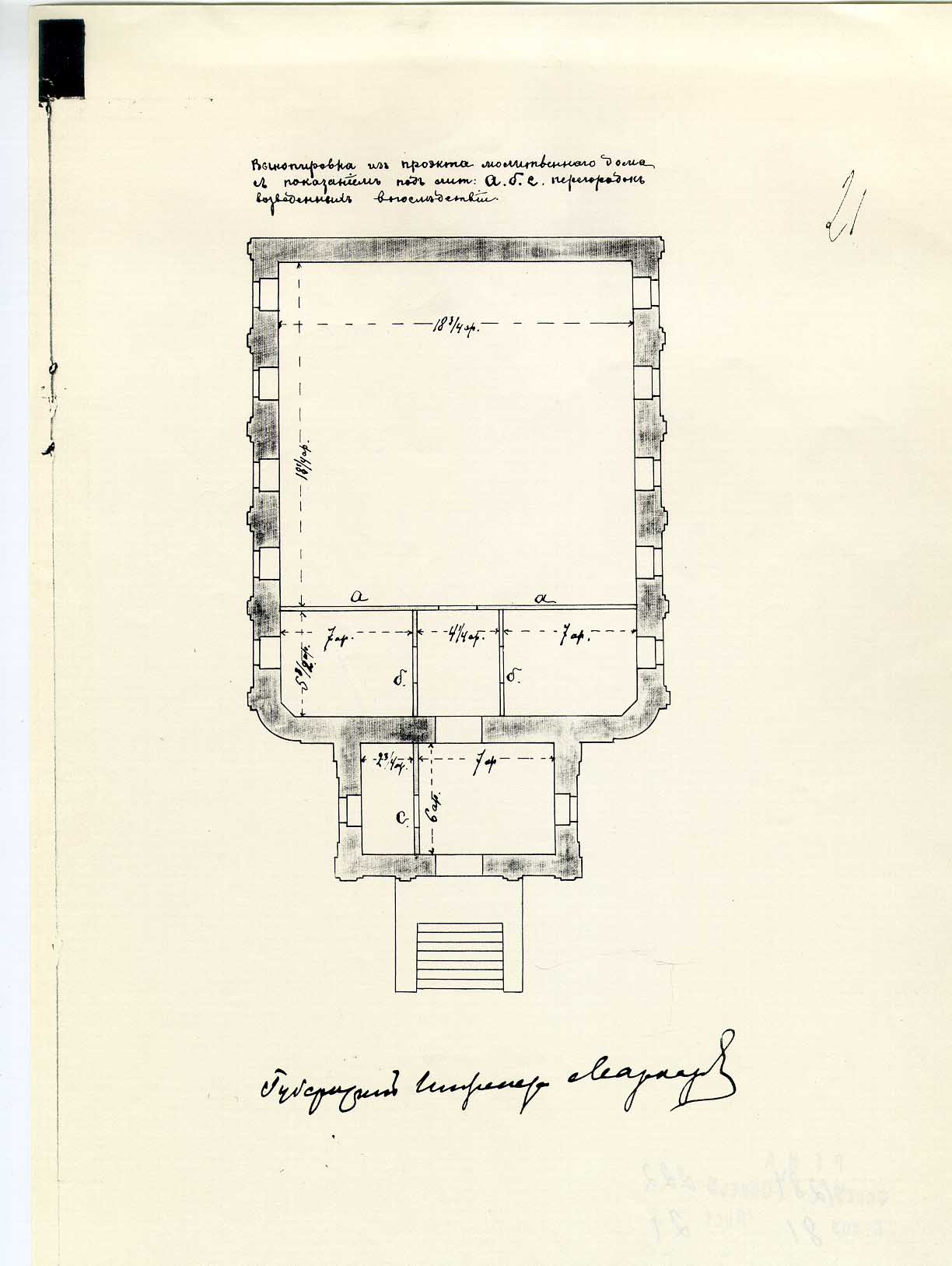
- 2002 Feb 23 — Prayer and
the Politics of Place: Molokan
Church-Building, Tsarist Law, and the Quest for a
Public Sphere in Late Imperial Russia Department of History,
The Ohio State University. Paper Presented at the
Conference: “Sacred Stories: Religion and Spirituality
in Modern Russian Culture”, University of Illinois,
February 23, 2002. (89 KB, .PDF file. Read with
Acrobat Reader. Accompanying diagram of the
1886 Kolesnikov prayer house in Baku.
- 2002 Nov 22 — “Miliutin and the Caucasus:
Dmitrii Miliutin: Minister, General, Memoirist",
unpublished paper presented at AAASS
Conference (American Association for the Advancement
of Slavic Studies), Pittsburgh, Nov. 22, 2002
- 2003 — "Colonization
by
Conract:
Russian
Settlers, South Caucasian Elites, and the Dynamics
of Nineteenth-Century Tsarist Imperialism,"
Marsha Siefert, ed. Extending
the borders of Russian history: essays in honor of
Alfred J. Rieber. 2003, pages 143-166.
- 2003 — "Baikal: the Great Lake and its
People", 2003.
- 2003 Mar 27 — Also see a paper which
references "Heretices and Colonizers": "Rights, Courts, and Citizenship:
Law and Belonging in the Russian Empire", by
Jane Burbank, New York University. Prepared for
Workshop “Citizenship, Nationality, and the State in
Imperial Russia and the Soviet Union”. Davis Center
for Russian Studies, Harvard University, March 27-28,
2003. (104 KB, PDF file. Read with Acrobat Reader.)
- 2004 Fall — "Rethinking
russian
Historiography after the Fall of Communism",
Fall 2004
- 2004 Dec 5 — "Spiritual Fathers and Their
Children in Orthodoxy and Old Belief" (panel chaired
on December 5, 2004), and "Priestless Old Belief and the Power
of the State: Historical and Comparative Perspectives"
(panel chaired on December 6, 2004), American
Association for the Advancement of Slavic Studies (AAASS)
Annual Convention, The Boston Marriott Copley Place,
Boston, Massachusetts.
Reported in CSEES
newsletter,
Winter 2005.
- 2005 June
— Heritics and
Colonizers published. See table of Contents below.
- 2005 July 23
— Breyfogle presents new book to Dukhizhizniki in
Los Angeles.
- 2005 Autumn — Awarded and ACLS Frederick
Burkhardt Residential Fellowship for his project
"Baikal: The Great Lake and its People." He will be in
residence at the Radcliffe Institute for Advanced
Study for the Fellowship, on ACLE/SSRC/NEH
International and Area Studies Fellowship and an
American Philosophical Sabbatical Fellowship for
2006-2007. (OAH
Newsletter : Ohio Academy of History, Vol. 37,
Autumn 2005, page 12.)
- 2005
Nov 3-6 — 2 presentations at the 37th
Annual Conference, American Association for the
Advancement of Slavic Studies - AAASS, November 3-6,
Salt Lake City, Utah. See Preliminary
Program
(PDF):
- Page 5, Section 2-15. Thursday, 4:15 PM – 6:15 PM
"Imagining the Caucasus in Russian Empire and the
Soviet Union: The Caucasus through Various
Perspectives" — Co-led discussion.
- Page 14. Section 6-16. Friday, 4:30 PM – 6:30 PM
Population Politics in Imperial Russia: “Population
Politics and Russian Colonization in the South
Caucasus”
- 2006 — Online Bookreviews, by Louis M. Waddell —
Intinerario: International Journal on the History
of European Expansion and Global Interaction
- 2007 — "Russian
Colonizations: An introduction", in Peopling
the Russian Periphery: Borderland Colonization in
Eurasian History, edited by Nicholas
Breyfogle, Abby Schrader, Willard Sunderland,
Routledge, Nov 2, 2007, pages 1-19.
- 2008 Apr 24
— The
Empire in Practice: Russian Settlers, the Peoples of
South Caucasia, and the Structures of Tsarist
Governance,
Columbia University conference.
- 2010 April — Dry
Days Down Under: Australia and the World Water
Crisis, Origins: Current Events in
Historical Perspective. Updated as “Return
of the Wet” (Origins, 2011). He
is co-editor of this e-journal
- 2011 — Alumni Award for Distinguished
Teaching, The Ohio State University, Mershon
Center Annual Report, 2010-2012, page 59.
- 2011 — “The
Religious World of Russian Sabbatarians
(Subbotniki),” in Holy Dissent: Jewish
and Christian Mystics in Eastern Europe, ed. by
G. Dynner (Wayne State University Press, 2011).
- 2011 September 16–17 — Eurasian
Environments: Nature and Ecology in Eurasian History,
Hosted seminar.
- 2012 — “Смена
религии в православной империи: политика религиозной
принадлежности в России xix века” (Switching
Denominations in a Orthodox Empire: The Politics of
Religious Affiliation in Nineteenth-Century Russia) (Tataria
Magna, No.1, 2012). Pages 16-47. — Russian with
English introduction. Note photo on pages 16-17 is an
Orthodox family on the Mugan steppe, Azerbaijan,
1905-1915, mistakenly shown and reported as Molokane
on the Internet many times.
- 2012 — “The
Possibilities of Empire: Russian Sectarian Migration
to South Caucasia and the Refashioning of Social
Boundaries,” in
Migration and Membership Regimes in Global and
Historical Perspective, ed. by U. Bosma, G.
Kessler, and L. Lucassen (Brill, 2012).
- 2012 Aug — Russia
and the Race for the Arctic, Origins:
Current Events in Historical Perspective. He
is co-editor of this e-journal
- 2013 —
“The
Fate of Fishing in Tsarist Russia: The Human-Fish
Nexus in Lake Baikal,” Sibirica: Journal of
Siberian Studies, vol. 12, no. 2 (Summer 2013):
1-29.
- 2014 —
“‘Another
Voice from God’: An Orthodox Sermon on Christianity,
Science, and Natural Disaster,” in Orthodox
Christianity in Imperial Russia: A Source Book
on Lived Religion, ed., Heather Coleman (Indiana
University Press, 2014), 95-106.
- 2015 —
“At
the Watershed: 1958 and the Beginnings of Lake
Baikal Environmentalism,” Slavonic and East
European Review 93, no. 1 (2015): 147-180.
| 30
Surnames in Breyfogle's Ph.D. Thesis |
|
Pages in original
thesis
|
| 1. Anfimov |
95 |
| 2. Bezzubstov |
130, 289 |
| 3. Dobrynin |
153 |
| 4. Donetskova |
290 |
| 5. Gorbachev |
299, 328 |
| 6. Gus'kov |
129 |
7. Ivanov, Nikitin
|
99 |
| 8. Ivanov, Nazar |
328, 329 |
| 9. Ivanov, V. |
299, 324, 326, 330, 331,
341-44 |
| 10. Kanygina |
292 |
| 11. Khoritonov |
296, 297, 317, 318 |
| 12. Konovalov |
307, 308 |
| 13. Kozlov |
292 |
| 14. Loktionov |
321 |
| 15. Mironov |
304, 313, 315, 316 |
| 16. Nikitin |
300 |
| 17. Orlov |
304, 313, 315, 316 |
| 18. Pavlov |
299, 300, 324, 326, 327, 328,
331, 332, 333, 342-44 |
| 19. Petrov |
102 |
| 20. Podkovyrov |
85 |
| 21. Rodionov |
300, 331, 332, 333, 344 |
| 22. Samarin |
201 |
| 23. Sherbakov |
235 |
| 24. Shubin |
186 |
| 25. Tolmosov |
328 |
| 26. Tregubov |
178 Footnote 74 |
| 27. Uidin |
319 |
| 28. Voronin |
299, 300, 326, 330 |
| 29. Zholnina, E. |
291 |
| 30. Zholnina, U. |
311, 312 |
CONTENTS of new
book
|
|
Acknowledgemnts
Note on Translation and Transliteration
Abbreviations
Maps
Introduction
|
|
Part I. The Road to Transcuacasia |
- Toleration
Through Isolation
The Edict of 1830 and the Origins of Russian
Colonization in Transcaucasia
- To a Land
of Promise
Sectarians and the Resettlement Experience
|
|
Part II. Life on the South Caucasian
Frontier |
- "In the
Bosom of an Alien Climate"
Ecology, Economy, and Colonization
- Heretics
into Colonizers
Changing Roles and Transforming Identities
in the Imperial Periphery
- Frontier
Encounters
Conflict and Coexistence between Colonists
and South Caucasians
|
Part
III. The Dukhobor Movement
|
- From
Colonial Settlers to Pacifist Insurgents
The Origins of the Dukhobor Movement,
1887-1895
- Peasant
Facifism and Imperial Insecurities
The Burning of Weapons, 1895-1899
- The End
of an Era and It's Meanings
Selected
Bibliography
Index
|
Spiritual Christians Around the
World
|