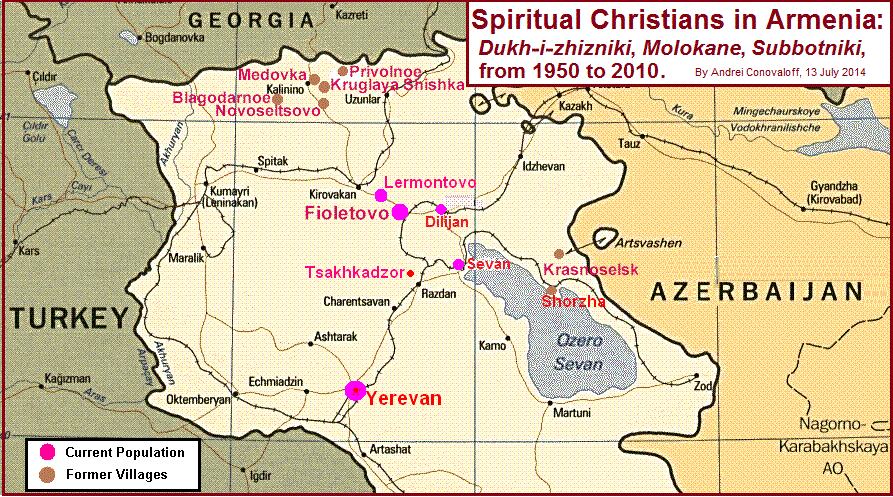
|
VESTI
NEDELI
NEWS of the WEEK
|
Духовние крестиане в Армение на Т.В.
Женщины Фиолетова
интервьюированы в 2006г. |
Spiritual Christians in Armenia on TV
Fioletovo women
intereviewed in 2006 |
|
| Осень 15-летий |
The 15th Autumn |
Состоявшаяся
независимость
Сергей Брилев — Выпуск
от 24.09.2006
|
Independence was established [in 1991]
Sergei Brilev — Broadcast
September
9, 2006
|
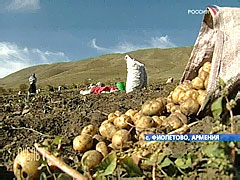
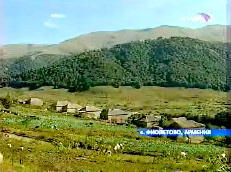
ФИОЛЕТОВО — отличие от многих других союзных
республик в Армении русский человек свои права сохранил
|
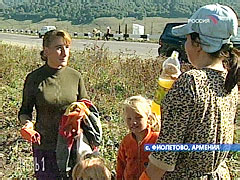
FIOLETOVO
— Unlike many other Soviet republics
the Russians in Armenia have preserved
their rights
|
Текст 1
— Текст
2 — Видео
(Windows Media Player)
Общая
продолжительность 12 минут
духовние крестиане в течение 65 секунд
Часть 1: 0:40-1:20
[минуты:секунды] = 40 секунды
|
Text 1
— Text
2 — Video
(Windows Media Player)
12 minutes total
Spiritual Christians for 65 seconds
Segment 1:
0:40-1:20 [minutes:seconds] = 40 seconds
|
| Осень проходит под знаком
15-летия распада СССР и создания новых независимых
государств. Хотя какие они уже новые и даже постсоветские?
Вопрос в том, насколько состоявшиеся. Независимая Армения,
безусловно, состоялась, несмотря на войну и блокаду. Именно
с этой необычной страны "Вести недели" и начинают эту "осень
15-летий". |
The theme of Autumn is the
15th anniversary of the collapse of the Soviet Union and the
creation of new independent states/ republics/ countries [in 1991]. But are
they new and post-Soviet? The question is how long have they
lasted. An independent Armenia, of course, was established
despite the war and blockade. That's why Vesti Nedeli begins
the series "15th Autumn" from this remarkable country. [First program in a series,
the second
program
shows Molokane
in Azerbaidjan.]
|
 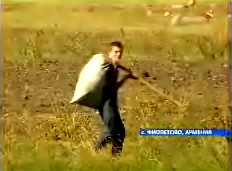 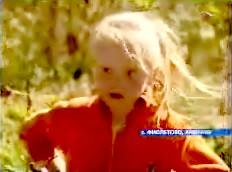
|
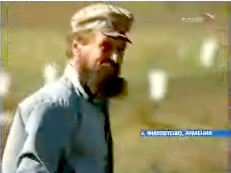
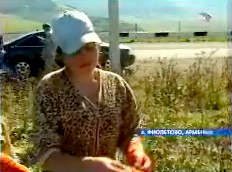
Разговор с немолодой местной
жительницей
|
Conversation with an elder local resident. |
| — Русские, молокане. Не нация
молокане, поверье молокане. Нас зовут молокане. |
Woman: Russian, Molokane. Not a Molokan
nationality, a Molokan faith.
We are called Spiritual
Christian Molokane.
[Also 3 congregations
of Dukh-i-zhiniki] |
| — Но по-армянски вы говорите,
наверное? |
Reporter: But do you speak
Armenian? |
— Нет, мы по-армянски не
знаем.
|
Woman: No, we do not know
Armenian. |
| — Серьезно? А сколько вы
здесь лет живете? 150? |
Reporter: Seriously? And
how many years have you lived here? 150? |
| — Да, наверное. |
Woman: Yes, probably. |
 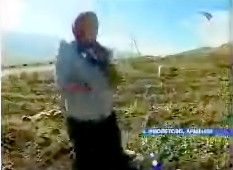 
|
| — Слушайте, а вот вы сами для
себя кто: русские, молокане, граждане Армении? Вот если вас
спросить: откуда вы? |
Reporter: Listen, but what do
you consider yourself: Russian, Molokans, Armenian citizens?
In other words, if you are asked: where are you from [who
are you]? |
| — Мы русские, но граждане
Армении. |
Woman: We are Russian, but
also citizens of Armenia. |
— Но в принципе в Армении
можно жить и сохранять свою культуру?
|
Reporter: But in principle,
can you live in Armenia and preserve your culture? |
| — Конечно, армяне неплохие. |
Woman: Of course, Armenians
is not bad. |
|
| Часть
2: 7:50-8:15 [минуты:секунды] = 25 секунды |
Segment 2: 7:50-8:15
[minutes:seconds] = 25 seconds
|
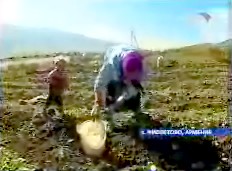
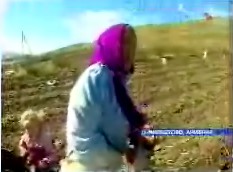
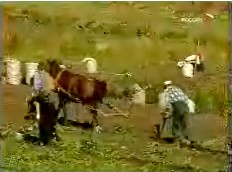
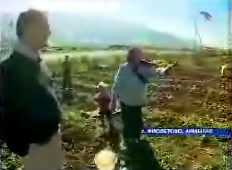
Женщина в поле.
|
A woman in the field. |
| — Картошка, капуста,
морковка, вы и при царе собирали, и при советской власти, и
сейчас. |
Reporter: You harvested
potatoes, cabbage, and carrots before Tsarist times, before
Soviet times, and today. |
— Мы всегда собираем.
|
Woman: We are always
harvesting. |
| — Трудно на такой земле
работать? Всё-таки горы |
Reporter: Is it difficult to
work on such land? In all these mountains. |
| — Трудно, вот копалкой
копаем. Руками трудно. |
Woman: See, it's hard to dig
with a hand shovel here. It's hard by hand. |
— Но у вас все в
основном в Армении держатся или был, кто уехал?
|
Reporter: Are you all still
mainly in Armenia, has anyone left? |
| — Нет, у нас уже полсела нет.
|
Woman: No, half of our
village is gone. |
| — А куда в основном
уезжают? |
Reporter: A where did they
basically go? |
| —В Россию. В Тюмень,
на Север |
Woman: To Russia. To Tiumen,
in the North. |
|
|
|
Spiritual
Christians in Armenia
Spiritual Christians
Around the World
|