 |
Радио
Свобода
— воскресенье 28 мая 2006 Broadcast on Orthodox Easter 2006 by Radio Free Europe / Radio Liberty's Russian-language service: SvobodaNEWS.ru — Sunday May 28, 2006 Слушать: windows media — real audio Also hear the 53-minute Russian broadcast in 2 formats: WMA: windows media audio — RM: real audio |
С христианской точки зрения |
From a Christian point of view |
Молокане |
Molokans |
| Яков Кротов [вебсайте] | Iakov Krotov
[program host in
photo above] |
| Яков Кротов: Тема нашей передачи посвящена молоканам. У нас в гостях председатель совета Московской общины духовных христиан-молокан Яков Васильевич Евдокимов, пресвитер тульской общины Виктор Васильевич Тикунов и молоканин просто Владимир Григорьевич Жабин. | Iakov
Krotov: The theme of our broadcast is dedicated
to the Molokans.
Our guests are the chairman of the council of the Moscow
community of
the Spiritual Christian- Molokans Iakov Vasilievich Evdokimov,
presbyter of the Tula community [Slobodka
village, Chern' region] Victor Vasilievich Tikunov, and a
Molokan
member Vladimir Grigor'evich Zhabin. |
| Молокане в русской культуре
не
то, чтобы неизвестны, но находятся, извините, отцы и
братья, где-то в
разряде таких религиозных анекдотов: молокане,
сапуны,
прыгуны.
Действительно сапуны и прыгуны — это такие молоканские
ответвления,
вектора. И, кажется, что это такое, люди молоку, что ли,
поклоняются?
Толкований самого происхождения слова «молокане» много,
слово впервые зафиксировано еще в XVIII веке и тогда никто
не
удосужился объяснить, что оно значит. Сегодня молокане
обычно объясняют
это, возводя к Библии, что молокане — это те, кто, как
предписывает
апостол Пётр, стараются питаться чистым словесным молоком,
это
действительно очень древний евангельский образ, когда
слово Божье
сравнивается с молоком, такое же сладкое, такое же вкусное
и полезное. |
The Molokans are not
unknown in
the Russian
culture, but can be found, excuse me fathers and brothers,
somewhere
among the religious
anecdotes about Molokans, Breathers*,
and Jumpers. Indeed,
Breathers and
Jumpers are offshoots of the core Molokans. And does it
seem that such
people might worship milk? There
are many interpretations of the very origin of the word
"Molokans".
This word was recorded is
for the first time in the 1700s and then no one found time
to explain what it means. Today the Molokans usually
explain it
referring to the Bible, that the Molokans are those
people, who, as
apostle
Peter prescribes [I
Peter 2:2], try to nurish themselves with clean
verbal milk. This
is
actually a very ancient Evangelical image, in which the
word of God is
compared with
milk, which is sweet, tasty and wholesome [gives health]. [* Breathers — sapuny — is a lessor published term decribing Jumpers /Maksimisty, some of whom will hyperventilate, causing respiratory alkalosis and lightheadedness which they percieve as the Holy Spriit.] Page not finished |
| Тем не менее, в 1805 году государь император покойный Александр издал указ, который предоставил молоканам свободу вероисповедания. Молокане торжественно праздновали недавно 200-летие этого указа. Свободу-то предоставили, да только, жалует царь, «да не милует псарь». В результате в XIX веке молоканам так предоставляли свободу, что в результате многие из них оказались на Кавказе, огромное количество в конце века уехало в Канаду, не без помощи Льва Толстого. Раньше сказать, что за молокан вступался Лев Толстой, это было хорошая характеристика, а сегодня, к сожалению, пожалуй, что и отрицательная. Потому что Лев Толстой — от Церкви отлученный или, во всяком случае, какой-то подозрительный. Так что там «Война и мир», это уже забыто, этого все равно никто не читает. А что Церковь запретила отпевать, это все помнят. | Nevertheless, in 1805 the
late
[deceased] sovereign
emperor Aleksandr published an edict
which
granted freedom of religion
to the Molokans. Recently the
Molokans solemnly celebrated the 200th anniversary of this
edict. However,
they
were granted freedom but the tsar only gives, "but
the
"huntsman" does not
have pity". As a result, in 1800s, the Molokans
got freedom, and
as a result many of them were sent to the
Caucasus. An enormous number left to
Canada at the end of the century, not without Leo
Tolstoy's aid*.
To earlier say that Leo
Tolstoy
entered for the Molokans, this was a good characteristic,
and today,
unfortunately, perhaps, that also negative. Because Leo
Tolstoy - from
the church removed or, in any case, such as suspicious. So
that
"War and Peace" is already forgotten, this nevertheless no
one
reads. But that church forbade to perform funeral service,
this all
they remember. [* The host confuses Spritial Christian Molokans with Spiritual Christian Doukhobors, a common mistake. Tolstoy helped about 8000, 1/3 of all Russian Doukhobors, migrate to Canada from 1899 to 1905. Afterward, from 1905 to 1912, less than 1%, about 2500, of all Molokans and Jumpers in Russia fled, without much help from Tolstoy, mostly to California, though they originally intended to join the Doukhobors in Canada.] |
| И вот сегодня молокане вернулись, многие молокане, хотя не все, но многие, вернулись из Азербайджана, из Армении, из Грузии, возвращаются в Россию. Канадские молокане возвращаются, но так, в порядке туризма. Возвратятся на месячишко и сразу назад, потому что в их Канаде, оказывается, как-то все-таки им пока еще лучше. Возвращаться возвращаются, однако проблема и непосредственный повод для нашей передачи — это отказ московского правительства выполнить свое предыдущее обещание предоставить молоканам молитвенный дом, дом для молитвы. Почему вдруг так все изменилось? Почему дом обещали и почему отказали? Это вопрос, естественно, к председателю совета Московской общины духовных христиан-молокан. | And here today the Molokans returned, many Molokans, although not all, but many returned from Azerbaijan, from Armenia, from Georgia, they returned to Russia. The Canadian [American] Molokans return, but as tourists. They will visit for about a month and immediately go back [home], because in their Canada [America] it appears to them still far better. To return they return; however, problem and direct occasion for our transfer - this the refusal of Moscow government to carry out their previous promise to grant to the Molokans a church, a house for praying. Why did everything change so suddenly? Why did they promise a church and then refuse it? This is a question, naturally, for the chairman of the council of the Moscow community of the Spiritual Christian Molokans. |
| Яков
Евдокимов: Дорогие братья и сестры, во Христе
Иисусе. Мы должны
благодарить отца небесного за его милость и любовь, что он
предоставил
нам возможность в эту великую неделю воскресения Иисуса
Христа, когда
весь христианский мир празднует воскресение Иисуса Христа,
мы, конечно,
как духовные христиане-молокане, так же поздравляем весь
христианский
мир, который исповедует Иисуса Христа и Господа нашего
Спасителя. |
Iakov
Evdokimov: Dear brothers and sisters in Jesus
Christ. We must
thank [our] heavenly Father for His grace and love, that
He granted us
the possibility during this great week of the resurrection
of Jesus
Christ, when Christians around the world celebrate the
resurrection
of
Jesus Christ. As Spiritual Christian Molokans, we of
course also wish a
happy Easter to Christians around the world [congratulate
the entire
Christian world] who confess Jesus Christ
as our Lord Savior. |
| Мы — духовные христиане-молокане. Я, поскольку мне пришлось ходить по Москве около семи лет и ходатайствовать кусочек земли, чтобы построить дом молитвы, мне приходилось сталкиваться со многими людьми в Москве и все с недоумением, не понимают, почему мы называемся «духовные христиане-молокане». Духовные, дорогие братья и сестры, это так просто понять. Вы помните, когда ангел Гавриил сошел к Марии, он сказал, что рожденный от нее будет от Духа Святого [От Луки 1:26-38 — Аннунциация]. И когда он Иосифу говорил, что «не отказывай свою жену, потому что рожденный от нее будет от Духа Святого» [От Матфея 1:20]. Он спасет, конечно, весь мир от грехов. И дальше, если мы пройдем, дорогие братья и сестры, по слову Священного писания, мы находим, когда Иисус Христос явился своим ученикам после воскресения. Он показывает свои руки и говорит: «Асизите, посмотрите, пощупайте, ибо дух плоти и костей не имеет» [От Луки 24:36-39]. | We are Spiritual Christian
Molokans. It was
necessary for me to go to Moscow for each of approximately
seven years
to
solicit for a parcel of land in order to build a church
[prayer house].
It was necessary for me to meet with many people in Moscow
who are
puzzled and don't understand why we are
called "Spiritual Christian Molokans". Spiritual, dear
brothers
sister, this is so simple to understand. Recall when the
angel
Gabriel descended upon Mary, and he said that what
originated from her
will be
from the Holy Spirit [Luke
1:26-38 — The
Annunciation].
And when he told Joseph: "do not reject
your wife, because what is born from her will be from the
Holy Spirit" [Matthew
1:20].
He will of course save the entire world from sin. And
furthermore, if we go, dear brothers and sisters, to the
words of the
Scripture, we find when Jesus Christ appeared to his
students after
the resurrection. He showed his hands and says: "Calm
down, look and
feel, since the spirit doesn't have flesh or bones" [Luke
24:36-39].Page not finished |
| Итак, дорогие братья и сестры, Бог наш — есть дух, и, поклоняясь ему, должны поклоняться духу, истине. Поэтому и духовные. А вот христиане, потому что мы исповедуем Иисуса Христа. Молокане в первом послании Христа, первое послание, вторая глава, второй стих, там сказано: «И вы, как новорожденные младенцы возлюбите чистое словесное молоко, дабы от него войти Вам во спасение» [1-e Петра 2:2]. Вот именно слова Священного Писания — и есть именно Библия, поэтому мы духовные христиане-молокане. | Thus, dear brothers and sisters, our God is a spirit, and in worshiping him, they must worship the true spirit, and therefore became spiritual. But we are Christians because we confess to Jesus Christ. The first message of Christ for Molokans, the first message, is the second chapter, the second verse, it says there: "Like newborn babies, long for the pure milk of the word, so that by it you may grow in respect to salvation" [I Peter 2:2]. This is the precise Bible Scripture, therefore we are Spiritual Christian Molokans. |
| Яков Кротов: Спасибо. Яков Васильевич, почему Вы всех поздравляете с Пасхой? Вот передо мной резолюция молоканского съезда 1927 года о переходе на новый стиль. Или Вы ту резолюцию уже отменили? | Iakov Krotov: Thanks. Iakov Vasilievich, why do you all celebrate Easter? Here before me is the resolution of the Molokan Convention of 1927 about conversion to the Gregorian calendar. Or did you already abolish that resolution? |
| Яков Евдокимов: Нет, дорогие братья и сестры, мы просто всю неделю празднуем. | Iakov Evdokimov: No, dear brothers and sisters, we simply celebrate the entire week. |
| Яков Кротов: Но все-таки Пасха у Вас по новому стилю или по-старому? | Iakov Krotov: But is Easter for you by the Gregorian or Julian calendar? |
| Яков Евдокимов: По-новому стилю, конечно. | Iakov Evdokimov: By the Gregorian calendar, of course. |
| Яков
Кротов: Яков Васильевич, можно Вами
поманипулировать? Вы
сказали, что Вы поздравляете весь христианский мир. Я
понимаю, когда
весь христианский мир поздравляет, скажем, старообрядец
белокориницкого
согласия, для него весь христианский мир — это его
белокориницкое
согласие. А Московская патриархия , католики, баптисты —
это служители
антихриста. А для Вас в «весь христианский мир» католики
входят? |
Iakov
Krotov: Iakov Vasilievich, were you fibbing? You said
that you
wish happy Easter to all Christians
around the world. I understand, when you congratulate all
Christians
around the
world ... let's
say, an Old Believer of the white-coronation accord [White
Movement?], for him the entire
Christian world is his white-coronation accord. And
for the Moscow
Patriarchy, the Catholics and Baptists are
servants of the antichrist. For you, do Catholics enter
into [are part
of] "all Christians around the
world"? |
| Яков Евдокимов: Нам все, кто почитает Господа нашего Иисуса Христа, кто верит в него, — все наши братья во Христе Иисусе. | Iakov Evdokimov: For us, everyone who honors our Lord Jesus Christ and believes in him, are our brothers in Jesus Christ. |
| Яков
Кротов: Армяне входят? |
Iakov Krotov: Do Armenians enter? |
| Яков Евдокимов: И армяне… | Iakov Evdokimov: And Armenians... |
| Яков
Кротов: Православные Московской патриархии? |
Iakov Krotov: The Moscow Orthodox Patriarchy? |
| Яков Евдокимов: Все входят. Потому что когда мы деяния апостолов читаем, когда Церковь Христа была благословенна Духом Святым, там все заговорили на разных языках. Отсюда все христиане, на всех языках говорящие и признающие Иисуса Христа, они являются христианами, мы со всеми в дружбе и любви. Сказано, «во всех народах спасение твое». | Iakov
Evdokimov: All enter.
Because when we read the Acts of the Apostles, when
Christ's church was
blessed by the Holy Spirit, all there were addressed in
different
languages. Hence all Christians, speaking all languages
and recognizing
Jesus Christ, they are all Christians; and we are with
them in
friendship and love. It says, "your salvation is in all
nations/peoples". [In contrast, the Jumper /Maksimist off-shoot sub-groups officially do not embrace "all Christians around the world", and specifically reject the Postoiannye (Constant /Original) Molokans and Subbotniki- Molokans. Their prophet M.G. Rudomyotkin writes that these are "wayward /delusional" and of the "666 .. ritualistic faiths /beliefs" (Spirit and Life, pages 277-279). Furthermore a few ultra-Maksimist sub-groups reject all other Maksimists, Jumpers, and Molokans.] |
| Яков Кротов: Спасибо. Итак, молокане или, как они себя сами называют, духовные христиане. Что значит духовные? Спрашиваешь их про квадратные метры, а Яков Васильевич — про Духа Святого. Хорошо… Тогда Владимир Григорьевич Жабин. Что такое случилось с помещением? | Iakov Krotov: Thanks. Thus, the Molokans or as they call themselves, Spiritual Christians. What does spiritual mean? You ask them about the land [square meters], and Iakov Vasilievich about the Holy Spirit. Good... Then Vladimir Grigor'evich Zhabin, what happen with the [church] investment? |
| Владимир
Жабин: Братья и сестры, в течение седьмого года
Московская
община духовных христиан-молокан не имеет возможности
построить свой
молитвенный дом. Обычный дом, обычную горницу, как в
Святом Писании
написано. И причина одна — непонимание местных властей о
том, что мы,
молокане, дружелюбны, как говорил мой брат Яков
Васильевич. Жили на
Кавказе и сейчас там живут, дружба до сих пор сохранилась.
В Армении
жили, в Грузии, в Средней Азии и все сохранилось. В Москве
не нашли у
местной власти понимания, что мы такие же люди, вернулись
на свою
родину историческую и хотим собраться и молиться Богу по
своим обычаям,
своим традициям. |
Vladimir Zhabin: Brothers and sisters, during the seventh year there is no possibility for the Moscow congregation of Spiritual Christian- Molokans to build its own prayer house [church] — an ordinary [prayer] house, an ordinary room [in a peasant cabin], as is written in the Holy Scriptures. And the main reason is the lack of understanding by local authorities about the fact that we Molokans are friendly, as my brother [in Christ] Iakov Vasilievich said. They lived in the Caucasus and now they live there [in Russia], and until now friendship remained intact. They lived in Armenia, in Georgia, in Central Asia and everything [customs, faith] remained intact. In Moscow, the local authorities did not understand that we are the same people who returned to our native historical land [Russia], and we want to gather and pray to God in our customs and traditions. |
| Седьмой год Южный округ Москвы, предлагая каждый раз новые участки, а сегодня это уже третий участок, который мы сейчас отстаиваем и хотим там построить молитвенный дом. По какой причине? Мы являемся людьми, вызывающими социальное напряжение у населения. Как нам сказал представитель Лукина, по правам человека, приехали и спросили людей, «а знаете Вы об этом что-нибудь». Они говорят: «Нет, не знаем». Новый заместитель Лужкова Валерий Юрьевич Виноградов собрал совещание по этому вопросу. Мы там обсудили все, и он сказал прямо в глаза представителю южной префектуры: «Сколько раз можно обманывать? Трижды даете, трижды отнимаете. Кто Вам поверит?» Когда сказали, что социальная напряженность, он говорит: «Где территория?» Открыли карту и на месте показали ближайший дом с тыльной стороны, 80 метров закрыты лесом, остальные 200-300 метров. Какое социальное неприятие? Люди вообще не знают, что там может быть. Поэтому мы хотели бы, чтобы нас правильно поняли, мы сторонники, чтобы наши отношения были добрые и чтобы в наше помещение люди приходили с добром, но не злом. | By
the seventh year the southern region of Moscow, proposing
each time new
sections, and today this already the third section, which
we now defend
and want to there build house of prayer. For what reason?
We are
people, which cause social stress in population. As to us
said
representative Lukina, on the rights of man, they arrived
and asked
people, "and you know about this anything". They speak:
"no, we do not
know". The new deputy Luzhkova Valerie Iur'evich
Vinogradov assembled
conference on this question. We there discussed
everything, and he said
directly into the eyes to the representative of the
southern
prefecture: "how often it is possible to deceive? Three
times you give,
three times take away. Who you will believe?" When they
said that
social tension, he speaks: "where the territory?" They
opened map and
on the spot showed the nearest house from the back side,
80 it was
meter they were closed with forest, rest 200-300 it was
meter. What
social nonacceptance? People not at all know that there
can be
Therefore we they would want, so that us would correctly
understand, we
are supporters so that our relations would be good and so
that into our
accomodation people would come with the good, but not by
evil. |
| Яков
Кротов: Спасибо. Вот передо мной воспоминания,
совершенно
дивные, молоканина середины 19-го столетия Нила Демрюкова,
их надо
видеть: написаны полууставом, как писали тогда
старообрядцы, текст дико
безграмотный в смысле грамматики и синтаксиса, но
совершенно
замечательно передан, во-первых, смысл, во-вторых, юмор.
Когда на
диспуте, если можно так выразиться, православного
священника с
молоканами, православный священник говорит: « Вы упорники,
ничево
ни понимаитя. Ничево, я саветаю вам малых дитей аддать на
8 лет в
духовнаю симимарию, ани абучуца, свищенаю права и вас
научуть исьтинай
веры». И тогда молоканин Никанор ему отвечает: «Ваша
высока
благославения, на 8 лет адать дитей в вашу симинарию учить
дитей чьтоба
ани нас научили, эта очинь для нас долга; Вы лучии нас
знаитя писания
покажитя нам сычас. Вы гляньтя, сколька у нас многалетьних
стариков и
старушак; пака 8 лет праучуця а эти люди памруть, а вы
сычас покажитя,
на писании, мы все пиридем к вам ». Так, наверное, и
сегодняшним
молоканам хочется, чтобы им объяснили именно сейчас, чем
они,
собственно, плохи. |
Iakov
Krotov: Thanks. Here before me are the
completely marvellous
recollections of a Molokan [woman] from the mid-1800s,
Nellie
Demryukova. You have to see them. They are written in semi-uncia
[half-uncial, hand-written script], like Old Believers
wrote then. The
text is wild and illiterate in the sense of
grammar and syntax, but is completely noticeably
transmitted, in the
first place, sense, in the second place, humor. When on
the debate, if
one may put it that way, orthodox priest with the
Molokans, orthodox
priest speaks: "You are stubborn people.
You don't understand anything. Nothing, I advise put small
children in
a spiritual seminary for
8 years, they will learn. I'll whistle the truth you will
learn the
true faith".
And then
the Molokan Nikanor answers him:
"Your
high blessing,
put children for 8 years into
your seminary to
teach the children what they can learn from us. This is
very expensive
for us. It's better for us to learn the scripture now
ourselves.
You take a look [glance]. How many of us old men and
women can
study for 8 years, or
these people will die,
and
you now show us,
the writing, and we'll all come to you". Thus
for example, today's Molokans it wants so that they would
explain by
them precisely now, than they, strictly, they were poor. |
| Яков Васильевич, все-таки, еще раз, почему, во-первых, Вам дали помещение, что уже удивительно, московская мэрия нечасто предлагает. А, во-вторых, все-таки под каким предлогом отказали, скажем так? | First, Iakov Vasilievich, again why should they give you a building, which Moscow city hall very rarely offers? And second, explain for what reason did they refuse? |
| Яков
Евдокимов: Вы знаете, даже
диву даешься. Если посмотреть документацию нашу, такие
резолюции
господина Лужкова, об особом контроле, три раза господин
Лужков
подписывал наши бумаги и как минимум десять раз
встречался, я
специально это подчеркиваю. Шанцев тоже, особый контроль,
Коробченко —
особый контроль. Вы можете представить, что уже наши
предпроектные
разработки находились в регламентной комиссии на
утверждении
строительства дома по адресу Макинская, владение 3. Там
старая
ветлечебница находилась, на этом участке. Можете
представить, мы уже
израсходовали 150 тысяч рублей только на оформление бумаг.
А там
рядышком буквально построили новую ветеринарную лечебницу.
И вот
господин Лужков, принимая новую ветлечебницу, не
согласовав с префектом
господином Бирюковым, не спросив, что творится в старой
ветлечебнице,
на старом участке, вдруг принимает решение, что в старой
ветлечебнице
построить клуб любителей животных «Юный зоотехник». А этот
участок
решением всех… вот целая бумага здоровенная документов
подтверждает,
что этот участок был отведен нам под строительством, и мы
уже оформили
документы. Поскольку оставалось в регламентной комиссии на
утверждение,
что этот старый дом, который там находится, бывшая
ветлечебница, потому
что сам господин Романенко, заместитель главного
архитектора, он пишет,
что наш участок отдален от жилого массива и этот дом
подлежит под снос.
Там, на этом месте, мы должны строить новый молитвенный
дом для всех
молокан Москвы и Московской области. Я пишу в префектуру
письмо, что
«дайте Ваше заключение о списании старого дома и акт о
том, что
новая
ветлечебница построена». И вдруг получаем, что господин
Лужков 12
февраля 2005 года своим выездным совещанием принимает
решение, что в
этом доме старой ветлечебницы сделать клуб любителей
животных, и нас,
таким образом, лишили этой возможности — и все. Сколько мы
ни пишем,
нас отфутболивают. А в последнее время ссылаются, якобы
теперь они
хотят там строить подстанцию «Скорой помощи». [Смотрите: « Мэр Москвы обманул молокан »] |
Iakov
Evdokimov: You know, you are given even wonder.
If we look
at our documentation, such resolution of Mr. Luzhkov,
about the special
control, three times Mr. Luzhkov signed our papers and as
the
minimum of ten times was encountered, I specially this I
emphasize. Is
entrenching also, special control, Korobchenko - special
control. You
can occur that already our predesign developments were
located in the
scheduled commission on the assertion of the building of
house through
the address Makinskaya, possession by 3. There old animal
hospital was
located, in this section. Just for filing papers, we
already spent
150,000
rubles [$30,000]. But they there near literally
built new veterinary hospital. And here Mr. Luzhkov,
assuming new
animal hospital, without having agreed with the prefect by
Mr.
Biriukov, without having asked which is created in the old
animal
hospital, in the old section, suddenly is made the
decision that in the
old animal hospital to build the club of the amateurs of
animals "young
zoo-technician". But this section by the solution of
all... here entire
paper very strong of documents confirms that this section
was diverted
to us under the building, and we already drew up
documents. Since it
remained in the scheduled commission on the assertion,
that this old
house, which there is located, the former animal hospital,
because
itself Mr. Romanenko, the deputy chief architect, he
writes that our
section is removed from the residential area and this
house is subject
for removal. There, at this place, we must construct new
house of
prayer for all Molokans of Moscow and Moscow region. I
write in the
prefecture letter that "give your conclusion about the
writing off of
old house and report about the fact that the new animal
hospital is
built". And suddenly we obtain, that Mr. Luzhkov on 12
February,
2005, his visiting conference makes the decision that in
this house of
old animal hospital to make a club of the amateurs of
animals, and us,
thus, deprived of this possibility - and all. How much we
not write, us
they kick around. But recently they refer, allegedly now
they want to
construct an "ambulance" substation there . [See: "Moscow Mayor Cheats Molokans"] |
| Дело
в том, что без предупреждения, без согласования, без
ничего абсолютно,
мы же целых 5 лет ждали, пока они построят новую
ветлечебницу, и вдруг
такой казус. Сейчас они нам предлагают новые участки.
Когда я слышал
еще с детства такое выражение «на тебе, Боже, что нам
негоже», сейчас мы убедились, что нам предлагают новые
участки,
действительно абсолютно не соответствующие для
строительства
молитвенного дома. Поэтому мы остались в таком недоумении.
Вы можете
себе представить, наш народ, русский народ,
репрессированный еще
Екатериной II , изгнан, по всем республикам, со всех
республик
приехали, причем не потому, что мы хотим жить в Москве, а
потому что
наши дети трудятся во всех областях, внуки, мой сын в
филармонии играет
здесь, в оперетте. Во всех областях. Главные врачи, все,
все. А вот нас
так… |
The fact is that without the warning, without the agreement, without anything absolutely, we entire 5 years awaited, until they build new animal hospital, and suddenly similar incident. Now they propose new sections to us. When I heard even from the childhood this expression "on you, God, that to us unfitly", now we ascertained that the new sections, which do not actually absolutely correspond for the building of house of prayer, propose to us. Therefore we remained in this bewilderment. You can visualize, our people, Russian people, punished already by Ekaterina II, it is banished, in all republics, from all republics they arrived, moreover not because we want to live in Moscow, but because our children work in all regions, grandsons, my son in the philharmonic society plays here, in the operetta. In all regions. Head physicians, all, everything. But here us so... |
| Дорогие братья и сестры, абсолютно не поняли власти местные. | Dear brothers and sisters, did not absolutely understand authority local. |
| Яков
Кротов: Спасибо, Яков Васильевич. Однако мы не
должны забывать,
как разумные люди, что возможны и другие варианты. Может
быть наоборот,
Вас как раз очень даже поняли и поэтому не предоставляют
места. |
Iakov Krotov: Thanks, Iakov Vasilievich. However, we must not forget as reasonable people, that are possible the different versions. It can be on the contrary, you exactly greatly even they understood and therefore they do not allow place. |
| Наш третий гость пресвитер общины под Тулой, село Слободка, пресвитер общины Виктор Васильевич Тикунов. Виктор Васильевич, вот Яков Васильевич очень красиво говорил про Духа Святого. Однако же молокане, насколько это русские люди? Все-таки несколько не то, что даже десятилетий, а, пожалуй, уже и века, некоторые общины живут за границей. Молокане переселялись в свое время в Бессарабию, в Аккерман. На Ваш взгляд, Ваша жизнь среди армян, среди мусульман в Азербайджане и вот теперь Москва, где было легче? Вы сами, где в основном жили, вы откуда? | Our third guest is the presbyter of community in the environs of Tula, village settlement, the presbyter of community Victor Vasilyevich Tikunov. Victor Vasilyevich, here Iakov Vasilyevich very beautifully spoke about the Holy Spirit. However the Molokans, how these are Russian people? Nevertheless somewhat the fact that even decades, but, perhaps, already and the centuries, some communities live abroad. The Molokans migrated in their time to Bessarabia, into Akkerman. In your view, your life among the Armenians, among the Moslems in Azerbaijan and here now Moscow, where it was more easily? You themselves, where in essence they did live, you from where? |
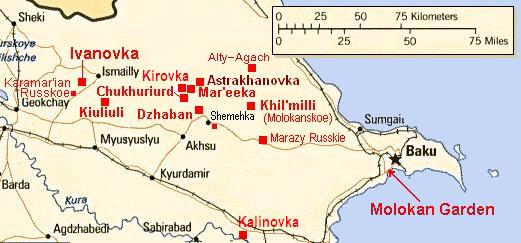
| Виктор Тикунов: Я сам жил в Армении, город Сархадзор, раньше он назывался Константиновка, построенный еще в царское время. Два села в Армении, которые были построены в честь великих князя и княгини, Еленовка, это около Севана, в честь княгини Елены, и Константиновка в честь великого князя Константина. | Victor Tikunov: I myself lived in Armenia, Sarkhadzor [Tsarkhadzor] city, earlier it was called Konstantinovka, built even in the tsarist time. Two villages in Armenia, which were built in the honor of a great prince and princess — Elenovka [now Semeonovka], near Sevan, in princess Helen's honor, and Konstantinovka in honor of the great prince Constantine. |
| Прожили мы там достаточно долгое время. Вопрос о легкости жития, конечно, приходилось обустраиваться [обстраиваться] на новой земле, в совершенно иных условиях, переселенцы из центральных областей России, в основном из Тамбовской области, переезжать в горную среду, в эти тяжелые условия было нелегко. Но дело в том, что на том месте, где обустраивались молокане, там уже было поселение в то время, армянское. Местные жители, армяне, помогли обустроиться молоканам, то есть дали на первое время им зерна, хлеба, давали продукты. В свое время, обустроившись, молокане сами стали помогать армянам. Поэтому именно в этой местности отношение было очень хорошее к молоканам, и дружили, до сих пор эта дружба сохраняется. Я буквально на прошлой неделе встретил земляков из Саркадзора, армян, которые очень обрадовались встрече со мной, с молоканином, пригласили свою диаспору посетить, пообщаться. | We lived there sufficiently
for
a long time. A question about the ease of life, of course,
it was
necessary to build yourself
on the new land, under completely
different conditions, migrants from the central regions of
Russia, in
essence from the Tambov region, to cross into the mountain
medium, it
was not easy into these severe conditions. But the fact is
that at that
place, where the
Molokans
built, there was there already
settling at that time, Armenian. Local residents,
Armenians, helped the
Molokans to build themselves, i.e., gave to the first
period to them
grains, grain crops, they gave products. In their time,
build ,
the Molokans themselves began to help Armenians. Therefore
precisely in
this locality relation was very good to the Molokans, and
they was
friends, this friendship remains, until now. I it
literally last week
met compatriots from Sarkadzora, Armenians, who greatly
were gladdened
to encounter with me, with Molokan, they invited their
diaspora to
visit, to meet. |
| Яков
Кротов: Спасибо. У нас вопрос Георгия из
Петербурга: «С
какого времени в истории появились молокане?» |
Iakov Krotov: Thanks. We have a question of Georgiy from Petersburg: "from what time in the history appeared the Molokans?" |
| Виктор Тикунов: Дело в том, что у нас в нашей традиции имена основателей вероучения, движения не сохранились. Это относит нас к тому, что, видимо, само по себе это организовалось в очень древнее время. В основе любого движения всегда стоит какое-то одно лицо, которое как бы направляет или выводит, может быть, назывались ереси, начальники когда-то раньше. | Victor Tikunov: The fact is that in us in our tradition the names of the founders of dogma, motion were not preserved. This carries us to the fact that, apparently, by itself this was organized in the very ancient time. At the basis of any motion always stands some person, who seemingly directs or derives perhaps were called heresy, chiefs once earlier. |
| Яков Кротов: Виктор Васильевич, то есть, Вы считаете себя протестантом и еретиком? | Iakov Krotov: Victor Vasilyevich, i.e., you do consider yourselves protestant and heretic? |
| Виктор Тикунов: Нет, не считаем. Мы не считаем вообще себя ни протестантами, хотя нас относят к русскому протестантизму. Но мы думаем, что все-таки вероучение попало, совершенно независимо от православия, на Русь. | Victor
Tikunov: No, we do not
consider. We consider generally ourselves not protestants,
although us
carry to the Russian protestantism. But we think that
nevertheless the
dogma fell, completely independent of Orthodoxy, on
Russia. |
| Яков Кротов: Независимо от протестантизма, Вы хотите сказать. | Iakov Krotov: Independent of protestantism, you want to say. |
| Виктор Тикунов: И независимо от протестантизма в том числе. Потому что оно не сохранило никаких черт, которые несет в себе протестантизм, оно отличается в корне от православия. Невозможно, выйти, скажем, из православия… Вот протестанты выходили из католической среды, они все равно сохранили, где-то, наверное, более 50 процентов структуры церковной, понимание, мировосприятие, оно сохраняется. В молоканстве этого ничего нет. Это совершено отличное пение от православного, которое сложилось, это восприятие духовных истин, понимание их в совершенно другом свете. | Victor Tikunov: And independent of protestantism including. Because it preserved no features, which the protestantism contains, it is differed in the root from Orthodoxy. It cannot be, left, let us say, from the orthodoxy... Here protestants left from the Catholic medium, they preserved nevertheless, somewhere, probably are more than 50 percent of the structure of church, understanding, world view, it remains. In Molokanism of this nothing no this perfected the outstanding singing from the Orthodox, which was formed, this perception of spiritual truths, their understanding in completely different light. |
| Яков
Кротов: Можно тут поподробнее? Что совершенно
другого от
русского православия? |
Iakov Krotov: Is possible here popodrobneye? What completely different from the Russian orthodoxy? |
| Виктор Тикунов: Дело в том, что не только от русского православия, можно сказать, вообще от всей христианской среды отличие в том, что молоканство стало воспринимать библейские истины в иносказательном свете, в духовном понимании. Поэтому это направление христианства не носило наименования «духовные христиане». Потом оно разветвилось на несколько ветвей: это были духоборцы, молокане, которые получили уже другие названия, то есть это внешнее название. Но сами себя они так продолжают называть, так называли, духовными христианами. | Victor
Tikunov: The fact is that not only from the
Russian orthodoxy,
it is possible to say, generally from the entire Christian
medium
difference in the fact that Molokanism began to receive
biblical
truths in the allegorical light, in the spiritual
understanding.
Therefore this direction of Christianity did not bear
designation
"spiritual Christians". Then it branched by several
branches: these
were Dukhobors, the Molokans, who was called other already
names,
i.e., this external name. But themselves they so continue
to call, thus
they called, Spiritual Christians. |
| Яков Кротов: Спасибо. Передо мной письмо из Института языкознания Российской Академии наук, где директор, профессор Виноградов просит московскую мэрию все-таки передать молоканам безвозмездно, тут это выделено жирным шрифтом, здание, потому что сотрудники института заинтересованы, такого русского языка не осталось больше нигде. И мы сталкиваемся с парадоксом: люди, исповедующие веру в течение нескольких столетий, люди, может быть, более русские, чем те, кто сегодня себя считает главными и лучшими русскими людьми, эти люди не имеют, где молиться Богу на своем исконном русском языке. | Iakov Krotov: Thanks. The letter from the institute of the linguistics of the Russian academy of sciences, where director, professor Vinogradov request Moscow city hall to nevertheless transmit to the Molokans gratis, here this isolated in boldface, building, because the colleagues of institute are interested, such the Russian language remained more nowhere before me. And we encounter the paradox: people, which confess faith during several centuries, people perhaps more Russians than those, who today itself consider main and best Russian people, these people do not have, where to pray to god in its age-old the Russian language. |
| У нас есть звонок из Москвы. Сергей Львович, добрый день, прошу Вас. | We have a call from Moscow. Sergey Lvovich, good day, please [...ask your question, or go ahead make your comment]. |
| Слушатель: Добрый день. Если позволите, такой вопрос. Молокане, как они относятся к премудрости божьей Софии? Второе. Как они относятся к иконопочитанию. | Listener: Good day. If you allow, this question. How to the Molokans regard the wisdom of God Sofia? Second, how do they regard respecting icons [icon-worship]. |
| Яков Кротов: Спасибо, Сергей Львович. | Iakov Krotov: Thanks, Sergey
Lvovich. |
| Виктор Тикунов: Я уже коротко упомянул, что отличие молоканства от других вероисповеданий заключалось в иносказательном взгляде на библейские истины. Поэтому такие понятия, как иконопочитание, почитание креста, другой атрибутики, воспринимались нами тоже в духовном их понимании. Таким образом, скажем, понятие «икона», мы ее понимаем как то, что человек является образом божьим, то есть это живая икона, которую каждый человек носит в глубине своей души, своего духа. Поэтому почитание такой иконы сохраняется, то есть мы видим в каждом человеке частицу божью, частицу его образа. А внешняя атрибутика, конечно, в этом свете уже перестала иметь такое важное значение для себя, и со временем она отпала. | Victor Tikunov: I already briefly mentioned that a difference in Molokanism from other religions was in the allegorical view on the biblical truths. Therefore such concepts, as Ikonopochitaniye, respect of cross, other attributes, were received by us also in their spiritual understanding. Thus, let us say, concept "icon", we it understand as that the fact that man is means God, i.e., this the living icon, which each person bears in the depth of his soul, his spirit. Therefore the respect of this icon remains, i.e., we see in each person particle God, particle of his means. But external attributes, of course, in this light already ceased to have such important significance for itself, and it fell in the course of time. |
| Яков
Кротов: Я напомню, что, видимо, молокане
возникли еще в те
времена, как раз XVI - XVII века, когда в России в
геометрической
прогрессии увеличивалось количество икон, материальных
святынь, храмов,
монастырей, оклады роскошные начинали делать. Часто
историки русской
Церкви, например, православные, как Георгий Федотов, видят
в этом один
из симптомов какой-то духовной болезни, когда становится
внешним
христианство. На самом деле народ на это реагировал не
только
болезненно, когда всю избу обвешивали иконами. Но мы
видим, что
возможна и другая реакция, которая кому-то покажется
неправильной, что
надо бороться за правильное почитание внешних икон, но,
тем не менее,
люди сделали такой выбор и, смотрите, они существуют
веками. По-моему,
не молокане ведь устраивали сталинские репрессии. |
Iakov Krotov: I will remind one that, apparently, the Molokans arose even in those times, exactly 1500-1600s, when in Russia in the geometric progression a quantity of icons, material sacred things, temples, monastery increased, payments luxurious began to make. Frequently the historians of Russian church, for example, Orthodox as Georgiy Fedotov, see in this one of the symptoms some of the spiritual disease, when Christianity becomes external. The people to this reacted not only painfully in reality, when they cheated in weighing entire cottage by icons. But we see that it is possible and another reaction, which to someone will seem by incorrect that it is necessary to fight for the correct respect of external icons, but, nevertheless, people made this selection and, you look, they exist by centuries. In my opinion not the Molokans indeed arranged Stalin repressions. |
| И все-таки, Владимир Григорьевич, отношение к Софии, премудрости Божьей, если вы духовные христиане, какое Ваше понимание этого термина Библии? | And nevertheless, Vladimir Grigor'evich, relation to Sofia, wisdom of God, if you are spiritual Christians, what your understanding of this term of Bible? |
| Владимир Жабин: Вы знаете, то, что мои братья говорят, я слабее их в этом плане. Я, честно говоря, не могу Вам ответить на этот вопрос. | Vladimir
Zhabin: You know, then that my brothers speak, I
it is weaker
them in this plan. I, honestly speaking, I cannot you
answer this
question. |
| Яков Кротов: Яков Васильевич… | Iakov Krotov: Iakov Vasilyevich... |
| Яков Евдокимов: Дорогие братья и сестры, все слова Священного Писания нас учат читать Библию тщательно, глубоко и не отклоняться от нее. Вот это есть все, что дал нам Бог через пророков. Мы также читаем, изучаем и Ветхий Завет, и Новый Завет, потому что в Ветхом Завете все предсказания о явлении Иисуса Христа, и Новый Завет — ко всему мы относимся, как к слову Священного Писания, с любовью. | Iakov
Evdokimov: Dear brothers
and sisters, all words of the Scripture us learn to read
bible
thoroughly, deeply and not to differ from it. Here this is
everything
that the god through the prophets gave to us. We also
read, we study
the Old Testament, and the new testament, because in the
Old Testament
all predictions about the phenomenon of Christ's Iisusa,
and the new
testament - to everything we relate how by the way of the
Scripture,
with the love. |
| Яков Кротов: Яков Васильевич, вот сказано в Библии: «Кесарю — кесарево, божье — Богу». С моей точки зрения (я прошу прощения, что вынужден ее озвучить), это означает, что нельзя просить ни у кесаря, будь он председатель исполкома, префект, мэр Москвы, нельзя у него просить безвозмездно здание, потому что рано или поздно кесарь потребует какую-то плату и хорошо, если деньгами. А если нравственностью? А Вы пр осите. Мудро ли Вы поступаете? | Iakov Krotov: Iakov Vasilyevich, it is here said in the Bible: to "To Caesar what is Cesar's, to God what is God's". From my point of view (I please forgiveness, that it is forced it to record), this it means that it cannot be requested in Caesar, there be it the chairman of executive committee, prefect, the mayor of Moscow, it is not possible in it to request gratis building, because sooner or later Caesar will require some pay and it is good, if by money. But if by morals? But you so on osite. Wisely whether you do enter? |
| Яков Евдокимов: Дело в том, что мы же говорим, вся власть от Бога, подчиняйся властям, ибо нет власти не от Бога. Существующая власть от Бога установленная. | Iakov
Evdokimov: The fact is
that we speak, all power from the god, be subordinated to
authorities,
since there is no authority not from the god. Existing
authority from
the god established. |
| Яков Кротов:
Подчиняться — одно, но
просить у нее… Представляете себе Христа, который приходит
к Каиафе и
говорит: «Дорогой Каиафа,
прошу выделить мне кафедру для
проповеди заповедей блаженства». |
Iakov Krotov: To be subordinated -
one, but to request in it... You visualize Christ, which
comes to
Kaiafa and speaks: "Dear Kaiafa,
I please to isolate to me
department for the sermon of the commandments of bliss". |
| Яков
Евдокимов: Если бы тогда
не было такой Конституции, конечно, Иисус Христос не
попросил бы. А
сейчас у нас ведь свобода, Конституция наша защищает и
все, и есть
указ, есть закон, указ президента о передаче земли всем
христианским
конфессиям и не только христианским. И в Конституции
записано об этом,
что все религиозные общины имеют право на землю. Поэтому
мы просим. |
Iakov Evdokimov: If then not there would be such constitution, of course, Of iisus Christ would not ask. But now indeed freedom, constitution our protects everything, and there is an edict, is a law, President's Decree about the transfer of the earth to all Christian konfessiyam and not only Christian. And in the constitution it is recorded about this, that all religious communities have right to the earth. Therefore we request. |
| Яков Кротов: Яков Васильевич, очень хорошо видно, что Вы все-таки всю жизнь, извините, в основном прожили в Грузии, Армении, в общем, не в России. В Конституции есть, но, извините, это же не означает, что сейчас по ней вдруг надо жить. | Iakov Krotov: Iakov Vasilyevich, very well it is evident that you nevertheless entire life, will excuse, in essence they lived in Georgia, Armenia, on the whole, not in Russia. In the constitution there is, but, you will excuse, the same does not mean that now it is suddenly necessary to live on it. |
| Владимир Жабин: Я хотел бы дополнить, просить или не просить у властей что-то. Мы не просим. По заявлению Меркулова, председателя комитета по связям с религиями московского правительства, на встрече с нашими старцами он сказал так… В Москве была молоканская слобода. Пожалованы земли Екатериной II в районе нынешней Преображенской площади и далее. Он сказал так, что рубите, стройте дома, стройте молитвенный дом и живите. Поэтому трудно сказать, что мы просим. | Vladimir
Zhabin: I would want
to supplement, to request or not to request in the
authorities
something. We do not request. On the statement of
Merkulov, chairman of
the Liaison Committee with the religions of Moscow
government, at the
encounter with our old men he said so... In Moscow there
was Molokan
settlement. Are granted the earth by Ekaterina II in the
region present Preobrazhenskiy area and further. He said
so that you
erect, build a house,
to
build a prayer house and live*.
Therefore it is
difficult to say that we request. [* It's considered good Russian grammar to repeat your meaning several times in a sentence, which in English is unnecessary redundancy.] |
| Яков Кротов: Понятно, Вы не просите, Вы - верите слову. Насколько это мудрая позиция? Люди, которые не жили при большевистской власти в России, видимо, какая-то есть разница между молоканами Закавказья и молоканами России. Вообще, где больше сохранилось молокан, в России или в Закавказье? Вот я вижу, молокане в 20-е годы очень приветствовали советскую власть, и что из этого вышло. | Iakov Krotov: I understand, don't you ask, you - believe to word. How this is wise position? People, which did not live with the Bolshevik authority in Russia, apparently, some are a difference between the Molokans of Transcaucasia and the Molokans of Russia. Generally, where more greatly it was preserved the Molokans, in Russia or in Transcaucasia? Here I see, the Molokans in the 20's greatly greeted the Soviet regime, and which left this. |
| Виктор Тикунов: Здесь, я думаю, не только советскую власть. Любую власть всегда молокане приветствовали, как бы ни была. Потому что христианство, как вероисповедание, должно иметь право жизни или не то, что имеет право жизни, оно способно жить в любой среде, политической, экономической или этническое среде. Но есть еще другой аспект. То, что сегодня мы говорим, ведь эти права даны государством верующим: право иметь свой собственный молитвенный дом, право исполнять свою службу, право издавать и печатать, публиковать свои богослужебные книги, литературу. Это право дано государством. | Victor Tikunov: Here, I think, not only Soviet regime. Any authority always the Molokans greeted, no matter how it was. Because Christianity, as religion, must have the right of life or not that which has the right of life, it is capable of living in any medium, political, economic or ethnic to medium. But there is other still aspect. That that today we speak, indeed these rights are given by state believing: the right to have its own house of prayer, right to fulfill its service, right to publish and to print, to publish its worship books, literature. This right is given by state. |
| Яков Кротов: Даю справку. В 1927 году молоканский съезд приветствовал советскую власть, в России тогда было около 300 общин, в 1929 году от этих 300 общин осталось 5, все остальные были уничтожены, просто зачистка прошла капитальнейшая, и молокане в основном уцелели только в Закавказье, откуда они теперь вернулись в Россию. Как говорил один персонаж советского кино: «Я тебя выдвинул, я тебя и задвину». Пока Вы считаете, что права даны государством, государство, значит, имеет логически право эти Ваши права и аннулировать или превратить в фикцию. | Iakov Krotov: I give
information. In 1927 Molokan Convention greeted the Soviet
regime, in
Russia then there were about 300 communities, in 1929 from
these 300
communities 5 remained, everything else were destroyed,
simply
cleaning lost their investments,
and the Molokans in essence survived
only in Transcaucasia, from where they now returned to
Russia. As one
character of the Soviet cinema spoke: "I you it advanced,
I you I will
begin to move". Thus far you consider that the rights are
given by
state, state, which means, has logically right these your
rights to
annul or to convert into the figment. |
| Справка.
Современная концепция прав человека стоит на том, что
права
даны человеку, поскольку он человек. И нет государства, —
а у него всё
равно есть право. Вот когда из этого будем исходить,
тогда, может быть,
ближе будем к словам Священного Писания о том, что человек
— есть образ
и подобие Божье и права даны не Кесарем, а Богом в момент
творения. И
самый грешный, подлый и низкий человек имеет те же самые
права, что
самый святой, потому что он Божий образ. |
Information.
The contemporary concept of the rights of man costs on
what the rights
are given to man, since he is man. And there is no state,
and in it
nevertheless to eat a right. Here when we will proceed
from this, then
perhaps nearer we will be to the words of the Scripture
about the fact
that man - is means and similarity God and rights are
given not by
Caesar, but by god at the moment of creation. And the most
culpable,
meanest and low person has the same rights, that saint
himself, because
it is God means. |
| У нас есть звонок из Москвы. Елена, добрый день, прошу Вас. | We have a call from Moscow. Helen, good day, good day, please [...ask your question, or go ahead make your comment]. |
| Слушатель: Здравствуйте. Я очень рада слышать эту передачу, у меня с молоканами связаны замечательные воспоминания. Я считаю, что такое прекрасное духовное явление, как русские молокане, нуждается в защите. Я могу рассказать, что в конце 70-х годов летом несколько раз мы жили в Армении и там наше внимание привлекли очень интересные люди. Во-первых, у них были чудные выражения лиц, такие светлые и отличающиеся от светских людей. Во-вторых, они были одеты в русскую одежду примерно 60-х годов XIX века. То есть девушки были в платках и сарафанах, мужчины были в длинных рубашках и в сапогах. Это были молокане. Они работали на почте, в других местах. Я поняла, что это люди очень мужественные, они сохранили свою самобытность, сохранили верность слову божьему, сохранили свою веру, сохранили русский язык XIX века в таких условиях отчуждения, они остались этому верны. Конечно, им Бог в этом помогал. Я верю, что и сейчас Господь им помогает, и все эти испытания останутся позади. Может быть, они только сейчас как-то сплачивают. Я очень буду рада, если это явление, такое духовное, если эта конфессия сохранится в нашей культуре и будет еще более приумножена. Так что я Вам желаю всего самого хорошего. | Listener:
How do you do. I is
very glad to hear this transfer, in me with the Molokans
remarkable
recollections are connected. I consider that this
excellent spiritual
phenomenon, as the Russian Molokans, needs protection. I
can describe
that at the end of the 70th is annual in summer several
times we they
lived in Armenia and very interesting people drew there
our attention.
First, they have the strange expressions of the persons,
such bright
and differing from secular people. In the second place,
they were
dressed in the Russian clothing of the approximately
1860s. Such that,
girls were in the shawls and the sarafans
[Russian peasant
woman's
tunic dress with buttons in front, no sleeves],
men
were in the long jackets and boots. These were the
Molokans.
They worked on the mail, in other places. I understood
that this people
are very courageous, they preserved their originality,
preserved
faithfulness to word God, preserved their faith, preserved
the Russian
language 1800s under such conditions of alienation, they
remained to this they were accurate. Certainly, them god
in this
helped. I believe that also now the Lord them helps, and
all these
tests will remain behind. It can be, they only now somehow
join. I will
be very glad, if this phenomenon, such spiritual, if this
of faith is
preserved in our culture and it will be even more
increased. So that I
to you I desire entire best. |
| Яков Кротов: Спасибо, Елена. Сообщение на пейджер, Раиса Егоровна: «Уважаемые молокане, не только Вы, но и христиане православные не имеют христианского православного храма в Восточном Бирюлеве. 125 тысяч жителей, 50 тысяч детей, 20 процентов мусульман, зарегистрированных, огромное количество незарегистрированных мусульман, и несметное количество свидетелей йоги». Я не очень пониманию, свидетели йоги, — это иеговисты или это йоги все-таки или иеговисты объединились с йогами. | Iakov Krotov: Thanks, Helen.
Communication to the pager, Raisa Egorovna: "the respected
Molokans,
not only you, but also Christians orthodox do not have
Christian
orthodox temple in eastern Biryuleve. 125 thousand
inhabitants, 50
thousand children, 20 percent of Moslems, registered, an
enormous
quantity of unregistered Moslems, and an innumerable
quantity of
witnesses yogi". I not very to understanding,
witnesses are yogi, this
of iyegovisty or this yogi nevertheless or iyegovisty
were combined
with the yogi. |
| Так или иначе, позвольте,
Яков
Васильевич, Вам задать провокационный вопрос. Не только Вы
пострадали.
Московская мэрия снесла кришнаитский храм, обещая взамен
предоставить
возможность построить новый, и вот прошло два года, и
кришнаитам
запретили строить новый храм взамен снесенного. Вы тоже
считаете, что
кришнаитам не место в Москве или Вы только о себе? |
One way or another, please, Iakov Vasilyevich, to you to pose provocative question. Not only you suffered. Moscow city hall laid Krishna temple, promising to instead of grant the possibility to build new, and it here passed two years, and to Krishnas they forbade to construct the new temple of that of instead of brought down. Did you also consider that there is no place in Moscow for Krishnas, but only for you? |
| Яков Евдокимов: Ни в коем разе! Мы всегда говорим, во всех народах спасение твое. Дорогие братья и сестры, все, кто исповедует Иисуса Христа, кто верует… | Iakov Evdokimov: Not at all! We always speak about salvation for all people. Dear brothers sister, everyone who confesses in Jesus Christ, who believes... |
| Яков Кротов: Яков Васильевич, извините, кришнаиты не исповедуют Иисуса Христа, они кришнаиты. Тем не менее, Вы за то, чтобы у них тоже был храм? | Iakov Krotov: Iakov Vasilyevich, excuse me, Krishnas do not confess in Jesus Christ, they are Krishnas. Never the less, given that, should they also have a temple? |
| Яков Евдокимов: Конечно. | Iakov Evdokimov: Certainly. |
| Яков Кротов: Вы же
тоже были в
Азербайджане, как и Владимир Григорьевич. Насколько, в
общем, хорошо
складывались у Вас, молокан, отношения с миром ислама? Вы
вынуждены
были покидать Азербайджан, это что, ислам или
национальное? |
Iakov Krotov: You were also in Azerbaijan as Vladimir Grigor'evich. How, on the whole, were added well in you, the Molokans, relations to the peace of Islam? You forced were to leave Azerbaijan, this that, Islam or national? |
| Владимир Жабин: Я Вам скажу, сегодня, когда мы приходим и встречаем своих азербайджанских товарищей или друзей на рынке, на улице, в транспорте, где бы ни встречали, когда мы говорим, что мы молокане, поверьте, это родные люди. Я недавно был в посольстве Азербайджана с тем, чтобы встретиться с новым послом Азербайджана Полад Бюль-Бюль Оглы. Мы еще отца его знаем, Мамедова, певца, который пел, мы все это знаем. И вот представьте себе, что, когда я пришел в посольство, первое, что встретилось мне в консульстве, это масса людей просит разрешения на выезд в республику, домой, азербайджанцы. Там дети, старики, всякого возраста. И вот они стоят в очереди, чтобы попасть туда. В первый день шел дождь. Ничего не было на тот момент, и они под дождем стояли, ждали. Я прошел, в следующем подъезде было посольство. Я нажимаю кнопку, мне говорит товарищ: «Ким де» (кто). Я говорю: «Молоканин». Молчок. Снова другой голос: «Кто Вы?» Я говорю: «Молоканин, представитель молоканской общины». Опять молчание. Третий выходит, говорит: «Я вижу, что Вы пожилой человек, что Вы молоканин, заходите». То есть для азербайджанца сегодня слово «молоканин», как «Сим-Сим, открой дверь». Вот это наше отношение азербайджанцам и к миру, где мы жили и выросли. | Vladimir
Zhabin: I will say today, when we come and meet
our Azerbaijan
comrades or friends on the market, on the street, in the
[public]
transportation,
wherever they met, when we say that we the Molokans, have
faith, these
are native people. I was recently in the embassy of
Azerbaijan in order
to meet with the new ambassador of Azerbaijan Polad
Biul'-Biul' Ogly.
We still his father know, Mamedova, the singer, who sang,
we know
all this. And here visualize that when I arrived into the
embassy, the
first, which was encountered to me in the consulate, this
the mass of
people requests permission to the departure into the
republic, home,
Azerbaijanians. There children, old men, any age. And here
they cost in
the turn in order to fall there. During the first day the
rain went.
Nothing not there was nothing at that moment, and they in
the rain
stood, awaited. I passed, in the following entrance there
was the
embassy. I press button, the comrade tells me: "Kim de"
(who). I speak:
"Molokan". Molchok. Again another voice: "Who You?" I
speak: "Molokan,
the representative of the Molokan community". Again
silence. The third
leaves, he says: "I see, that you are elderly person, that
you Molokan,
go". I.e., for the Azerbaijanian today word "Molokan" as
"Sym-sym,
open door". Here is this our relation to Azerbaijanians,
also, to the
peace, where we lived and grew. |
| Яков Кротов: Спасибо. У нас есть звонок из Москвы. Игорь, добрый день, прошу Вас. | Iakov Krotov: Thanks. We have a call bell from Moscow. Igor, good day, please [...ask your question, or go ahead make your comment]. |
| Слушатель: Здравствуйте. Я сам христианин веры евангельской и знаю, что духовные дары, которые давались в свое время и сейчас, я уверен в этом, духовным христианам, в какой-то степени повлияли на возрождение такого движения, как пятидесятничество, в России. У меня вопрос такой. Есть ли в использовании в молитвах у духовных христиан-молокан иных языков? | Listener: How do you do. I very Christian of the faith of Evangelical and I know that the spiritual gifts, which were given in their time and now, I were confident in this, to spiritual Christians, into some of degree they influenced the revival of this motion as pyatidesyatnichestvo, in Russia. I have a question of such. Is there in the use in the prayers in the spiritual Christian- Molokans of other languages? |
| По поводу строительства молитвенных домов, я знаю, что такие проблемы есть не только у них, а у всех так называемых инославных, и со стороны властей не только настороженное к этому отношение, но и часто агрессивное. Я знаю, что есть проблемы, например, у Церкви «Эммануил», где пастором является Александра Пуршага, и многих других общин, которые, всячески желая строить себе молитвенные дома, не получают согласия на это со стороны властей. Будьте благословенны. Удачи Вам во всех начинаниях божьего покрова. Спасибо. | Apropos of the building of houses of prayer, I know that such problems exist not only in them, and in all so-called non-Orthodox, and from the side of authorities not only the alerted to this relation, but also frequently aggressive. I know that there are problems, for example, in the church "Emmanuel", where the minister is Aleksandr Purshaga, and many other communities, which, in every way possible desiring to construct to themselves houses of prayer, do not obtain agreement to this from the side of authorities. You be blessed. Successes to you in all undertakings of God cover. Thanks. |
| Яков Кротов: Спасибо. Есть ли у молокан молитвы на иных языках? Напомню, что в день Пятидесятницы, по рассказу Деяний апостолов евангелиста Луки Дух Святой, сойдя на апостолов, проявил себя, как их способность говорить так, что их понимали люди разных национальностей, присутствующие при этой проповеди. Существует убеждение в том, что есть два толкования: либо они говорили на еврейском, но Дух дал окружающим понимание еврейского или арамейского языка, либо они действительно заговорили на разных языках. Так или иначе, сегодня очень многие христиане, прежде всего пятидесятники, считают основным признаком христианства, сошествия Духа, способность человека говорить на языке непонятном, он нуждается в каком-то переводе, но, тем не менее, открывает какую-то духовную истину. | Iakov Krotov: Thanks. Is there in the Molokans of prayer in other languages? I will recall that during the day of Pentecost, on the story of the acts of the apostles of the evangelist Luke the Holy Spirit, after descending to the apostles, appeared himself, as their ability to indicate so that people of different nationalities, which be present with this sermon, understood them. There is a persuasion in the fact that there are two interpretations: either they spoke on the Jewish, but spirit gave understanding Jewish or Aramaic language to those surrounding or they actually addressed in the different languages. So or otherwise, today very many Christians, first of all five-foremen, consider as the basic sign of Christianity, descent of spirit, the ability of man to speak in the language incomprehensible, it needs some transfer, but; those not less, some spiritual truth is opened. |
| Виктор Тикунов: Прежде всего, благодарю, конечно, за пожелание брата Игоря. У молокан есть толк, называется «прыгунский», который очень близок к пятидесятничеству. Можно сказать, это своего рода русское пятидесятничество. Вот они практикуют говорение на языках и состояние вхождения в такой дух, в дух, где пророчества произносятся. Но толк, к которому принадлежим мы, в частности, постоянные [«постоянные молокане» - самоназвание данного направления молоканства – Прим. Я.Кротова], такого не практикуем. | Victor Tikunov: First
of all, I
thank, of course, for brother Igor's wish. The Molokans
have a branch
called "Jumpers", which is very close to Pentecostalism.
It
is possible to say, this of its kind Russian
Pentecostalismo. Here
they practice speaking in tongues and state of entry into
this
spirit, into the spirit, where the prophecies are
pronounced. But the
sense, to which belong we, in particular, constants [the
"Constant
Molokans" - autonym of this direction of Molokanism -
Prim. Ia.
Krotova ], such we do not practice. |
| Яков Кротов: Из лучших чувств мой совет: хотите успешнее проповедовать, давайте, пусть будут не прыгуны, а джамперы, тогда к Вам пойдет молодежь, прямо с дискотек и — на богослужение. | Iakov Krotov: From the best feelings my council: you want more successfully to preach, give, let there will be not the jumpers, but dzhampery, then to you it will go young people, directly from the disk libraries and - to the divine service. |
| У
нас есть звонок из Петербурга. Ирина, добрый день, прошу
Вас. |
We have a call from Petersburg. Irina, good day, please [...ask your question, or go ahead make your comment]. |
| Слушатель: Добрый день. Я
поздравляю всех, кто находится в студии, кто слушает
передачу, с
праздником Воскресения Христова. У меня вопрос конкретно к
Владимиру
Жабину. Дело в том, что моя фамилия Дилясова, родилась я в
Баку, а вся
моя родня из села Ивановка Шамахойского района, все
молокане. У меня
есть предположение, что мы с господином Жабиным достаточно
близкие
родственники. Вот у меня в этой связи вопрос. Какова была
его судьба,
то есть, как он переехал из Азербайджана, и какова в этой
связи судьба
общин молоканских в последние 15 лет? Вот миграционные
процессы,
которые идут в молоканской среде? Спасибо большое. |
Listener: Good day. I congratulate all, who be situated in the studio, who listens to transfer, with the holiday of the resurrection of Christ's. In me a question it is concrete to Vladimir Zhabin. The fact is that my surname Diliasova, I was born of Baku, and entire my relatives from the village Ivanovka, Shamakhoi region, all Molokans. I have the assumption that we with Mr. Zhabin sufficiently close relatives. A question is here in me in this connection. Which there was its fate, i.e., as it did move from Azerbaijan, and which in this connection the fate of the communities of Molokansin the last 15 years? Here are the migratory processes, which do occur in the Molokan medium? Thanks is large. |
| Владимир Жабин: Ирина, я отвечу так. Наша фамилия - Жабин — происходит по всей России из одного села Жабино, это Липецкая область Чеплыгинский район. Это село, откуда пошла вся фамилия, Жабино. Там прекрасные, красивые места, там было село, где была тысяча дворов когда-то, сейчас осталось 40 дворов, в основном старики и больные. Это я говорю о фамилии. Сейчас фамилия Жабина есть и в Армении, и в Азербайджане много. Мой однофамилец Жабин Александр Федорович является пресвитером нашей сегодняшней общины в Москве. | Vladimir Zhabin: Irina, I answer thus. Our surname (Zhabin) occurs through entire Russia of one village Zhabino, these are Lipetsk region, Cheplyginsk region. This is village, from where went entire surname, Zhabino. There excellent, beautiful places, there was there the village, where it was thousands of courts once, now it remained 40 courts, in essence old men and patients. This I speak about the surname. Now the surname Zhabin exists in Armenia, and in Azerbaijan it is much. My namesake Zhabin Aleksandr Fedorovich is the presbyter of our today's community in Moscow. |
| Как сложилась судьба? Я
уехал из
Баку давно, 40 лет назад, но мои связи
с Баку, с селом Ивановка, Шемахой и прочими, остались
постоянными и до
сих пор некоторые мои родичи живут в Ивановке. |
How was formed fate? I left from Baku long ago, 40 years ago, but my connections with Baku, with the village Ivanovka, Shemakhoi and other, they remained Constants and, until now some my relations live in Ivanovka. |
| Яков Кротов: Если можно, Владимир Григорьевич, Вы упомянули Ивановку, это же огромнейшее молоканское хозяйство, молоканский колхоз, они так замимикрировались при советской власти. Кто-то остался или тюркотский национализм всех выставил? | Iakov Krotov: If it is possible,
Vladimir Grigor'evich, you mentioned Ivanovka, the same
huge Molokan
farm, Molokan collective farm [kolkhoz],
they then zamimikrirovalis'
with the Soviet regime. Someone did remain or the Turkic
nationalism of
all did advance? |
| Владимир
Жабин: Нет, сегодня село Ивановка – это тоже
крупное село, по
нынешним временам, 1,5-2 тысячи человек еще там живут,
работают. |
Vladimir Zhabin: No, today the village Ivanovka is also a large village, currently 1500 to 2000 people still live and work there. |
| Яков Кротов: Молокан. | Iakov Krotov: Molokans. |
| Владимир Жабин: Только молокан. И сегодня в этом селе поменяли только одно название, было имени Калинина, стало имени Николая Васильевича Никитина, который был 40 лет председателем этого колхоза. | Vladimir Zhabin: Only Molokans. And in this village they today changed only one name, it was Kalinin, became the name of Nikolai Vasilyevich Nikitin, who was chairman of this kolkhoz for 40 years. |
| Яков
Кротов: Молоканин? |
Iakov Krotov: Molokan? |
| Владимир Жабин: Молоканин. Покойный Гейдар Алиев с ним был в дружбе, в полном смысле слова. Николай Васильевич был единственный из русских людей, молокан, который был Героем соцтруда, в тот период было ему присвоено это звание. Это уже о чем-то говорит. | Vladimir Zhabin: Molokan. Deceased Geydar Aliyev with it was in the friendship, in the true sense of the word. Nikolai Vasilyevich was only from the Russian people, the Molokans, who was the hero of the soviet worker, in that period this title was appropriated to it. This already about in something speaks. |
| Яков Кротов: Я боюсь, что это говорит только о том, что азербайджанский национализм не так страшен, как национализм, с которым многие русские люди, вернувшиеся с Кавказа, сталкиваются здесь. | Iakov Krotov: I fear, that this speaks only, that the Azerbaijan nationalism is not so terrible as the nationalism, which many Russian people, which returned themselves from the Caucasus, encounter here. |
| У нас есть звонок из Московской области. Гагик, добрый день, прошу Вас. | We have a call from the Moscow region. Gadik, good day, please [...ask your question, or go ahead make your comment]. |
| Слушатель: Здравствуйте. Я очень рад, что программа про молокан. Я из Еревана корнями. У меня во дворе много молокан живут, я с детства с ними дружил. Они очень честные люди, до сих пор держат русскую национальную форму, они очень добрые и хорошие люди. Никогда, сколько я жил в Ереване, никогда не видел, чтобы от молокан что-нибудь плохое кто-то слышал или что-то видел. Особенно у них очень вкусная солянка с капустой, всегда я покупал на рынке. Самого лучшего желаю молоканам, потому что они отличные люди. Дай Бог Вам счастья, удачи. На что Вы стараетесь, чтобы получилось. | Listener: How do you do. I am very glad that the program is about Molokans. I am originally from Yerevan. Many Molokans live near my home. I've been friends with them since childhood. They very honest people, until now, hold Russian national form, they are very kind and good people. Ever since I lived in Yerevan, never it saw so that from the Molokans someone would hear anything poor or would see something. Especially they have very tasty cabbage sauerkraut, which I always bought at the market. I desire the best to the Molokans, because they are outstanding people. May God give you happiness, success. On that you try so that it would come out. |
| Яков Кротов: Спасибо, Гагик. Напоминаю, у молокан есть еще особенность, за которую их сильно не любили в России и очень любили в Азербайджане: не едят свинину, соблюдая, между прочим, Священное Писание, потому что это и в Новом Завете, ну, никуда от этого не деться, не надо есть свинину. | Iakov Krotov: Thanks, Gagik. I resemble, the Molokans have another special feature, for which them strongly they did not love in Russia and greatly they loved in Azerbaijan: they do not eat pork, observe, by the way, the Scripture, because this and in the new testament, well, to anywhere from this not disappear, it is not necessary to eat pork. |
| И все-таки, Яков Васильевич, у армян о молоканах хорошее мнение. А давеча в Москве на «Пушке» зарезали армянского подростка 17 лет, через два дня избили армянина- кинорежиссера. На Ваш взгляд, это что, как Вы, живший в Армении много лет, что бы Вы посоветовали русскому человеку, который считает, что во всем виноваты «кавказцы»? Вы же тоже кавказец. | And nevertheless, Iakov Vasilyevich, the Armenians have about the Molokans a good opinion. But lately in Moscow in the "Pushk" they slaughtered the Armenian adolescent of 17 years, in two days they thrashed Armenian- motion picture director. In your view, this that as you, that lived in Armenia many years, that you did advise to the Russian person, who does consider that in everything are guilty "Caucasians"? You also Caucasian. |
| Яков
Евдокимов: Я кавказец тоже, конечно. Спасибо
этому брату,
который так отзывается о молоканах, который прожил в
Армении, и это
действительно так. Наши молокане сохраняют и слово
Священного Писания,
и зря, напрасно не выпьют, не заругаются. Если уж они
пришли на наше
собрание, это и семья крепкая и в моральном отношении, и
во всех
областях. Мы с армянами дружили очень даже. Мы заходили,
не то, как
сейчас американцы, что они совершенно забыли русский язык.
Мы в семью
заходили — мы русские, во двор мы вышли – мы армяне. Я
знаю в
совершенстве литературный язык. У меня друзья
замечательные, армяне. Я
очень сожалею, что наших армянских парней здесь убивают,
жаль. Это, я
не знаю, кто… Ну, вскроется, конечно… Армяне вообще очень
добрые,
талантливые, способные, замечательные. Должен отметить,
дорогие братья,
Великая Отечественная война показала, что армяне храбрые,
в
пропорциональном отношении героев Советского Союза у армян
больше, чем
в другой национальности. Так они защищали родину. |
Iakov
Evdokimov: I am a Caucasian also, it is certain.
The thanks to
this brother, who so answers about the Molokans, which
lived in
Armenia, and this is actual thus. Our Molokans preserve
the word of the
Scripture, and in vain, in vain will not drink, they will
not scold. If
already they arrived to our meeting, this family is strong
and in moral
sense, and in all regions. We with the Armenians was
friends very even.
We went, not that as now Americans, what they completely
forgot the
Russian language we in the family they went - we Russians,
into the
court we they left - we Armenians. I know to the
perfection literary
language in me friends remarkable, Armenians. I greatly
will regret,
that our Armenian fellows they here kill, it's a pity.
This, I do not
know, who... Well, it will be revealed, certainly...
Armenians are
generally very good, are talented, are capable, are
remarkable. It must
note, dear brothers, World War II showed that the
Armenians brave, in
the proportional attitude of Heroes of the Soviet Union in
Armenians
are more than in another nationality. So they protected
the native land. |
| Яков Кротов: Яков Васильевич, Вы необыкновенный человек. Другой бы сказал, что молокан больше всего среди Героев Советского Союза, а Вы всё-таки пропустили армян впереди. Подозреваемый и обвиняемый в убийстве армянского подростка задержан и он, к сожалению, вполне русский молодой человек. Что же тут делать? | Iakov Krotov: Iakov Vasilyevich, you are unusual person. Another would say that the Molokans most of all among the Heroes of the Soviet Union, and you nevertheless let pass Armenians in front. The suspected and accused in the murder Armenian adolescent is delayed and it, unfortunately, completely Russian young person. However, what here to make? |
| У нас есть звонок из Московской области. Сергей Васильевич, прошу Вас. | We have a call from the Moscow region. Sergey Vasilyevich, please [...ask your question, or go ahead make your comment]. |
| Слушатель: Здравствуйте. Спасибо большое гостям. Я видел однажды молоканскую общину в Грузии, действительно потрясающие люди. Но я хотел бы сказать одно: те небольшие отличия, которые отличают молокан от христиан, на самом деле несущественные. А вот то, что Вы так цените чистое словесное молоко — это прекрасно. Но Вы должны знать, что никакое слово не выражает и не может выразить истину, и не может выразить состояние Святого Духа. | Listener: How do you do. Big thanks to the guests. I once saw the Molokan community in Georgia, the actually staggering people. But I would want to say one: those small differences, which distinguish the Molokans from the Christians, in reality unessential. But here that that you so value clean verbal milk, this is wonderful. But you must know that no word expresses and it cannot express truth, and cannot express the state of the Holy Spirit. |
| У меня к Вам маленький вопрос. Как Вы внутри своей общины, по какой причине внутри Вашей общины соблюдается такая чистота и порядок? Сознательно ли это творится или это творится дисциплиной, так сказать, насильственной? Всего доброго. | I have to you a small question. How you inside your community, for which reason inside your community keeps such cleanliness and order? Consciously whether this is created or this is created by discipline, so to speak, forced? Good wishes to you all. |
| Виктор
Тикунов: Дорогой брат, молоканство когда-то себя
так
определяло, как свободомыслящее христианство. Свобода для
молокан очень
много значила в любой сфере деятельности. Поэтому
принудительных
методов никогда не применялось в молоканстве. До сих пор
желательно,
конечно, мое такое желание, чтобы методы принуждения ни в
какой
христианской среде не стояли бы на первом месте — ни в
деле воспитания,
ни в деле проповеди, ни просто в общении с людьми. |
Victor
Tikunov: Dear brother,
Molokanism once defined itself as a free-thinking
Christianity. Freedom
for the Molokans greatly much meant in any sphere of
activity.
Therefore forced methods never it adapted in Molokaniam.
Until now is
desirable, of course, my such desire, so that the methods
of coercion
neither in whatever Christian medium would stand in the
first place -
nor in the matter of training nor in the matter of sermon
nor it is
simple in the contact with the people. |
| Яков Кротов: У нас есть звонок из Москвы. Иван, добрый день, прошу Вас. | Iakov Krotov: We have a call from Moscow. Ivan, good day, please [...ask your question, or go ahead make your comment]. |
| Слушатель: Здравствуйте. Вопрос немножко не по теме. Я с интересом слушаю Ваши передачи, вы такой просвещенный человек. Но почему Вам никогда не звонят люди Вашей конфессии или другой конфессии, тоже весьма просвещенные, чтобы обострить дискуссию как-то? Это было бы в сто раз интереснее. Желаю всем благ. | Listener: How do you do. Question a little not concerning the theme. I with the interest I listen to your broadcast, you this educated person. But why to you never do ring people of your faith or another faith, also very educated, in order to aggravate discussion somehow? This would be one hundred times more interesting. I desire to all of goods. |
| Яков Кротов: Спасибо, дорогой Иван. Я думаю, что звонят люди, как Вы выразились, и моей конфессии. В этом смысле большое спасибо слушателям, потому что люди звонят действительно из самых разных секторов, Церквей, из самых разных секторов христианства. | Iakov
Krotov: Thanks, Dear
Ivan. I think that ring people, as you were expressed, and
my
faith. In this sense the many thanks to listeners, because
people
ring actually from the most different sectors, churches,
from the most
different sectors of Christianity. |
| Яков Васильевич, в заключение, если можно, маленький провокационный вопрос. Вы действительно будете только писать прошения мэру, только возмущаться? В суд не собираетесь подавать и как-то через суд требовать реализации конституционного права? | Iakov Vasilyevich, in
conclusion, if it is possible, a small
provocative question. You will actually only write
applications mayor,
only agitated? In the law court you do not be going to
give and through
the law court to somehow require the realization of
constitutional
right? |
| Яков Евдокимов: Почти полтора года мы пишем во все инстанции, пока не подаем в суд, пишем. Два раза писали Лукину Владимиру Петровичу, два раза Чуеву, два раза президенту. Вот мы последний ответ получим на письмо, которое мы посылали президенту, [и в зависимости от того, что нам ответят:] «да-да», «нет-нет», мы должны подавать в суд. Дело в том, что мыф по всей Москве, по всей Московской области должны собрать своих людей, чтобы они не отходили от нашего упования веры. Мы должны помочь. Это наша цель — собрать народ, чтобы они не теряли свое упование. Дай Бог здоровья. | Iakov Evdokimov: We write almost one-and-a-half years in all instances, until we give to law court, we write. Two times wrote Lukinu to Vladimir Petrovich, two times to Chuyev, two times to the President. Here we last answer will obtain to the letter, which we sent to the President, [also, depending on the fact that they will answer us:] "Yes" or "No", we must give into the law court. The fact is that myf on entire Moscow, throughout entire Moscow region must gather its people so that they would not move away from our hope of faith. We must soak. This is our purpose - to gather people so that they would not lose their hope. Give the god of health. |
| Яков Кротов: Спасибо. | Iakov Krotov: Thanks. |
|
|
|
| Молокане
в Москве Духовные христиане — вокгуг света |
Molokans in Moscow Spiritual Christians Around the World |