 2007.7.20
Новости
— Только
текст — Копия
Вести
видео — Видео для
виндос медиа плер
|
Russian
text
machine translated by Google.com
See
video
at Vesti news website. Run time 4:42
Download
"Vesti" news video for Microsoft Windows Media Player.
See shorter English broadcast version and text at Russia
Today: "Russian
religious
community prospers in Azerbaijan", 21 July, 2007.
Run time 2:52
|
|
Almost 5 minutes, this
is the longest Russian national news TV broadcast about
Molokans to date. Compare to 21
seconds on Vesti Nedli. Several national Russian
radio programs have been longer. |
Русский колхоз посреди Азербайджана
|
A Russian cooperative farm in the middle of Azerbaijan
|
| В конце позапрошлого века в
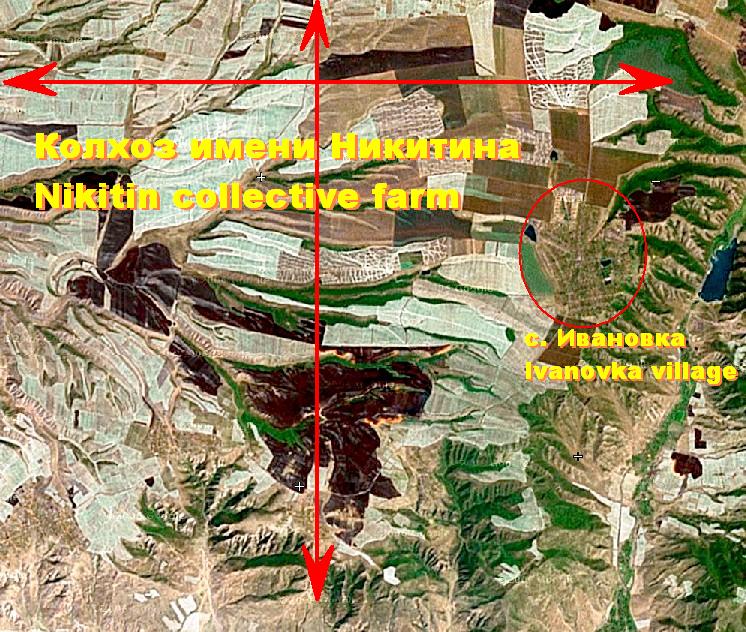
Ивановке было уже шестьсот дворов. |
At the end of the 1900s
[beginning of 2000] Ivanovka
had 600 homes. [The
town is about 1 square mile, collective farm 10+ square
miles.]
|
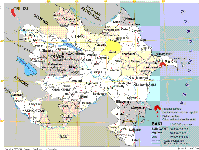
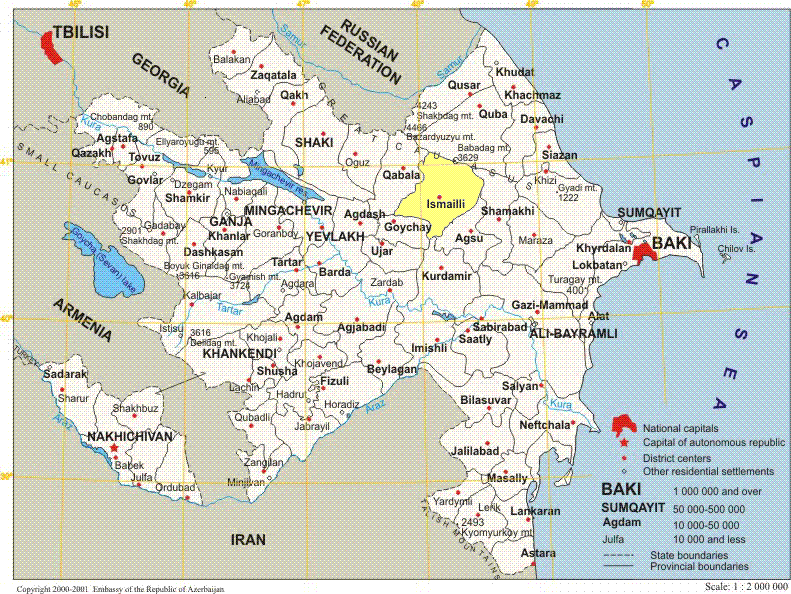
Азербайджан –
Azerbaijan
|
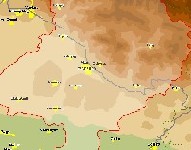
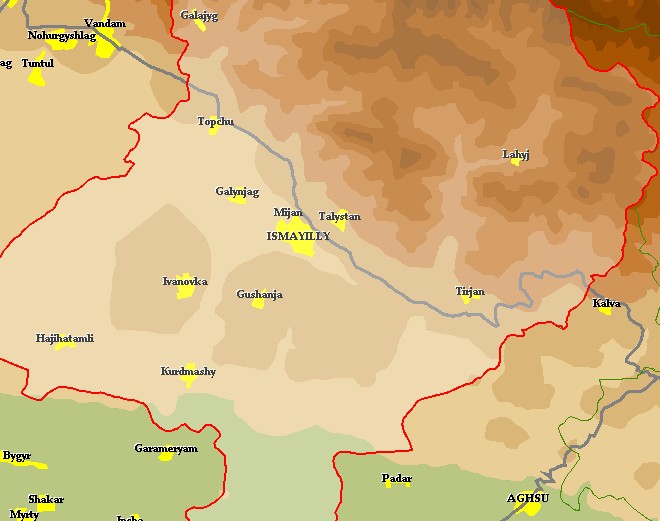
Исмаиллинский р-н –
Ismailli district
|
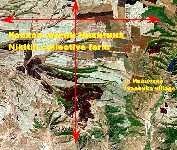
Из спутника – Satellite
|
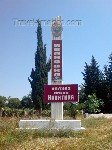
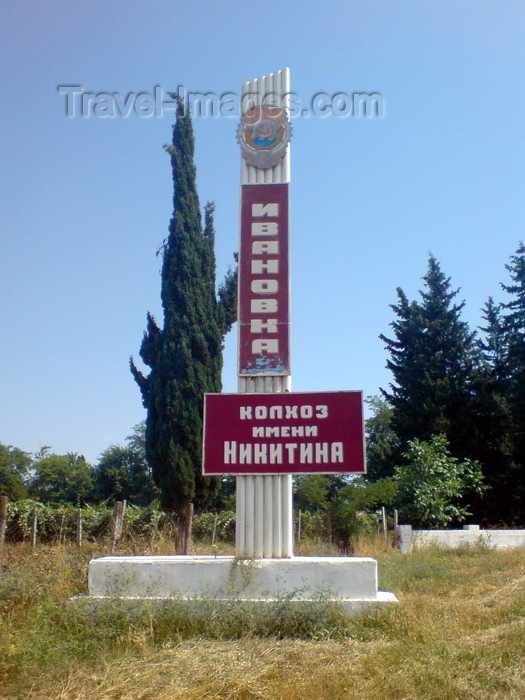
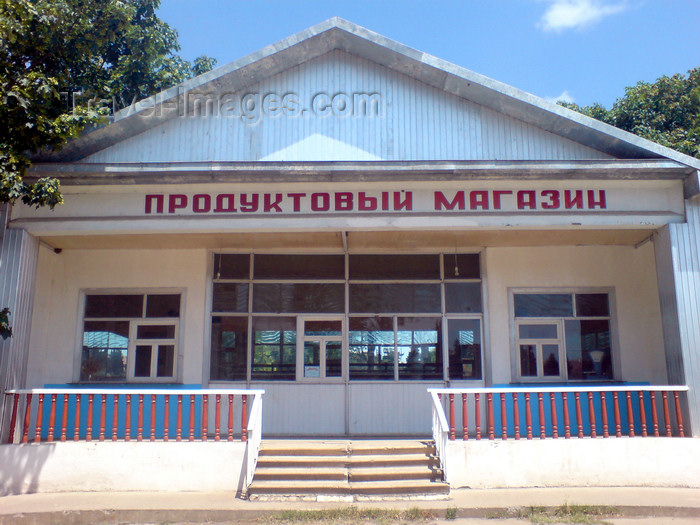
Вход – Entrance
|
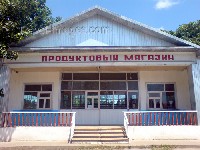
Магазин – Store
|
|
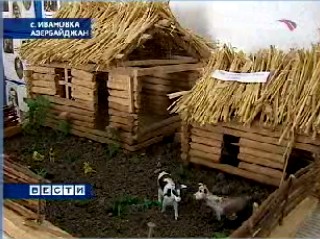
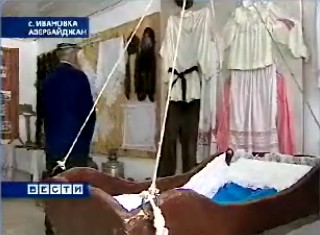
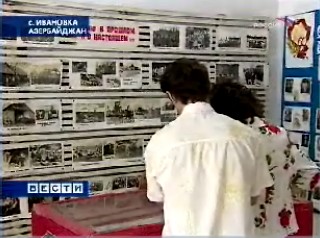
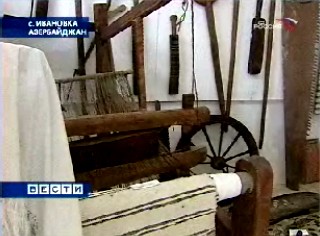
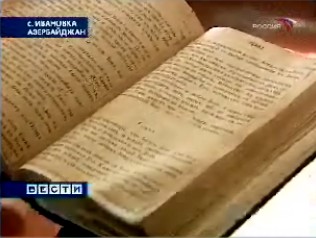
| В маленьком колхозном музее
– этапы большого пути ивановской общины. Последователи
одного из христианских течений, зародившегося в России
больше двухсот лет назад, храмов не строят, не признают
икон и не берут в руки оружия. Первая община молокан была
основана тамбовским крестьянином Семёном Уклеиным в конце
XVIII века, вскоре Екатерина Великая переселила их на
территорию современного Азербайджана. Там молокане
основали свою деревню, где их потомки живут до сих пор. |
The great development path
of the Ivanovka
communitiy is displayed in a small rural museum. The
followers of this Christian faith which was born in Russia
more than 200 years ago, do not build temples, do not
recognize icons and do not bear arms. The first community
of Molokans was founded by Tambov
peasant Semeon Uklein at the end of the 1700s, and shortly
after Catherine the Great* relocated them to what is now Azerbaijan.
[MYTH:
Molokans first arrived in Azerbaijan during the reign
of Nicholas
I. *See
Breyfogle, Heretics
and Colonizers, pages 1+ about 1830 edict. This
myth is repeated again below.] There Molokans
founded their own village, where their descendants still
live.
|
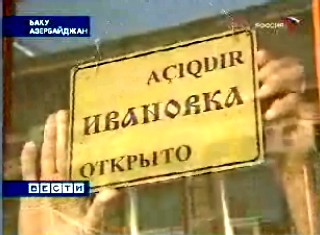
Baku Ivanovka store opens
|
|
|

Oil sold in recyled bottles
|
|
|
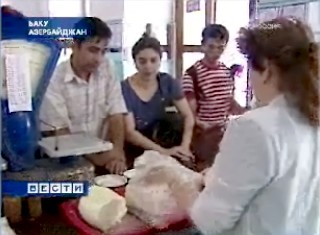
До конца перерыва еще
несколько минут, но продовольственный магазин в самом
центре Баку уже осаждают самые нетерпеливые. Горох и
ячмень в грубых мешках, масло и сыр на скромных прилавках.
Эта действующая выставка достижений ивановского хозяйства
среди дорогих бутиков бакинского Бродвея лишь для
непосвященных выглядит анахронизмом. Постоянные покупатели
думают иначе: "Подсолнечное масло очень хорошее, не
рафинированное, всегда сюда идем".
|
A few minutes before the
end of the afternoon break [pereryv], the food shop in the centre of
Baku is already besieged by very impatient customers. Pea
and barley in bags, butter and cheese on modest shelves.
This current exhibition of achievements of the Ivanovka farm among
expensive boutiques along the Baku Broadway [downtown
international financial, business and cultural district]
just looks like an anachronism [out of place] to to the
uninitiated. Regular buyers think differently: "The
sunflower oil is very good, not refined. We always go
here."
|
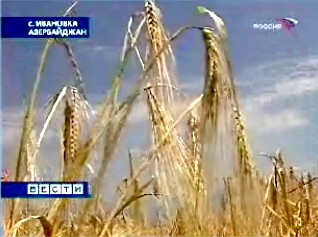
|
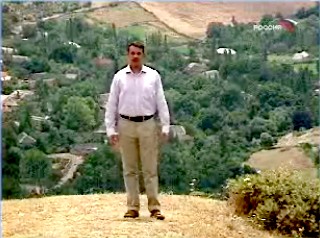
Valentin Bogdanov, reporter
|
|

|
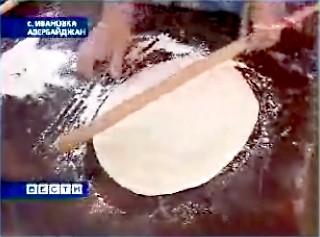
Rolling noodles
|
|
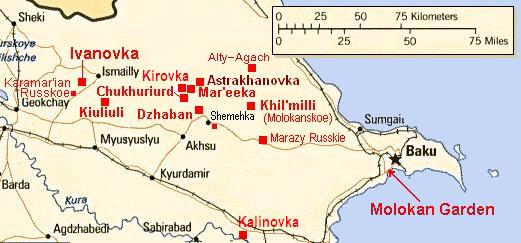
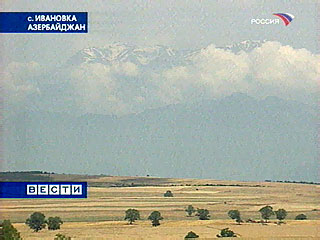
| Источник этого изобилия в
двухстах километрах от Баку, под самыми облаками.
Заповедный уголок. Допетровская Русь в центре горного
Исмаиллинского района. Здесь никогда не говорят "придти в
Ивановку". В нее, как в Иерусалим, можно только
"подняться". По преданию первым это сделал плотник Иван.
Путник расположился на привале, копнул заступом землю и
замер от удивления – под ногами лежал настоящий чернозем.
В конце позапрошлого века в Ивановке было уже шестьсот
дворов. Эта старая извилистая дорога – словно памятник
первым переселенцам. Ее строили всем миром. |
The source of this wealth
is 200 kilometers [125
miles] from Baku, as
the crow flies [literal: under most clouds]. A
preserved little corner. Pre-Petrov Rus'* in the center of
the lofty Ismailli
district. Here no one says, "Come to Ivanovka."
Here, as in Jerusalem, one can only be "up-lifted".
According to legend, the first who did this was Ivan, a
carpenter. The traveler stopped to rest, he shoveled a
pile of dirt and stood still with astonishment, under his
feet lay black earth [very rich soil]. At the end of the
1900s [beginning of 2000] Ivanovka had 600
homes. This old winding road, is like a monument to the
first settlers. They built it for the whole world. [* About 1000-1600, before the time of Peter
I "The Great"
who became Tsar in 1682 and modernized Russia from a medieval
to European-style country. Rus' are the ancient Russian
people.]
|
|
|
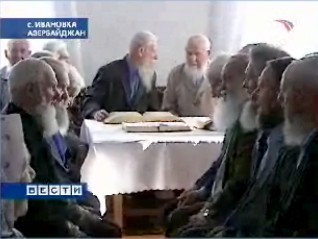
Sunday meeting
|

|
|
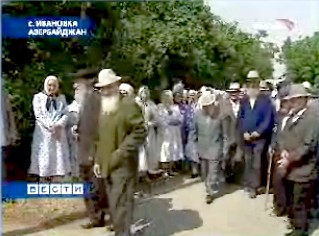
| Живые картины русской
соборности. На поминках вместе катают лапшу и пекут хлеб.
Как и два века назад старики собираются на воскресную
молитву. Сразу за ними приходят дети. У молокан нет
привычной для православных церкви. Это здание здесь
называют собранием. Стены без икон. Мужчины на службе –
отдельно от женщин. |
Live pictures of a Russian
cathedral. They are making [rolling] noodles [lapsha] and baking
bread for a funeral banquet [pominki]. The elderly gather for Sunday
prayer like they did two centuries ago. Immediately behind
them come the children. What the Molokans have is not
customary for Orthodox churches. This building is called a
sobranie
[assembly, gathering, meeting]. The walls have no icons, and during
the service the men are separate from the women.
|
Museum
|
|
|
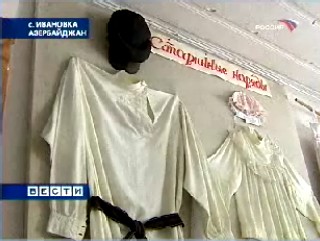
Notice black
men's belt
|
|
|
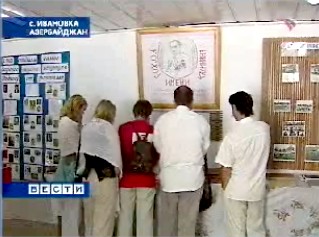
В маленьком колхозном музее
– этапы большого пути ивановской общины. Молокан на Кавказ
переселила в XVIII веке Екатерина. Их ссылали из-под
Воронежа и Тамбова. Говорят, императрица очень
рассчитывала на религиозную устойчивость колонистов. "Наша
вера и вот азербайджанская – это одно и то же. У них
Коран, а мы называем Библия. Она одна и та же. Там
написано – "не красть", и здесь. Там – "не сотвори зла", и
здесь. Но только там – по-азербайджански, а тут –
по-русски", – объясняет пресвитер молоканской церкви
Василий Прокофьев.
|
The great development path
of the Ivanovka
communitiy is displayed in a small rural museum. [One of 8 Molokan museums
in the world.] Molokans were relocated to the
Caucasus in the 1700s by Catherine the Great. [MYTH: The first settlement in
Azerbaidjan was Kyzyl
, Karabakh, in 1832; and in 1835 Molokans first arrived in
Alty-Agach, Shirvan district, Elizavetpol guberniia, now
Azerbaijan, during the reign of Nicholas
I. See
Breyfogle, Heretics
and Colonizers, pages 1+, and map page xviii.] They
were exiled from near Voronezh,
and Tambov. [Most came voluntarily from all over
central and south Russia (Ukraine). See
Breyfogle's PhD thesis, pages __.] They
say, the Emperess counted on the colonists religious
stability. "Our faith and the Azeri faith are the same.
They have the Koran, and we have the Bible. It's the same.
There it is written, "do not steal ", and here. There, "no
evil thoughts", and here. But there [the Koran] is in the
Azerbaijani language, and here [the Bible] is in the
Russian language", explains the presbyter of the Molokan
church Vasili Prokof'ev.
|
|
|

Vasili Prokof'ev, presbyter
|
|
|
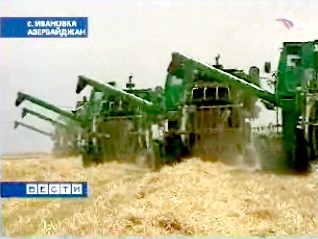
Новенькие комбайны, недавно
купленные в лизинг, – посреди ячменного поля. Красный флаг
– сигнал к разгрузке. Это полусоветская пастораль отдaёт
постановкой, но уже 40 лет для здешних мест это привычная
реальность. Еще в 70-е Ивановский колхоз стал миллионером.
Теперь хозяйство носит его имя. Экономическое чудо в
масштабах республики – заслуга местного председателя
Николая [Григорьевичa]
Никитина. К началу девяностых здесь жили и работали
4,5 тысячи человек. Сейчас – около трех. Тяжелые времена
вползли и на эти склоны. "У нас есть семьи, которые в 90-е
уехали, но когда трудные времена прошли – вернулись и
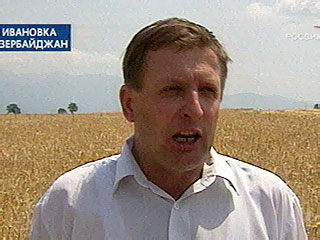
сейчас здесь работают", - рассказывает Михаил Панферов,
председатель колхоза им. Николая Никитина.
|
New combines recently
leased are in the middle of barley fields. The red flag is
the signal to unload. It looks like a half-Soviet pastel
picture, but it is an everyday reality in this place for
40 years. As early as the 1970s the Ivanovka farm became a
millionaire. Now the farm is named after him. [Formerly the Kalinin kolkhoz, it was
renamed when he died in 1994.] The local chairman
Nikolai [Grigor'evich]
Nikitin was honored as an Economic Miracle Worker of the
Republic. In the early 1990s, 4500 people lived and worked
here. Now there are about 3000. Hard times and a decline
had crawled in. "We have families who left in 1990s, but
the hard times passed and now they returned to work here,"
says Michael Panferov, president of the collective farm
named Nikolai Nikitin.
|
|
Michael Panferov,
collective farm president
|
|
|
Колхоз имени Никтина для
Азербайджана – явление вообще уникальное. В 1996-м в
стране прошла аграрная реформа. Землю передали в частную
собственность. Но на никитинцев никто покушаться не стал.
Жили колхозом – пусть живут и дальше, решили тогда в Баку.
"Это исключение было сделано ради сохранения этой
общности. Ради сохранения компактности русского населения
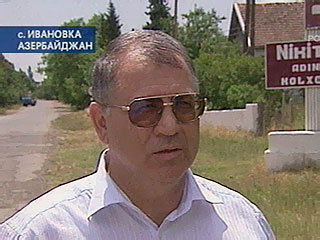
согласно их пожеланиям", – объясняет глава исполнительной
власти Исмаиллинского района Низами Аликперов.
|
The Nikitin collective farm
is a unique phenomenon in Azerbaijan. In 1996 the
country had an agrarian reform. Land was transferred to
private ownership. But nobody infringed on the Nikitin
farmers. The Baku politicians at that time reasoned, let
the collective farm live a long time. "This exception was
made to preserve this community, for the sake of
preserving the compactness of the Russian population in
accordance with their wishes," explains Nizami Alikperov,
head of the executive branch of Ismailli
district.
|
|
|
Nizami Alikperov, Ismaili district
chief
|

Azerbaidjan president visits
|
|
Сохранить колхозный уклад
разрешил лично Гейдар Алиев. Портреты первого президента
здесь повсюду. Когда его не стало, в Ивановке сильно
забеспокоились. Но в 2005-м сюда специально приехал его
сын Ильхам Алиев, чтобы произнести фразу, которую от него
так ждали: "Теперь я – ваш гарант". Эти четыре слова
оказали серьезный успокоительный эффект. "Даже вот
языковой барьер у нас не чувствуется. У нас всю
документацию ведут на азербайджанском языке, но когда
обращаются ко мне, говорят по-русски. Беспокоятся, что я
чего-то не пойму. Все время интересуются. Очень хорошие
отношения сложились", – рассказывает Ольга Жабина,
представитель главы исполнительной власти Исмаиллинского
района в селе Ивановка.
|
Saving the collective farm
structure was personally authorized by Heydar
Aliyev [former president of Azerbaijan] Portraits of
the first President are everywhere here. When he left
office, Ivanovka began to worry a lot. But in 2005 his son
Ilham
Aliyev specifically came here to utter the phrase
that they so waited for: "I am now your guarantor." These
four words had a very reassuring effect. "Even now we have
not felt a language barrier. We have all the documentation
that we can manage the Azeri language, but when they [the
Azeris] turn to me, they speak in Russian. I'm worried
that there's something I don't know. I'm interested all
the time. Very good relationships exist" says Olga
Zhabina, Representative of the Chief Executive of Ismailli
district in the village of Ivanovka.
|
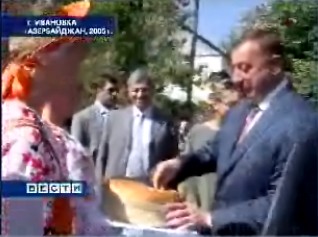
President Ilham Aliyev greeted
with bread and salt
|
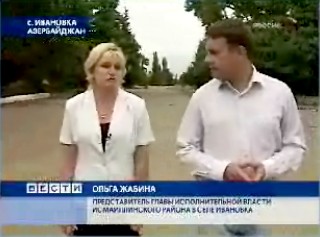
Olga Zhabina, Ismailli district
representative
|
|
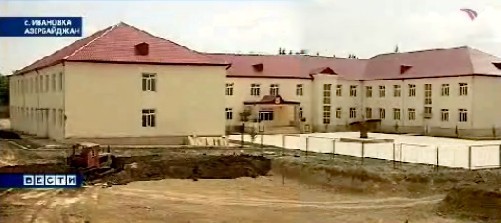
New school
|
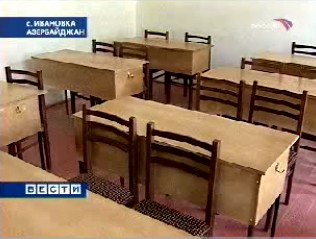
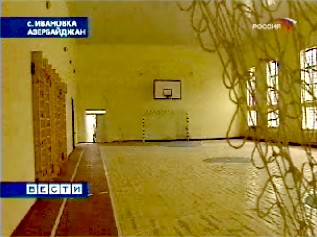
Самое наглядное
подтверждение сказанного – новая школа. Ее построили за
несколько месяцев. Ученики уже в сентябре переселятся в
современные классы и будут осваиваться в спортивном зале,
которого у старой школы никогда не было. Еще через год
появится бассейн и даже свой стадион. Кстати, школу
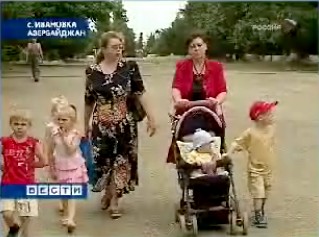
построили с заделом. Сейчас в Ивановке пятьсот сорок
учеников, но классы рассчитаны на семьсот двадцать. С
демографией в этом русском селении все в порядке.
|
The most visible
confirmation of this is a new school. They've been
building it for several months. In September students will
move in to modern classrooms and will get familiar with
the gymnasium, which the old school did not have. In
another year a swimming pool and even their own stadium.
Incidentally, they built the school themselves [with no
outside help]. Now Ivanovka has 540 students, but the
class rooms can accommodate up to 720. All is well with
the residents in this Russian village .
|
|
|
|
| Валентин Богданов,
РТР-Вести |
Valentin Bogdanov,
RTR-Vesti (Russian Television Reporter, The News)
|
|
|
|
Spiritual Christians in
Azerbaijan
Spiritual Christians
Around the World
|