
2008-10-14
MALAKAN BELGESELİNE ÖDÜL
|
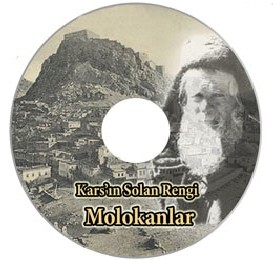
The Fading Color of
Kars:
Spiritual Christians
|
Kars
News
October 14, 2008
Award to the Spiritual Christian Documentary
Film
|
|
Gazetemiz
yazarlarından Vedat
Akçayöz’ün proje sahipliğini ve
finansörlüğünü yaptığı “Kars’ın Solan Rengi:
Malakanlar” adlı belgesel film ilk kez katıldığı 9.
Uluslararası
Altın
Safran Belgesel Film Festivali'nde birincilik ödülü aldı.
|
The documentary
film "The Fading Color of Kars:
Spiritual Christians" received first
prize
at the 9th
International Golden Saffron Documentary Film Festival,
in which it
was entered for the first
time. The producer and
financial sponsor was Vedat Akçayöz (Ukchuyez), one of our
newspaper
journalists. [In 2007
the first
Turkish
film about Spiritual Christians, "The Guest",
was
shown.]
|
| Tarihi danışmanlığını Av.
Erkan
Karagöz ile Prof. Dr. Bingör
Sönmez’in yaptığı, çekimlerini Kars’ta ve Rusya’da Vedat
Akçayöz’ün gerçekleştirip Yalçın
Yelence’nin hazırladığı “Kars’ın
Solan Rengi: Malakanlar” adlı belgesel
film, Kars’ta düzenlenecek Altın Kaz Film Yarışması yanı
sıra,
İngiltere ve Almanya’daki yarışmalara da katılacak. |
The documentary film "The
Fading Color of Kars: Spiritual Christians" will also
be entered into
competitions
in England and Germany in addition to the Golden Goose Film
Competition
that will be held in Kars. The film's historic consultants
were the Lawyer Erkan Karaguz
and
Professor Doctor Bingur Sonomez. Filming was
done by Vedat Akçayöz in Kars and in Russia, and director
Yalchin
Yelence.
|
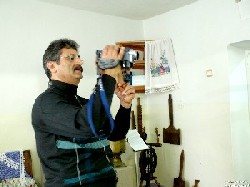
Akçayöz (pronounced:
Ahk-tchah-yez) filming in the Stavropol
Regional Museum of Fine Art, Novokumskoe
Branch. March
10, 2008.
|
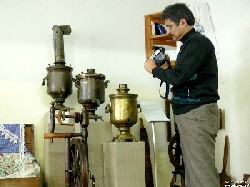
Click on photos to
go to
Akçayöz's photo album, then click on album
photo to enlarge
futher.
|
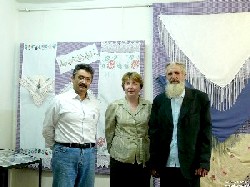
Akçayöz (Ahk-tchah-yez) with Olga
Samarina,
museum director and
curator of Spiritual Christian exhibits. The
elder is translating.
|
|
Yeni hazırlanan belgesel
filmin
ilk kez katıldığı bir yarışmada
birincilik ödülü almasının önemli ve anlamlı
olduğunu bildiren Akçayöz, “Malakanlar’la ilgili şu ana
kadar çok şey yazıldı çizildi. Ama savaş istemeyen,
barıştan yana olan bu halkı yazıp çizmelerle anlatmak
yetmiyordu. Bunun belgesel olarak hazırlanması gerektiğini
düşündüm ve çekimler için önce
Kars’tan başladım. Daha sonra Rusya’ya giderek orada
çekimler
yaptım. Av. Erkan Karagöz ve Prof. Dr. Bingür Sönmez’in
desteğiyle Yalçın Yelence’nin hazırladığı güzel bir
belgesel film ortaya çıktı.” dedi.
|
Akçayöz said that
it's very
important and meaningful for a newly produced documentary
film to get
the first prize in a competition that it has entered for the
first
time. Until now there has been a lot of things written and
discussed
about the Molokans, but it wasn't just enough to write and
talk about
this nation [these people] who don't want war and is
peace-loving. I
thought that it should be produced as a documentary, so I
first started
shooting in Kars, then I went to Russian and continued
shooting the
film. With the support of Lawyer
Erkan Karaguz and Professor Dr.
Bingur Sonomez, and director Yalchin Yelence, a beautiful
film
materialized [came to be]. |
| 30 ve 60’şar dakikalık olarak
hazırlanan “Kars’ın
Solan Rengi:
Malakanlar” adlı belgesel filmde, ağırlıklı olarak
Malakanlar’ın
Rusya’dan Kars’a sürgünlerini, daha sonra yeniden Kars’tan
Rusya’ya
göçlerini anlatıldığını ifade eden Akçayöz,
“Malakanlar’ın en önemli
özelliği savaş karşıtı olmalarıdır. Askere gitmedikleri ve
Ruslar
tarafından dağıtılan tüfekleri yaktıkları için Kars’a
gönderildiler.
Daha sonra Kars’ta da askerlik yapma teklifini reddettikleri
için bu
kez yeniden Rusya’ya göçe zorlandılar. Bu, Malakanlar’ın
barışçıl
yönüdür. Diğer bir yönleri ise tarımcılıktır.
Belgeselde Malakanlar
başta barışçıl yönleri olmak üzere tüm
yönleriyle detaylı
anlatılmıştır. Belgeselin en önemli bölümü de
Kars’taki yaşamlarıdır.”
diye konuştu. |
Akçayöz stated that
this
documentary film "The
Fading Color of Kars: Molokans", which was produced as
a 30 minute
and
a 60 minute film, deals mainly with the exile of the Spiritual Christians Molokans
from
Russia to Kars, and later their migration from Kars to
Russia. The most
important feature of the Spiritual
Christians Molokans is that they
are against war. They
were sent to Kars from Russia because they did not join the
military*, and
they burned their rifles
that were distributed to them by the Russians.** Later they were
forced to
migrate to Russia again because they rejected the request to
do their
military service in Kars [Turkey].***
This is the peaceful side of the Molokans, another feature
of them is
their farming [agriculture]. In the documentary film, Spiritual Christians Molokans
are
explained in great detail with all their features, but
primarily as
peaceful [peace-loving] people. The most important part of
the
documentary film is their life in Kars.
Corrections
* Most
Spiritual Christians voluntarily relocated to Caucasus
provinces for economic
reasons. See Breyfogle's thesis
and book.
Originally Spiritual Christians objected to
the
military because soldiers were required to perform Russian
Orthodox
religious rituals. See: Narrative
of the Visit of Isaac Robson (1867), page
13. After contact
with
Germans Protestants in Ukraine, many Spiritual
Christians expanded
their
objection to include war. See: Zhuk: Russia's
Lost
Reformation, page 156; and Hoover and Petrov: Russians'
Secret, Chapter 10.
** Only Doukhobors
burned
rifles, and were punished for 3
gun-burning demonstrations in the Caucasus in 1895,
one of which occurred north of Kars between Spasovka
and Terpenie
[Терепение] villages, Shuragel
district, Kars
Province, Russian Empire. Terpenie village was renamed Plodorodnoe
[Плодородное]
and abandoned in 1921. Location today is about 1.5
km.
east
of Karhan village, Akyaka district. The severe
punishment of the demonstrators initiated a mass
migration of about
one-third
of all Doukhobors to central Canada by 1900. Within 10
years, less than
1% of
all non-Doukhobor Spiritual Christians, who fled the Caucasus, intended to
follow the Doukhobors to Canada but
got
diverted to California
USA. Some left because the 50-year military
exemption given to
colonizers of new Russian territory had expired.
*** Most all Spiritual Christians who remained in Kars and
were drafted served in the Turkish military.
———————
Big thanks to Odil Tunali-Payton for translation.
|
|
|
See the film
documentary online
Spiritual Christians in Turkey
Spiritual Christians Around
the World |