Correspondence with Turkish Historian Erkan Karagöz |
||||
| Erkan Karagöz is an
attorney in eastern Turkey who grew up among Spiritual
Christians near Kars and has been researching and writing
about them for many years. See his blog: "The last
Spiritual Christians Erkan has submitting some of his published work about Spiritual Christians in Turkey for posting here — in Turkish. More people, like Dmitri Bruhin in Fresno, are needed to help translate Turkish text. Below are his answers to questions about his involvement in translating Semyonov's book: The History of Caucasian Spiritual Christians |
Some of Erkan's
correspondence, contributions, and work is displayed here,
edited for clarity.
|
|||
|
||||
|
|
||||
| From:
"Erkan
Karagöz"
<aequitas44@gmail.com>
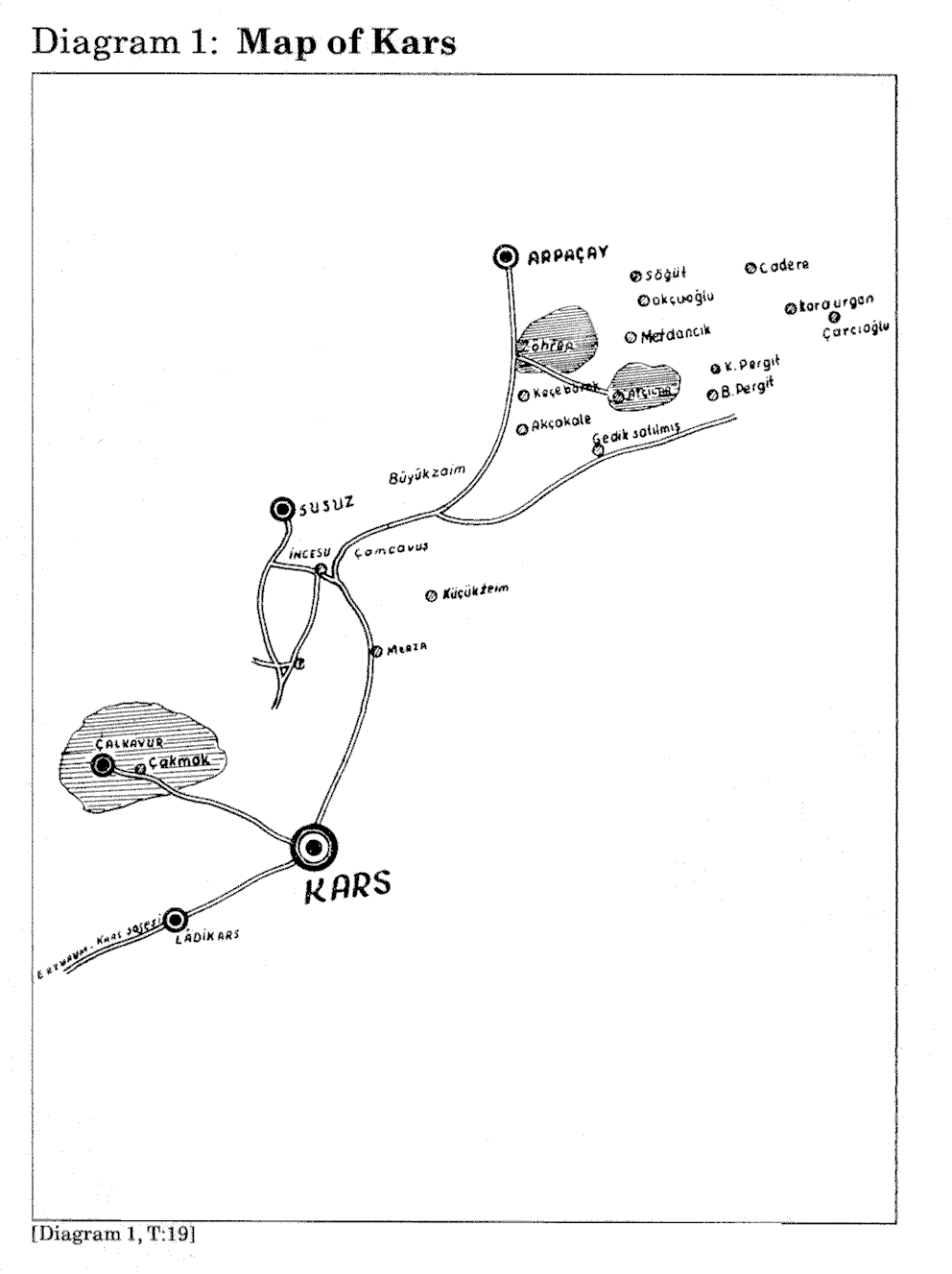
Subject: Re: Spiritual Christians Date: Wed, 22 Mar 2006 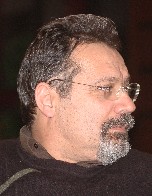 I was
born in İncesu
[north of Kars, formerly: Malaia- Voronstovka]. During my
childhood it was a small village where Spiritual Christians I was
born in İncesu
[north of Kars, formerly: Malaia- Voronstovka]. During my
childhood it was a small village where Spiritual Christians I am not a Spiritual Christian My combined background of specializing in social science, history, sociology and geography greatly helped me to investigate Spiritual Christians Additionally, I have published many novels, worked on books about social history and I am also currently in the process of writing. In my novels there are some important parts about Spiritual Christians In the second attachment I received from you there were write-ups [on the Internet] about my books and the first one was about Spiritual Christians I have a long write up about Spiritual Christians There are no other write ups about Spiritual Christians The book by Ivan Semyenov which is now being translated into Turkish under my supervision. My ultimate goal is to introduce Spiritual Christians I am also working on a short film project with a friend of mine whose grandmother was a Prygun I sincerely believe that we as Turks, especially the people of Kars, are indebted and owe a great gratitude to Spiritual Christians If you wish I can send you my works in Turkish and you can put them onto your website. As I do not know English, it would be impossible for me to translate them into English. The letters I am sending and communicating with you in English are currently translated into English by a friend of mine. Should you also wish me to forward you some pictures I have in my possession, I can do so. I look at your website and following it with an interest. I think it is well done. I also think it should be utilized more and more on wider spectrum. Looking forward to hearing from you soon. Best regards, Erkan |
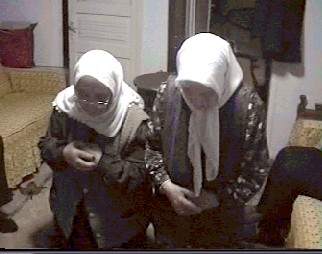
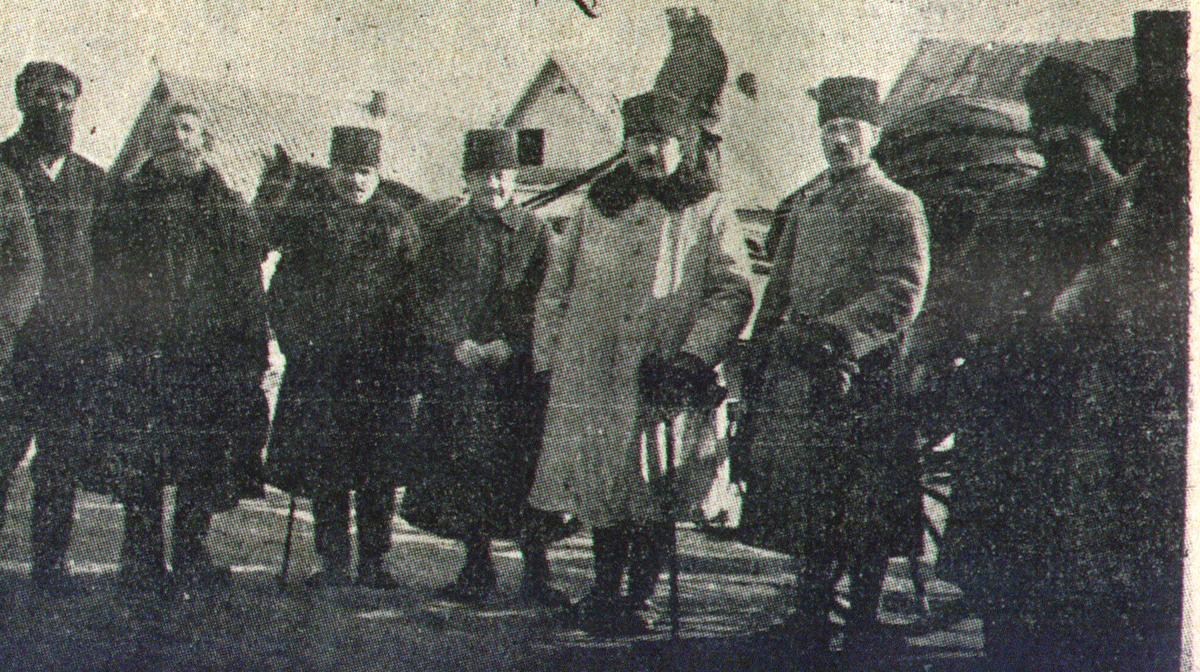 Chakmak village 1921. Molokan elders greet Kazım Karabekir Pasha, center with light coat, a military hero during the Turkish War of Independence, then president of the Grand National Assembly. He signed the Treaty of Kars with the Soviet Union on October 23, 1921. Photo sent by Turkish historian Erkan Karagöz. Click on photo to enlarge. From: "Erkan Karagöz" <aequitas44@gmail.com> Subject: Re: Spiritual Christians Date: Tue, 28 Mar 2006 Unfortunately, I do not speak or write in Russian. The book by Semyenov is being translated by professionals [including a Molokan woman, Ludmila Denisenko]. During the process of its translation, I only oversee the theological terminolgies to check if they are being utilized in a correct manner and place. I should be very grateful, if you would kindly let me know the mistakes you spotted that he has made in his book. I would like these points to be attached at the back of the book before it is published as a reference. The short film about Spiritual Christians I sent you two pictures. Did you not receive them? [He later sent more photos.] I also sent you some of my works published in a magazine, newspaper and also a write up about Spiritual Christians Regarding the book by Orhan Turkdoghan who does not touch on the big exodus [1960s to Stavropol'], also their problems and the difficulties faced during 1922. He also suggests that their biblical belief (or bible) was "The book of Sun" [Spirit and Life] and they believe in Maksim [Rudomyotkin]. He also suggests that there are some Spiritual Christians Currently, I am also working on another paper and when it is finished I will be sending it to you. It is based on the ethics of law about the history of Spiritual Christians 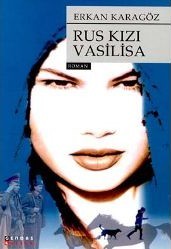 Additionaly,
I
will be sending to you a copy of a section of my book, in
Turkish again, in which there is also a part about Spiritual Christians Additionaly,
I
will be sending to you a copy of a section of my book, in
Turkish again, in which there is also a part about Spiritual Christians Best regards, Erkan |
|||
|
|
||||

Spiritual Christians Around the World