The Pilgrims of
Russian-town
Seventy Years Later
by Stephen
E. Scott — Old Order Notes — No. 26,
Fall-Winter 2002 — Pages 7-34
Old Order Notes, P.O. Box 791 Greenville, OH 45331 — Subscription $12 per year.
Editor: Fred Benedict, 313 South First St., Union City OH 45390 — phone 937-968-5911 Covington, Ohio
Published by: Ohio Amish Library, 4292 S.R. 39, Millersburg, Ohio 44654
 Update
February 5, 2012 — The founder and publisher of "Old Order Notes" died in February
2011. He was one of the
originators of the Brethren
Heritage Center and served as the first Chair of
its Board of Directors. He was also a prolific writer
of articles published in numerous periodicals, and
publisher of "Old Order Notes" and "Quest."
Update
February 5, 2012 — The founder and publisher of "Old Order Notes" died in February
2011. He was one of the
originators of the Brethren
Heritage Center and served as the first Chair of
its Board of Directors. He was also a prolific writer
of articles published in numerous periodicals, and
publisher of "Old Order Notes" and "Quest."
Fred Benedict published "Old Order Notes," one of the best sources for data on Old Order groups, on an irregular basis from 1978-2003. He was a prominent "Old Order" historian, printer, and writer who headed the Brethren Encyclopedia project until the current president, Robert Lehigh, succeeded him in 2006, when he moved to the Brethren Retirement Community in Greenville, Ohio. His funeral was held at the Old German Baptist Brethren Church in Covington, Ohio. (Founding BE President Fred Benedict With the Lord, The Brethren Encyclopedia, News & Events, February 22, 2011; Church of the Brethren Newsline, 9) Brethren bits: Remembrances, Feb 24, 2010; and Fred Benedict, Longtime Brethren Encyclopedia Head, Dies, 22 Feb 2011, BRETHREN-L Archives.).
Added publisher identification and summary above. Faith labels below are updated to correspond with the Taxonomy of 3 Spiritual Christian Groups: Molokane, Pryguny and Dukh-i-zhizniki — books, fellowship, songs, holidays and prophets.
Update August 12, 2010, edited February 7, 2012 — Events added since 2002. Index alphabetized.
Since posting, Scott's article has consistently ranked high in page hits at Molokane.org, probably due to the Anabaptist keywords. The LA-UMCA printed an earlier version for sale minus these critical updates.
The term "Molokan" as originally used by Scott below mostly refers to the fractionated denominations of Dukh-i-zhizniki, whose ancestors were mostly Pryguny, Maksimisty and other faiths, with a few Molokane. The Dukh-i-zhiznik faiths have excommunicated their members for attending Prygun (Jumper) services in America, avoid Molokane, and non-affiliated Dukh-i-zhizniki.
After 1928, Prygun congregations in America transformed into fragmented denominations of Dukh-i-zhizniki, so named because their varied faiths are based on the 1928 book Dukh i zhizn', which they all place as a third testament on their altar tables next to the Bible, and they created their own song and prayer books. The Dukh-i-zhizniki introduced Maksim's rituals, discarded several Prygun holidays (most notable : the Birth of Christ), and officially shun their any ancestral Molokan, Prygun and Subbotnik faiths.
Though I was among many who contributed to and proofread Scott's text in 2002 and posted it here, I had not fully understood the dynamics of American ethnic Russian sectarian history until my 2007 trip to Russia. In 2008, I was beginning to explain and diagram the faith divisions as now presented in the Taxonomy, which is often updated. The more precise faith labels and history have been incorporated into my Introduction and Scott's report below. Previously printed versions of Scott's paper before 2012 are in error and should be corrected.
Introduction by Andrei Conovaloff (Updated 6 September 2013)
The author, Steven Scott, is a member of the Old Order River Brethren — Anabaptists who share similar old world values and customs with Russian sectarians and have overlapping histories, in Russia and in the U.S. In what is now south Ukraine in the 1800s, Molokane and Pryguny lived adjacent to and visited, worked for and held prayer meetings with Molochna German protestants. Many Molokane adapted Stundists principles and some migrated to Los Angeles, relabeled as Stundo-Presbyterians. A few Pryguny and Dukh-i-zhizniki intermarried with Mennonites in the U.S. Many young Russian-American and German-American sectarian men met as conscientious objectors in jails and camps during both world wars. Collaboration on this paper is a small but significant continuation of our historic ties. For more history on the Internet see:
 Scott
was concerned that his people, and similar groups of
the Plain
People, who dress simply "plain," may soon
disappear by assimilation. After reading Pilgrims in Rusisan-Town
(Young 1932), Scott focused on the
last paragraph, page 276:
Scott
was concerned that his people, and similar groups of
the Plain
People, who dress simply "plain," may soon
disappear by assimilation. After reading Pilgrims in Rusisan-Town
(Young 1932), Scott focused on the
last paragraph, page 276:
"... The old PrygunMolokan
is rapidly vanishing. ... What the next
quarter-century will reveal is as yet uncertain, but
the present trends indicate that city life eventually
fuses even the most refractory sectarian material."
Scott wanted to know if they vanished after 25 years, by 1960? He found Molokane.org, assumed they survived, and began the research published below. If the Pryguny survived in big American cities, he figured there was hope that Anabaptists could also survive.
Scott's research took over 2 years and involved counsel with many Dukh-i-zhizniki and Molokane. This is a well written and extensively referenced (with numbered citations) summary of the past 70 [80] years. He took great care to be accurate in his reporting and courteous during his research. I commend him for submitting drafts for proofreading which have been reviewed by members of the LA-UMCA, and many Dukh-i-zhiznik elders in Southern California. The paper is better due to their cooperation. I have enhanced it for the Internet with links and comments.
Scott was glad to conclude that Dukh-i-zhizniki (whom at that time, he and I mistakenly called Molokans) have survived after nearly a century in big American cities. His finding gave many Brethren hope for their future generations, while the LA-UMCA copied his original article for sale, with errors which are corrected here.
But facts gathered since 2007 yield a different conclusion than reported in 2002 — only the most zealous dissident minority of Dukh-i-zhizniki preserved by imposing their version of their old world rituals, by attacking the faiths of their ancestors in America and evicting what they believe to be the "unclean" heretics among them. Though a few non-Dukh-i-zhizniki have managed to marry-in and join, recruiting is forbidden except for people of affiliated faiths who convert from the Former Soviet Union. Many congregations now forbid visitors and guests, a complete reversal of their immigrant ancestors. In 2013, the Hacienda Heights UMCA board ruled that only "members of their mother churches" are allowed to enter the premises, which excludes Molokane, Pryguny, and anyone a zealot wishes to attack.
Integration with similar Dukh-i-zhiznik faiths is limited. About 50 Dukh-i-zhiznik families have been imported, sponsored from Armenia since perestroika, divided between the U.S. and Australia to supplement the vestigial Russian language, but were not fully accepted on either continent due to their different rituals and beliefs.
Tightening dogma have restricted membership so much that attendance during the most popular Passover holiday across all Dukh-i-zhiznik congregations in America and Australia is less than the number of ancestral immigrants to the USA. The residual participating attendance in year 2000 was less than 90 earlier.
The truth is, Dr. Young's prediction in 1932 was absolutely correct. The Prygun organized faith was extinguished in the U.S. by the end of the 1950s, about 25 years after her book was published.
Analysis conducted since 2007, in-progress, indicates that Dr. Young did not fully realize that in her presence Maksimisty and Klubnikinisty were dominating the Pryguny and would eventually transform all the established congregations into a new faith based on their book: Dukh i zhizn', which some believed replaced the New Testament. Their zealous persistence caused the majority of Russian sectarians in Southern California to avoid their Dukh-i-zhiznik faith by joining Protestant faiths and/or assimilating. Descendants of the Prygun immigrants only remained "plain people" if they converted to Dukh-i-zhizniki.
Young did not study the authentic Molokane in San Francisco. She mistakenly called Pryguny "Molokans" in her text 100s of times, though her title (above) and study population were clearly limited to Dukhovnie Khristian Pryguny (Spiritual Christian Jumpers). But, these Pryguny were already transformed into Dukh-i-zhizniki. Dr. Young quoted extensively, not from the Bible, but from 24 pages of the Dukh i zhizn', which is not used by the Molokan or Prygun faiths anyplace in the world, yet she erroneously reports this is a book about "Molokans."
Her 1926 masters thesis, "Social Heritages of Molokane in Los Angeles," was mostly about the new ritual book. She apparently did not realize that she was helping the Dukh-i-zhiznik transformation and camouflaging their new secret faith as "Molokan," a hijacked label.
A government report showed Dr. Young testified at least once before an immigration committee about the worthiness of Russian sectarians as citizens during a time of deportation of undesirable aliens (research in-progress). In my opinion Dr. Young with the guidance of Prygun and Maksimist elders, protected their faiths by limiting the content of her book to their nicer history, avoiding the ugly facts. For examples: the extensive court cases and international publicity about bride selling is merely somewhat mentioned on pages 144-146, missing or avoiding most of the story and its impact; and both the Hawaii and Arizona colony segments are very short with errors. The Hawaii colony was on Kapaa in 1906, not Honolulu in 1907 as briefly shown on page 259; and Arizona had 4 colonies beginning in 1911, not one beginning in 1914. Her source material is limited, largely based on personal interviews with preference for first hand data, her renown specialty, a method which neglects data-rich secondary sources, such as newspapers. Her focus on juvenile delinquency was to support her husband's research as he became an recognized expert in this new topic of national concern about all immigration groups.
Though it appears to me that Dr. Young avoided most of the ugly history, what she did report about juvenile delinquency, aversion for education, and other unflattering facts, created a huge uproar among Dukhizhiniki in Los Angeles in the 1930s that lasted for decades. Oral history reported Young was an evil Jew who took advantage of these poor peasant Russians to promote her own career at their expense, and she only told the most disgusting stories while ignoring the glorious blessings and miracles of the Holy Spirit among these chosen people of God. She inoculated the population against outside (ninash) researchers into the 2000s. Stories told by people, like my illiterate grandmother Sasha Shubin, were extremely negative into the 1960s when I arrived in Los Angeles. My uncle Dr. John ("Coe") A. Shubin, who got his Ph.D. in economics at USC, boasted to me that in the 1950s he found Dr. Young on campus giving a lecture with her husband, and he interrupted and scolded both publicly for what they did to disgrace the his people for their personal gain. I don't think my uncle John fully reviewed or understood her book or research.
Little known is that Young was working on a second book to report how the United Dukh-i-zhiznik Molokan Christian Association (UMCA) was revitalizing their Russian ethnic society by attracting their assimilated youth with new programs in English. She was going to reverse her prediction that these Dukh-i-zhizniki were doomed in the city. Unfortunately Young's papers were destroyed in a fire at the International Institute where she was working, and her sequel was never published.
From it's founding in 1926 to 1940, the LA-UMCA programs were primarily conducted in Russian. In the late 1930s, a Brethren minister Jack Green became a Bible teacher at a ghetto mission for immigrants, The House of Light, where he helped launch a club especially to serve the local ethnic Russian youth — the Young Russian Christian Association (YRCA). Many of the youth nurtured by the YRCA and college educated, revitalized the UMCA in the 1940s with English lessons, socials and sports, to the dismay of their peer Dukh-i-zhizniki (called Chuloki) who still scorn these "Jack Greeners" as their heretics. LA-UMCA revitalization progressed for more than 20 years, into the 1960s when it was halted by zealots, who completely conquered control of the UMCA by the 1980s. Many formed the men's Heritage Club which attracting most of the YRCA-ers away from the UMCA.
The most zealous persevered for 3 generations, imposing their Dukh-i-zhiznik faiths upon all residual Russian sectarians in Southern California. Those who opposed or questioned the Dukh i zhizn' either left the faiths or were expelled — yielding a retention of less than 10% of the living descendants a century later. The very popular LA-UMCA youth clubs, sports programs, Sunday School, Bible classes, fashion shows, teas, talent shows, dinners, numerous youth clubs, and Wednesday Night Church which flourished since Young's book, have all diminished in scope and scale, or vanished — a victory for the most aggressive zealots. When the LA-UMCA newsletter ceased publication about 2005, the board forbid a website, but one woman and her kids privately began to email a calendar of events and announcement to 100s, which is now their only mass communication method, besides a few websites maintained by individuals. Nothing "officially" appears in print or on the Internet, due to a mandated retreat from publicly exposing their faiths. The LA-UMCA property is now primarily used for the Dukhizhinik "Molokan Elementary School" (MES), wedding showers, some youth activity, and an annual picnic.
Those who remained among Dukh-i-zhizniki can join in their charismatic jumping and shout singing, or silently watch. In the 2000s, a century after immigration, new social-service groups have appeared among some of the assimilated to bridge the gap between America and the Dukhizhinik zealots.
Will Plain People survive into the 2000s? It depends on what you mean by survive and what kind of Plain People. How and what one chooses as a measurement of survival can be as varied as the yardstick and the person reading it. My update below projects that only the most ritualistic, conservative and isolated zealots can probably persist another century, by preserving some historic rituals, dress and beliefs with dictatorial fragmented leadership. Most descendants will continue to adapt to their surrounding society as they are now by reading this on the Internet, some using a mobile computer. The culture of Plain People can survive if it can preserve an essence of its core faith while adapting to the new world while the conservative, fundamental elders die off.
Update February 9, 2017
Spelling Dukhizhiznik(i) is corrected to Dukh-i-zhinik(i). Originally I used hyphens, then removed them to simplify the term. But, my Russian wife Tanya told me that духижизник (dukhizhiznik) in Russian can be interpreted as духи-жизник (dukhi-zhiznik) meaning "spirit/perfume life/living", and is very misleading. Therefore 2 hyphens are needed in Russian and English — дух-и-жизники, Dukh-i-zhizniki. In Russian the term does not need to be capitalized, but I do it in English to indicate they are a name, label.
The previously combined terms "diaspora Dukh-i-zhizniki" is misleading because the Dukh-i-zhiznik faiths originated in Arizona and Southern California, and with the book were transferred to Armenia, USSR, and Kars, Turkey. Therefore diaspora Dukh-i-zhiniki are all in the Former Soviet Union and Australia. But, diaspora Molokane are still in Northern California.
Old Order Notes, P.O. Box 791 Greenville, OH 45331 — Subscription $12 per year.
Editor: Fred Benedict, 313 South First St., Union City OH 45390 — phone 937-968-5911 Covington, Ohio
Published by: Ohio Amish Library, 4292 S.R. 39, Millersburg, Ohio 44654
In Black Font the reader
will find the original text, and in bracketed [Red
Font] changes and comments, with links to
more information on the Internet. The current Russian
alphabet is used here, updating many of the
pre-1918 Russian texts. Brackets are used for
corrections to aid those who may print these pages
without color.
REVIEW:
Scott finds that descendants of urbanized sectarians from Russia still exist in California, which gives hope that German sectarians will also continue in the new world. Research conducted after this 2002 paper was published reveals that only the most zealous Dukh-i-zhiznik faiths persisted. The original Molokan, Prygun and Subbotnik faiths were extinguished in Southern California, somewhat replaced with a few Americanized social organizations.
REVIEW:
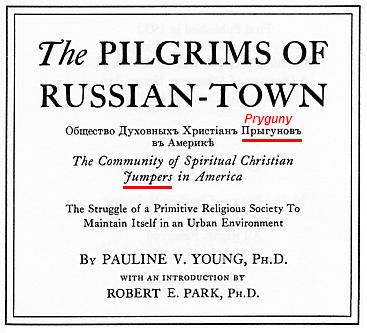
Young, Pauline V. The Pilgrims of
Russian-Town : Общество Духовных Хрисиан Прыгунов
в Америке, The Community of Spiritual Christian
Jumpers in America : The Struggle of a Primitive
Religious Society to Maintain Itself in an Urban
Environment. (Chicago: University of Chicago
Press, 1932), 296 pages.
Scott finds that descendants of urbanized sectarians from Russia still exist in California, which gives hope that German sectarians will also continue in the new world. Research conducted after this 2002 paper was published reveals that only the most zealous Dukh-i-zhiznik faiths persisted. The original Molokan, Prygun and Subbotnik faiths were extinguished in Southern California, somewhat replaced with a few Americanized social organizations.
Update
February 5, 2012 — The founder and publisher of "Old Order Notes" died in February
2011. He was one of the
originators of the Brethren
Heritage Center and served as the first Chair of
its Board of Directors. He was also a prolific writer
of articles published in numerous periodicals, and
publisher of "Old Order Notes" and "Quest." Fred Benedict published "Old Order Notes," one of the best sources for data on Old Order groups, on an irregular basis from 1978-2003. He was a prominent "Old Order" historian, printer, and writer who headed the Brethren Encyclopedia project until the current president, Robert Lehigh, succeeded him in 2006, when he moved to the Brethren Retirement Community in Greenville, Ohio. His funeral was held at the Old German Baptist Brethren Church in Covington, Ohio. (Founding BE President Fred Benedict With the Lord, The Brethren Encyclopedia, News & Events, February 22, 2011; Church of the Brethren Newsline, 9) Brethren bits: Remembrances, Feb 24, 2010; and Fred Benedict, Longtime Brethren Encyclopedia Head, Dies, 22 Feb 2011, BRETHREN-L Archives.).
Added publisher identification and summary above. Faith labels below are updated to correspond with the Taxonomy of 3 Spiritual Christian Groups: Molokane, Pryguny and Dukh-i-zhizniki — books, fellowship, songs, holidays and prophets.
Update August 12, 2010, edited February 7, 2012 — Events added since 2002. Index alphabetized.
Since posting, Scott's article has consistently ranked high in page hits at Molokane.org, probably due to the Anabaptist keywords. The LA-UMCA printed an earlier version for sale minus these critical updates.
The term "Molokan" as originally used by Scott below mostly refers to the fractionated denominations of Dukh-i-zhizniki, whose ancestors were mostly Pryguny, Maksimisty and other faiths, with a few Molokane. The Dukh-i-zhiznik faiths have excommunicated their members for attending Prygun (Jumper) services in America, avoid Molokane, and non-affiliated Dukh-i-zhizniki.
After 1928, Prygun congregations in America transformed into fragmented denominations of Dukh-i-zhizniki, so named because their varied faiths are based on the 1928 book Dukh i zhizn', which they all place as a third testament on their altar tables next to the Bible, and they created their own song and prayer books. The Dukh-i-zhizniki introduced Maksim's rituals, discarded several Prygun holidays (most notable : the Birth of Christ), and officially shun their any ancestral Molokan, Prygun and Subbotnik faiths.
Though I was among many who contributed to and proofread Scott's text in 2002 and posted it here, I had not fully understood the dynamics of American ethnic Russian sectarian history until my 2007 trip to Russia. In 2008, I was beginning to explain and diagram the faith divisions as now presented in the Taxonomy, which is often updated. The more precise faith labels and history have been incorporated into my Introduction and Scott's report below. Previously printed versions of Scott's paper before 2012 are in error and should be corrected.
Introduction by Andrei Conovaloff (Updated 6 September 2013)
The author, Steven Scott, is a member of the Old Order River Brethren — Anabaptists who share similar old world values and customs with Russian sectarians and have overlapping histories, in Russia and in the U.S. In what is now south Ukraine in the 1800s, Molokane and Pryguny lived adjacent to and visited, worked for and held prayer meetings with Molochna German protestants. Many Molokane adapted Stundists principles and some migrated to Los Angeles, relabeled as Stundo-Presbyterians. A few Pryguny and Dukh-i-zhizniki intermarried with Mennonites in the U.S. Many young Russian-American and German-American sectarian men met as conscientious objectors in jails and camps during both world wars. Collaboration on this paper is a small but significant continuation of our historic ties. For more history on the Internet see:
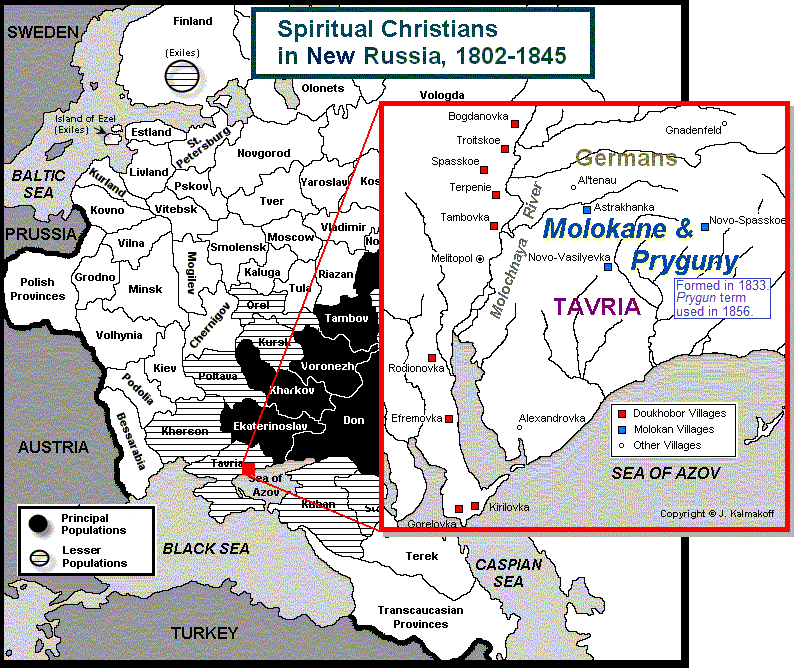
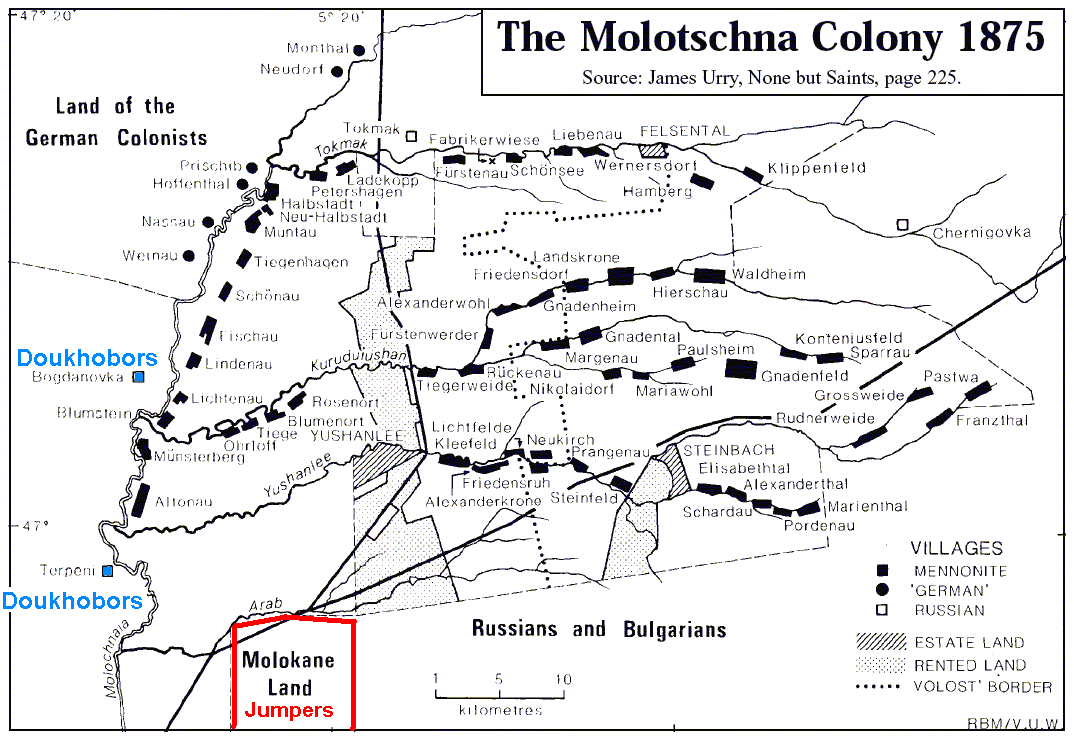
- Staples, John Roy. Cross-cultural encounters on the Ukrainian steppe: settling the Molochna basin, 1783-1861 (University of Toronto Press, Jun 20, 2003.) Pages: 37, 68, 71, 91-93, 96, 99-100, 103.
- Hoover, Peter, with Serguei V. Petrov. The Russians' Secret: What Christians Today Would Survive Persecution? (Benchmark Press, 1999) Chapters 12 and 13.
- The Dukhobortsy, 1822-1828, by Daniel Schlatter, Doukhobor Genealogy Website.
Scott
was concerned that his people, and similar groups of
the Plain
People, who dress simply "plain," may soon
disappear by assimilation. After reading Pilgrims in Rusisan-Town
(Young 1932), Scott focused on the
last paragraph, page 276: "... The old Prygun
Scott wanted to know if they vanished after 25 years, by 1960? He found Molokane.org, assumed they survived, and began the research published below. If the Pryguny survived in big American cities, he figured there was hope that Anabaptists could also survive.
Scott's research took over 2 years and involved counsel with many Dukh-i-zhizniki and Molokane. This is a well written and extensively referenced (with numbered citations) summary of the past 70 [80] years. He took great care to be accurate in his reporting and courteous during his research. I commend him for submitting drafts for proofreading which have been reviewed by members of the LA-UMCA, and many Dukh-i-zhiznik elders in Southern California. The paper is better due to their cooperation. I have enhanced it for the Internet with links and comments.
Scott was glad to conclude that Dukh-i-zhizniki (whom at that time, he and I mistakenly called Molokans) have survived after nearly a century in big American cities. His finding gave many Brethren hope for their future generations, while the LA-UMCA copied his original article for sale, with errors which are corrected here.
But facts gathered since 2007 yield a different conclusion than reported in 2002 — only the most zealous dissident minority of Dukh-i-zhizniki preserved by imposing their version of their old world rituals, by attacking the faiths of their ancestors in America and evicting what they believe to be the "unclean" heretics among them. Though a few non-Dukh-i-zhizniki have managed to marry-in and join, recruiting is forbidden except for people of affiliated faiths who convert from the Former Soviet Union. Many congregations now forbid visitors and guests, a complete reversal of their immigrant ancestors. In 2013, the Hacienda Heights UMCA board ruled that only "members of their mother churches" are allowed to enter the premises, which excludes Molokane, Pryguny, and anyone a zealot wishes to attack.
Integration with similar Dukh-i-zhiznik faiths is limited. About 50 Dukh-i-zhiznik families have been imported, sponsored from Armenia since perestroika, divided between the U.S. and Australia to supplement the vestigial Russian language, but were not fully accepted on either continent due to their different rituals and beliefs.
Tightening dogma have restricted membership so much that attendance during the most popular Passover holiday across all Dukh-i-zhiznik congregations in America and Australia is less than the number of ancestral immigrants to the USA. The residual participating attendance in year 2000 was less than 90 earlier.
The truth is, Dr. Young's prediction in 1932 was absolutely correct. The Prygun organized faith was extinguished in the U.S. by the end of the 1950s, about 25 years after her book was published.
Analysis conducted since 2007, in-progress, indicates that Dr. Young did not fully realize that in her presence Maksimisty and Klubnikinisty were dominating the Pryguny and would eventually transform all the established congregations into a new faith based on their book: Dukh i zhizn', which some believed replaced the New Testament. Their zealous persistence caused the majority of Russian sectarians in Southern California to avoid their Dukh-i-zhiznik faith by joining Protestant faiths and/or assimilating. Descendants of the Prygun immigrants only remained "plain people" if they converted to Dukh-i-zhizniki.
Young did not study the authentic Molokane in San Francisco. She mistakenly called Pryguny "Molokans" in her text 100s of times, though her title (above) and study population were clearly limited to Dukhovnie Khristian Pryguny (Spiritual Christian Jumpers). But, these Pryguny were already transformed into Dukh-i-zhizniki. Dr. Young quoted extensively, not from the Bible, but from 24 pages of the Dukh i zhizn', which is not used by the Molokan or Prygun faiths anyplace in the world, yet she erroneously reports this is a book about "Molokans."
Her 1926 masters thesis, "Social Heritages of Molokane in Los Angeles," was mostly about the new ritual book. She apparently did not realize that she was helping the Dukh-i-zhiznik transformation and camouflaging their new secret faith as "Molokan," a hijacked label.
A government report showed Dr. Young testified at least once before an immigration committee about the worthiness of Russian sectarians as citizens during a time of deportation of undesirable aliens (research in-progress). In my opinion Dr. Young with the guidance of Prygun and Maksimist elders, protected their faiths by limiting the content of her book to their nicer history, avoiding the ugly facts. For examples: the extensive court cases and international publicity about bride selling is merely somewhat mentioned on pages 144-146, missing or avoiding most of the story and its impact; and both the Hawaii and Arizona colony segments are very short with errors. The Hawaii colony was on Kapaa in 1906, not Honolulu in 1907 as briefly shown on page 259; and Arizona had 4 colonies beginning in 1911, not one beginning in 1914. Her source material is limited, largely based on personal interviews with preference for first hand data, her renown specialty, a method which neglects data-rich secondary sources, such as newspapers. Her focus on juvenile delinquency was to support her husband's research as he became an recognized expert in this new topic of national concern about all immigration groups.
Though it appears to me that Dr. Young avoided most of the ugly history, what she did report about juvenile delinquency, aversion for education, and other unflattering facts, created a huge uproar among Dukhizhiniki in Los Angeles in the 1930s that lasted for decades. Oral history reported Young was an evil Jew who took advantage of these poor peasant Russians to promote her own career at their expense, and she only told the most disgusting stories while ignoring the glorious blessings and miracles of the Holy Spirit among these chosen people of God. She inoculated the population against outside (ninash) researchers into the 2000s. Stories told by people, like my illiterate grandmother Sasha Shubin, were extremely negative into the 1960s when I arrived in Los Angeles. My uncle Dr. John ("Coe") A. Shubin, who got his Ph.D. in economics at USC, boasted to me that in the 1950s he found Dr. Young on campus giving a lecture with her husband, and he interrupted and scolded both publicly for what they did to disgrace the his people for their personal gain. I don't think my uncle John fully reviewed or understood her book or research.
Little known is that Young was working on a second book to report how the United Dukh-i-zhiznik Molokan Christian Association (UMCA) was revitalizing their Russian ethnic society by attracting their assimilated youth with new programs in English. She was going to reverse her prediction that these Dukh-i-zhizniki were doomed in the city. Unfortunately Young's papers were destroyed in a fire at the International Institute where she was working, and her sequel was never published.
From it's founding in 1926 to 1940, the LA-UMCA programs were primarily conducted in Russian. In the late 1930s, a Brethren minister Jack Green became a Bible teacher at a ghetto mission for immigrants, The House of Light, where he helped launch a club especially to serve the local ethnic Russian youth — the Young Russian Christian Association (YRCA). Many of the youth nurtured by the YRCA and college educated, revitalized the UMCA in the 1940s with English lessons, socials and sports, to the dismay of their peer Dukh-i-zhizniki (called Chuloki) who still scorn these "Jack Greeners" as their heretics. LA-UMCA revitalization progressed for more than 20 years, into the 1960s when it was halted by zealots, who completely conquered control of the UMCA by the 1980s. Many formed the men's Heritage Club which attracting most of the YRCA-ers away from the UMCA.
The most zealous persevered for 3 generations, imposing their Dukh-i-zhiznik faiths upon all residual Russian sectarians in Southern California. Those who opposed or questioned the Dukh i zhizn' either left the faiths or were expelled — yielding a retention of less than 10% of the living descendants a century later. The very popular LA-UMCA youth clubs, sports programs, Sunday School, Bible classes, fashion shows, teas, talent shows, dinners, numerous youth clubs, and Wednesday Night Church which flourished since Young's book, have all diminished in scope and scale, or vanished — a victory for the most aggressive zealots. When the LA-UMCA newsletter ceased publication about 2005, the board forbid a website, but one woman and her kids privately began to email a calendar of events and announcement to 100s, which is now their only mass communication method, besides a few websites maintained by individuals. Nothing "officially" appears in print or on the Internet, due to a mandated retreat from publicly exposing their faiths. The LA-UMCA property is now primarily used for the Dukhizhinik "Molokan Elementary School" (MES), wedding showers, some youth activity, and an annual picnic.
Those who remained among Dukh-i-zhizniki can join in their charismatic jumping and shout singing, or silently watch. In the 2000s, a century after immigration, new social-service groups have appeared among some of the assimilated to bridge the gap between America and the Dukhizhinik zealots.
Will Plain People survive into the 2000s? It depends on what you mean by survive and what kind of Plain People. How and what one chooses as a measurement of survival can be as varied as the yardstick and the person reading it. My update below projects that only the most ritualistic, conservative and isolated zealots can probably persist another century, by preserving some historic rituals, dress and beliefs with dictatorial fragmented leadership. Most descendants will continue to adapt to their surrounding society as they are now by reading this on the Internet, some using a mobile computer. The culture of Plain People can survive if it can preserve an essence of its core faith while adapting to the new world while the conservative, fundamental elders die off.
Update February 9, 2017
Spelling Dukhizhiznik(i) is corrected to Dukh-i-zhinik(i). Originally I used hyphens, then removed them to simplify the term. But, my Russian wife Tanya told me that духижизник (dukhizhiznik) in Russian can be interpreted as духи-жизник (dukhi-zhiznik) meaning "spirit/perfume life/living", and is very misleading. Therefore 2 hyphens are needed in Russian and English — дух-и-жизники, Dukh-i-zhizniki. In Russian the term does not need to be capitalized, but I do it in English to indicate they are a name, label.
The previously combined terms "diaspora Dukh-i-zhizniki" is misleading because the Dukh-i-zhiznik faiths originated in Arizona and Southern California, and with the book were transferred to Armenia, USSR, and Kars, Turkey. Therefore diaspora Dukh-i-zhiniki are all in the Former Soviet Union and Australia. But, diaspora Molokane are still in Northern California.
- In This Issue
- Our Contributors
- Contents
- The Pilgrims of Russian-Town Seventy Years Later
- The Molokans [and Pryguny]
- The [Pryguny] Molokans According to Pauline
- Major Changes in Russian-Town
- The U.M.C.A.
- [Pryguny, Dukh-i-zhizniki] Molokans and the World Wars
- How Many [Dukh-i-zhizniki and] Molokans Today?
- [Prygun and Dukh-i-zhiznik] Molokan Migrations
- Two Kinds of Molokans
[Russian Sectarians in America: Molokane, Pryguny,
Dukh-i-zhizniki, Subbotniki, Dukhobortsy]
- Factions Among the [Dukh-i-zhiznik] Jumper Molokans
- [Dukh-i-zhiznik] Molokan Organizations and Activities
- [Dukh-i-zhiznik] Molokan Worship
- Literature and Language
- [Dukh-i-zhiznik] Molokan Identity
- The Russian Language
- Contacts with the Old Country
- [Dukh-i-zhiznik] Molokan Dress
- Separation from the World
- [Dukh-i-zhiznik] Molokan Survival
- NOTES
- BIBLIOGRAPHY
- [Spiritual Christians] Molokans in Europe and Asia
- [Dukh-i-zhiznik] Molokan History, Beliefs and Practices (Dukh-i-zhiznik Molokan Authors)
- [Dukh-i-zhiznik] Molokan Devotional Literature
- Molokan Periodicals
- American [Dukh-i-zhiznik] Molokan History and Sociology (Non-[Dukh-i-zhiznik] Molokan Authors)

- Have the pious [Dukh-i-zhizniki] Molokans
been absorbed into the glitz and debauchery of city
known ‘round the world for its sinfulness?
- Have the descendants of the [Dukh-i-zhizniki] Molokans
been assimilated into the secular and religious American
mainstream?
- Do joyous, Russian psalms no longer ring
from simple [Dukh-i-zhiznik]
meeting houses in Southern California?
- Are bearded men in traditional Russian garb and women with long dresses and veiled heads no longer seen on the city streets of East Los Angeles?
In this Issue
We are happy to present in this issue Stephen Scott's fine inquiry into the state of the [Dukh-i-zhizniki] Molokans today. Old Order interest in the [Dukh-i-zhizniki] Molokan experience is well summed up in a statement of Scott on page seven — "Their experience in an urban environment is especially pertinent to many of us who have not moved to the city but have gradually had the city move to US."One hundred twenty-one years ago the Wolf Creek Old German Baptist Church was organized as a separate church from the German Baptist Brethren (known after 1908 as Church of the Brethren) [See chart]. Then, the Wolf Creek Church played a significant part in the origin of the division. From the History of the Church of the Brethren in Southern Ohio (1920) we include two portions of the book: (1) a brief history of the congregation from its start when Brethren settled the area in early 1800, (2) an account of the origin of the Old German Baptist movement; while from the Church of the Brethren point of view, nevertheless fair and somewhat complimentary. (It is our opinion that very few, perhaps only 1 percent, of Old German Baptists have access to copies of History of the Church of the Brethren of southern Ohio). Then we include an item with which we are particularly pleased: a brief account of the council just following the division at which members of the Wolf Creek church of the German Baptist Brethren (conservatives), disfellowshipped the Old Order members for their "schismatic proceedings," and a complete list of names of every member so disfellowshipped. It is our belief that this list has never been published. This item is selected from the original MINUTES of the Wolf Creek Church of the Brethren for 1881, now in the possession of the "Brethren Heritage Center" of Brookville, Ohio. The book also contains an extensive list of members of the Wolf Creek Church of the Brethren which we leave unpublished. These items are particularly significant at this time when the Brethren Heritage Center, a joint effort of individuals from the Brethren bodies interested in church history and genealogy, is making its debut, one hundred twenty-one years following the parting-of-the-ways.
We begin a two-part selection from Dr. Gary Kochheiser's Doctor of Ministry paper on nonresistance. A careful and thoughtful study of this paper will reveal the present disparate views on the subject, their origins, and how they grew.
Our Contributors
Stephen E. Scott grew up in southwestern Ohio near a large group of Old German Baptist Brethren. He attended Cedarville College and Wright State University. Stephen is author of numerous books on the Plain People:- Plain Buggies: Amish, Mennonite, and Brethren Horse-Drawn Transportation,
- Why Do They Dress That Way?,
- The Amish Wedding and Other Special Occasions of the Old Order Communities,
- Amish Houses and Barns,
- An Introduction to Old Order and Conservative Mennonite Groups and
- coauthor of Living Without Electricity.
[He is also the Administrative and Research Assistant at the Young Center for Anabaptist and Pietist Studies.]
Gary Kochhelser grew up in north central Ohio as a member of a Grace Brethren Church. He attended Grace College, Grace Theological Seminary, and Trinity Evangelical Theological Seminary. He is an ordained minister of the Fellowship of Grace Brethren Churches and has pastored FGBC churches in Cedar Rapids, IA and Longview, TX. He is the senior Bible teacher at Mansfield Christian School in Mansfield, OH. He and his wife, Carol (Weidman), live in Mansfield, OH. They have two children, both attending Grace College.
Contents
|
The Pilgrims of Russian-town Seventy Years Later Stephen Scott |
Page 7 |
| Wolf Creek, Ohio Church Minutes |
35 |
| Wolf Creek Church History History of the Church of the Brethren in Southern Ohio |
39 |
| Old German Baptist Brethren (Old
Orders) History of the Church of the Brethren in Southern Ohio |
42 |
| The Doctrine of Nonresistance Gary Kochhelser |
45 |
| Flockflood Donald F. Durnbaugh |
89 |
| Genealogy |
95 |
| Potpourri – Editors Musings
– Follow the Money – Marriages Are Not Musical
Chairs – The Imitation of Christ – The Same
John-Anabaptist History Collection Gets New Home –
Nothing Hidden, Nothing Exempt, Bittersweet Victory
(poem) |
95-110 |
| Meaning in Life |
111-112 |
The Pilgrims of Russian-town Seventy Years Later
The book, Pilgrims of Russian-Town, by Pauline V. Young tells the story of a group of Russian Christians called [Pryguny : Jumpers] Molokans from the early 1900s, when they came to America, until 1932, when the book was published. [After 1928 many American Pryguny transformed into a new Dukh-i-zhiznik faith, based on their new ritual book they call the Dukh i zhizn'.] The purpose of this article is to describe what has happened to the [Dukh-i-zhizniki] Molokans since Young's book. Because the [Dukh-i-zhizniki] Molokans might be considered the Russian equivalent of "Plain People" a study of their history is valuable to us Pennsylvania German Plain People [Pennsylvania Dutch] in seeing how they survived persecution in their homeland and how they have struggled to remain a separated people in the New World. Their experiences in an urban environment is especially pertinent to many of us who have not moved to the city but have gradually had the city move to us.
For those readers who did not follow the series,* some introduction, reiteration and clarification might be in order. The [Pryguny] Molokans trace their beginning to the religious turmoil of seventeenth century (mid-1600s) Russia, which produced many sectarian groups including a movement called "Spiritual Christians." These people rejected the formalism of the Russian Orthodox Church and all of its trappings, including icons, vestments, and elaborate rituals. A personal relationship with God was stressed without the involvement of priests. Similar to English Quakers, the Spiritual Christians saw the literal observance of baptism and communion as extraneous. Going even further, a belief developed which saw even the Bible as unnecessary for communion with God.
*[Editors note: Pauline Vislick Young's Pilgrims of Russian-Town appeared in a reprint in six installments in Old Order Notes (#18-23, 1998-2001). The 72 year old sociological treatise on the Russian [Prygun] Molokan immigrants in Los Angeles was well done. Scott says, "Pauline Vislick was born in Poland in 1896. She came to America in 1914 and was a student at the University of Chicago, 1915-1919." See news of the new book reprint.]
[Note again that the Young clearly identifies her subjects as Pryguny in the title, though she refers to them in the text 100s of times as "Molokan," a different denomination. This misnomer confused everyone ever since and has been corrected here.
Dr. Young was born in in Russian-Poland among Jews, spoke Russian and apparently identified with these immigrant Russian sectarians. She got her Ph.D. in sociology at the University of Southern California (U.S.C.), and this book was adapted from her masters and doctorate theses. Before 1914, sociology departments at U.S.C., Occidental and Pomona colleges had personal contacts with the Russian sectarians coordinated by Dr. Rev. Dana Bartlett, director of the Bethlehem Institutions, who conducted one-week joint college classes every year in the slums of Los Angeles. Bartlett believed that aspiring sociologists should know their subjects first hand, as he had been taught "in the field." Among their many field lessons was attending Prygun religious services held at the Stimson-Lafayette Industrial School.
The second edition of Young's popular textbook Scientific Social Surveys and Research (1949) included many of her original interview notes with Pryguny. Young is well-known for applying innovative data recording methods and statistics to sociology research.
Young's graduate work in the 1920s builds on the 1918 surveys by U.S.C. graduate student Lillian Sokoloff:
The Russians in Los Angeles. Sociologist Dr. Waters reports that Young’s 1932 book is the best documentation of an immigrant group he has ever found, and that it provided him with valuable data to compare Pryguny with later immigrant groups.
Dr. Robert C. Bannister, Swarthmore College, produced 2 websites summarizing Young's work history: Chronology, and Sources. This was the first of her 7 books. She also authored 15 articles, including 2 about Pryguny:
- "Family Organization of the [Pryguny] Molokans", Sociology and Social Research, Sept 1928.
- "The Russian [Pryguny] Molokan Community in Los Angeles", American Journal of Sociology, Vol. 35, No. 3. (Nov., 1929): 393-402.]
1. The
Molokans [and Pryguny]
An 18th century Spiritual Christian named Simeon Uklein
began preaching the authority of the Bible in faith and
practice. In the 1760s Uklein's followers formed a separate
group who came to be known as Molokans [Russian: Molokane] — meaning "Milk
Drinkers." They received this name from the fact that they
did not observe the Russian Orthodox fasts prohibiting the
drinking of milk. The Molokans themselves like to think of
the title as referring to "spiritual milk."
The
Spiritual
Christians from whom the Molokans divided became known as Doukhobors
or "Spirit
Wrestlers," a name given to them by a Russian bishop
who accused them of striving against the Holy Spirit. [Before these labels, both
groups were probably called iconoclasts,
ikonobortsi.]
Like the Molokans, the Doukhobors reversed the connotation
of their epithet and interpreted it to mean that they were
fighters for the Spirit. Both groups grew in number
(although the Molokans much more rapidly) and extended
beyond their central Russian homeland to southern Ukraine in
the first decade of the 19th century (1800-1810). In the
1840s the Russian government sought to isolate the Spiritual
Christians by forcefully
removing [less than
half ] them south of the Caucasus Mountains in
present Armenia, Azerbaijan, and Georgia on the Turkish
border. [Pryguny in America
claimed to have begun in 1833, but were a named heresy
about 1856.] Despite, adverse conditions, the [sectarians, mostly]
Molokans [, Pryguny, Subbotniki]
and Dukhobors prospered in their mountainous home, but at
the dawn of the twentieth century new threats motivated
large numbers of both groups to seek a new home in North
America. [Mostly the
most dissident migrated.] The Dukhobors led the way
in 1899 and [one-third]
settled on large communal tracts in Saskatchewan, Canada. In
contrast, from 1904 to 1912 several thousand [mostly Pryguny and some]
Molokans (about 1% of their number) were inspired* to relocate in Los
Angeles, California.(1) [* Though some were "inspired" by prophecy to follow the Doukhobors to Canada, many factors influenced the migration of each person and family. See a comprehensive list comparing reasons why so many stayed while a only few left.]
2. The [Pryguny] Molokans According to Pauline Young
In her 1932 book Pauline Young describes how the [Pryguny] Molokans were utterly devastated by their comparatively brief exposure to urban America. These Russian peasants are shown to have been largely overcome by the forces of American culture and their battle to survive as a separate religious group was deemed futile. In the closing pages of her book Young mentions a few encouraging signs. The rate of delinquency had declined considerably in 1931 and she states, "At times there are evidences of a true cultural revival which seems destined to sweep the ranks of the youth …" But on the downside she concludes, "… but again new defections occur with such rapidity that it is increasingly apparent that in the end sectarianism is not wholly able to resist the insidious penetrating corrosives of urban life.”(2) And her final statement, "… the present trends indicate that the city life eventually fuses even the most refractory sectarian material."(3)The readers might wonder what actually happened to the [Pryguny] Molokans in the seventy years that have transpired since the Pilgrims of Russian-Town appeared in print. At that time the [Pryguny] Molokans had only been in America for about 25 years. So what became of the children, grandchildren, and even great grandchildren of the Pilgrims of Russian-Town? Have Pauline Young's doleful predictions come true? Have the pious [Pryguny] Molokans been absorbed into the glitz and debauchery of a city known round the world for its sinfulness? Have the descendants of the [Pryguny] Molokans been assimilated into the secular and religious American mainstream? Do joyous, Russian psalms no longer ring from simple meeting houses in southern California? Are bearded men in traditional Russian garb and women with long dresses and veiled heads no longer seen on the city streets of East Los Angeles? The answers to these questions may surprise you.
Young estimated that about 5,600 [Pryguny] Molokans lived in Los Angeles in 1932. She counted six congregations with 100-150 families in each.(4) One can assume that the great majority of the [Pryguny] Molokans Young interviewed are no longer on the scene. It is doubtful if more than a handful of the Russian-born [Pryguny] Molokans Young encountered could be among the living, and the troubled youth she described would now be well beyond the allotted three score and ten [70] years of age. Nearly a century after the [Pryguny] Molokans arrived in the hostile wilds of urban Los Angeles, could there possibly be any survivors?
3. Major Changes in Russian-Town
Several significant events in the [Dukh-i-zhiznik] Molokan community occurred immediately after Pauline Young wrote Pilgrims of Russian-Town. The same year the book was published, 1932, Philip Mikhailovich Shubin passed away at age 77. He was [one of] the respected elder[s] who had been instrumental in bringing his people to America, helped them adjust to the American scene, provided wise counsel during the First World War and stable leadership through the stormy 20's.(5) This is the stately looking white bearded man whose picture appears in the front of Young's book.Also, in the summer of this same year of 1932, three Los Angeles [Dukh-i-zhiznik] Molokan congregations decided to merge in an effort to remedy leadership and church government problems. The Selimskaia, Karmolinovskaia, and the Ol'shanskaia [congregations] churches, whose membership totaled over 500 families, purchased a property on East Third Street and built a large structure which became known as the "Big Church," but officially it was the First United Christian Molokan Church [of Spiritual Jumpers]. On Sunday, February 26, 1933, the members of the three congregations ceremoniously left their old meeting places and marched through the streets to a joyous meeting at their new [assembly hall]
Not all [Dukh-i-zhizniki] Molokans were enthused about the merger, however. A minority of members among the three L.A. [congregations] churches who did not take part in the merger were strongly critical of the move.(7) Prophet Ivan Sussoyeff predicted that the Big Church would some day abandon important principals of the [Dukh-i-zhiznik] Molokan faith and others made unfavorable prophecies concerning the new congregation.(8) When the bylaws of the United Church were revealed during the dedication ceremony, the prophecies seemed to be fulfilled in the minds of some people. Departing from [Dukh-i-zhiznik] Molokan tradition, the affairs of the [congregation] church were to be governed by several committees including one called the Dukhovny Komitet (Spiritual Committee) which was to look after spiritual matters, including the disorderly members [, the most zealous Maksimisty]. In this arrangement the presbyters and elders would be under the authority of the younger members of the Komitet. Also, the chief speaker was now to be elected for a term of one year instead of being chosen by the presbyters as the need arose. These changes were instituted to eliminate the dissension and bitter debates which had long distressed the [Pryguny] Molokans, and free the presbyters for their more important spiritual duties.(9) Those who opposed the changes in [congregational] church government cut off fellowship with the Big Church and those who sympathized stayed with it.(10)
[If the UMCA and "Big Church" would have officially united to maintain their core Prygun faiths and rejected the new Dukh-i-zhiznik faith, instead of trying to compromise with it, the history of these conflicting religious families would be drastically different today. I think that the American Pryguny would have maintained their growth curve beyond the 1960s, and with a professional staff have further flourished, integrating English in services and adapting technology. In contrast, the Dukh-i-zhizniki would maintain their separate affiliated congregations, with varying degrees of reprimand for members who stray among the Pryguny.
A revealing testimony of how Dukh-i-zhizniki abuse Pryguny was documented in "Breaking the Silence: An Experience I Lived Through When I attended Big Church", in The Memoirs of Paul John Orloff, 2008, pages 417-474. Orloff details a series of abusive incidents by Big Church leaders from 1957 to 1999. Significant in the evolution of Dukh-i-zhizniki in America is his detailed report that in 1962 Orloff was falsely accused of attending the Persian Prygun sobranie (Kern Ave.) holiday, the Birth of Christ, "Christmas worship", when he was actually at another congregation 200 miles away near Porterville. He was verbally abused and excommunicated from his congregation. This and other harassments, caused him to not attend his family's congregation after September 14, 1965. Up to his Memoirs publication in 2008, Big Church officials insisted that Orloff apologize for something he never did and proved he never did.
The irony is that many Big Church members and others of duo-faith have Christmas trees in their homes, which Orloff never did, and regularly attend and are members of other faiths, with no repercussions by their Dukh-i-zhiznik congregations. No one has explained if Orloff was singled out for some other reason.
Orloff then explains that due to discrimination of his kids at his new Samarin sobranie (Akhtinski, Percy street) in the 1980s, he built a new prayer house in La Puente, named "Dom Malitvee" (house of prayer), with an open door policy to serve any Dukh-i-zhiznik descendants, many of whom are ignored or marginalized by other congregations, some for not being "paid members."
Berokoff reports about this holiday deviation dispute in Chapter 8, page 147. Berokoff falsely reported that Jumpers abandoned those holidays 100 years ago because he did not fully understand the 3 different faiths.
So many members were disgusted with Big Church in the 1960s that one group split off to form a new congregation in Monterey Park (Hill Top, Coyote Canyon sobranie, Bill Babishoff, presbyter). In the 1990s Babishoff compiled and published four instructional manuals explaining the Dukh-i-zhiznik rituals in English and Russian, which were not accepted by all congregations.]
4. The U.M.C.A.
Pauline Young mentions the formation of an organization to nurture [Prygun] Molokan youth in the faith and life of their people and provide alternate activities to those of the secular, sinful society and Baptist proselytizers. This was the United Molokan Christian Association, [a misnomer] which was begun by a group of nine men in 1926.(11) The organization started in a vacant store, but by 1928 rapid growth necessitated moving to a remodeled house made to accommodate 300 children.(12) At this time a charter for the organization was obtained from the state of California.(13) In 1934 a Ladies Auxiliary was organized which was responsible for carrying out a large part of the work of the U.M.C.A.(14) Every Sunday children were taught traditional [Prygun] Molokan songs and lessons in both Russian and English. On Wednesday evenings there were meetings geared to teach teenagers [Prygun] Molokan traditions and beliefs and provide a place for them to meet and socialize. These were not regular [worship] church meetings, but many of the elders of the church did attend and support the program.[Originally Sunday School was taught in Russian. During W.W. II, in the 1940s, the U.M.C.A. president, John Samarin, whose son Bill, had just graduated from the free Bible Institute of Los Angeles (B.I.O.L.A.), invited son Bill with Bill's best friend and B.I.O.L.A. class mate, Alex Patapoff, to organize Sunday School classes in English. The boys did, and the U.M.C.A. staff and attendance grew. When Bill chose to join the Brethren Church in Torrance and was sponsored to be a missionary in Central Africa, Al Patapoff became the lead U.M.C.A. teacher, through the early 1960s. Because Patapoff was a long-time active member of the Young Russian Christians Association (Y.R.C.A.), did not speak Russian, nor did his staff teach Dukh-i-zhinik rituals, the U.M.C.A. was scorned by zealots.]
There were conservative [Maksimisty] Molokans, however, who objected to certain aspects of the U.M.C.A. including the fact that children were not taught to kneel for prayer nor that jumping in the spirit was an important part of worship. [See: Berokoff ] Some also were critical of the fact that the organization obtained a charter from the state and was governed by a committee of men who were not leaders in the [Prygun] Molokan [society] church. Some didn't like the neon sign on the building that reminded them of a bar. As an alternative to the U.M.C.A., some of the conservatives started traditionally conducted midweek and Sunday afternoon church services and singing classes in the homes of the members. All of these efforts [by the U.M.C.A.] to instruct the youth in the ways of [their Americanized culture] the church and provide wholesome activities for them did result in marked decrease in juvenile delinquency.(15)
5. [Pryguny, Dukh-i-zhizniki] Molokans and the World Wars
During World War I the [Prygun] Molokan leadership made special effort to establish their denomination as a peace church with the U.S. government. The great majority of [Prygun] Molokan young men registered for the draft declaring themselves conscientious objectors, but actually escaped conscription by reason of their classification as resident aliens.(16) [34 men in Arizona went to jail for not registering and were released after 10 months if they 'signed out." 6 refused to sign out, and were turned over to the Army as insubordinate soldiers.] Six men from Arizona, did receive severe treatment and imprisonment for their refusal to register or cooperate with the military in any way.(17) By the time of World War II the conviction for joining the military had apparently weakened considerably. Little or no emphasis was placed on teaching the youth the ways of peace and nonresistance in the efforts of the U.M.C.A. and other youth programs.(18) Many [Pryguny] Molokans had not expected that there would be another war in which their young men would be called to serve. Additionally, many assumed that since the [Pryguny] Molokans had been recognized as conscientious objectors in World War I there would be no need to reestablish that status. Of course, that was not the case. Ivan Samarin, who had composed a petition to President Wilson in 1917 [in which all signed as Pryguny], now wrote a similar petition to President Roosevelt asking for exemption from the military for the [Dukh-i-zhizniki] Molokans.(19) A delegation of three men traveled to Washington in October 1940 to present their concerns to the government. A [Dukh-i-zhiznik] Molokan Advisory Council was organized very late in 1940 to deal with the government in regard to conscientious objectors.(20) This organization [partially] worked with other peace churches in the National Service Board.(21) The [Dukh-i-zhiznik] Molokan Advisory Council [demanded a work camp separate from the]After World War II an even smaller percentage of [Dukh-i-zhiznik] Molokan young men registered as conscientious objectors. From 1952 to 1964 sixteen [Dukh-i-zhizniki]
6. How Many [Dukh-i-zhizniki and] Molokans Today?
It is estimated that there are over 20,000 people descended from the 3,000 [Pryguny and] Molokans who arrived in the United States in the early 1900s and an additional 500 who arrived from Iran in the 1940s and 1950s. [This number is higher if all descendants of Spiritual Christians from Russia can be counted.] This sounds encouraging enough, however this number does not represent active congregationAbout 60% of all active [Dukh-i-zhizniki] Molokans in America still live in the Los Angeles area(34) although there has been a gradual move eastward within the metropolitan area.(35) There are ten [Dukh-i-zhiznik] Molokan congregations in and around Los Angeles. Five of the ten L.A. [Dukh-i-zhizniki] Molokans [congregations] churches date back to the early 1900s, and three were [splits]
[In 2016, the "Persian" congregation was coerced to close, because it was the last to remain in East Los Angeles among the Mexicans. Its members were told they had to join one of the "established" Dukh-i-zhiznik congregations if they wanted to continue in the "brotherhood."]
7. [Prygun and Dukh-i-zhiznik] Molokan Migrations
Young describes various efforts of the [Pryguny] Molokans to move to friendlier surroundings outside of Los Angeles.(40) Most of these early ventures in relocating failed, but there have been several successful [Prygun and] Molokan [rural] communities established in California and beyond. The inspiration to flee to a far off land of refuge, — pakhod in Russian — has been a recurrent theme in [Dukh-i-zhiznik] Molokan history. A pakhod [, according to some oral histories,] brought the [Spiritual Christians][* Wrong. The goal by zealots before arrival for many was never to live in a city, but in an agricultural commune, and return to Mt. Ararat or Russia. Mexico was the most successful and first communal venture, but they never adopted a Dukh-i-zhinik faith. A smaller commune in Arizona failed after 2 years. Many hoped to get rich quick and return home to Russia.]
One of the most recent instances of pakhod occurred in 1963 when a prophecy originating in the Arizona [Dukh-i-zhiznik] Molokan community inspired eight families to [flee from a possible nuclear holocaust the North Hemisphere and] seek a better life in [the Southern Hemisphere, where they chose] Australia.(42) More [Dukh-i-zhizniki] Molokans followed, and eventually five congregations in South Australia and two congregations in West Australia were established which have a total current memberships of over 100.(43) There were repeated efforts to settle in South America beginning in 1947(44) and a few families did migrate to Brazil in the early 1970s but [these]
[The 1970s Brazil pakhod, incorporated as the Dukh-i-zhiznik "
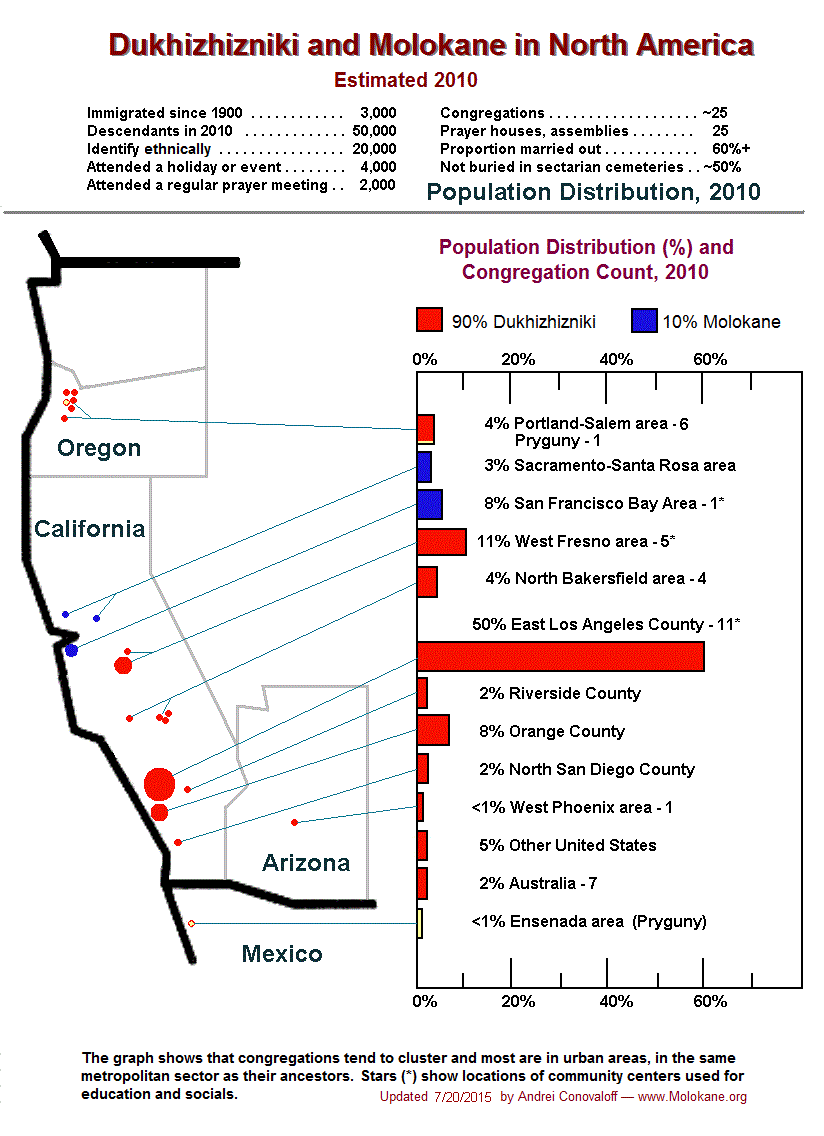 Most
[Dukh-i-zhiznik] Molokan
movement has been within the state of California. The most
successful [Dukh-i-zhiznik] Molokan
community outside of Los Angeles is located at Kerman, west
of Fresno, where there are four congregations with a total
of approximately 200 active members, an elementary school,
and a United [Dukh-i-zhiznik] Molokan
Christian Association here. This settlement began in 1915 as
an agricultural community concentrating on grape production.(46) Pauline Young seems to have overlooked
this community mentioning it very briefly in a footnote
indicating that [Pryguny]
Most
[Dukh-i-zhiznik] Molokan
movement has been within the state of California. The most
successful [Dukh-i-zhiznik] Molokan
community outside of Los Angeles is located at Kerman, west
of Fresno, where there are four congregations with a total
of approximately 200 active members, an elementary school,
and a United [Dukh-i-zhiznik] Molokan
Christian Association here. This settlement began in 1915 as
an agricultural community concentrating on grape production.(46) Pauline Young seems to have overlooked
this community mentioning it very briefly in a footnote
indicating that [Pryguny] Outside of California, a small [Dukh-i-zhiznik] congregation in Glendale, Arizona, has survived many troublesome times since it was founded in 1911. A small community of [Dukh-i-zhizniki] Molokans had existed in Oregon since the [1910s]
There are also Molokan congregations in San Francisco and Sheridan, California, which belong to a separate [faith]
[Upon immigration, the Pryguny in California appear have been be divided by divergent leaders who clashed on goals. Some believed America was a temporary stop to earn money to take back to Russia, some were set on retuning back to Mount Ararat for the "second coming" of Christ and Maksim Rudomyotkin. Others wanted all to live in harmony in an isolated religious agricultural colony — a New Jerusalem, but could never arrange that one location. Though Mexico was the largest colony, a major group moved to Arizona within 10 years, followed by more in the 1930s. Many ag-colonizations failed due to zealous religious leaders mis-led by ambitious land agents, who had been selling "The Promised Land" to religious immigrants for a century in the American West. By 1945, three attempts to return to Russia (1926) or Turkey (1939, 1945) failed, most boys enlisted in the military, and a "kingdom in the city" became their norm.
After W.W.II the restorationist movement in the city was dominated by increased zealotry, out-casting Americanized members, condemning the U.M.C.A. ("the devil dances on the roof") and Y.R.C.A., appearance (dress, beards, jumping, etc.). The paradigm shifted from pakhod location to wealth accumulation and prestol prominence. If a family looked and acted the role, frequented the right events, and looked wealthy, they became important, urban or rural. The farmers insulted the city dwellers, especially independent rubbish men for working in filth. The successful business man in the city could snub the farmer for not being blessed with material wealth.]
8. Two Kinds of Molokans [Russian Sectarians in America: Molokane, Pryguny Dukh-i-zhizniki, Subbotniki, Dukhobortsy]
The Molokans [Spiritual Christians from Russia who migrated to North] in America represent two major divisions. The rift occurred in 1833 in the Ukraine near the Black Sea. Those who believed in visible manifestations of the Holy Spirit became known as Pryguny or "Jumpers" because of the ecstatic jumping occurring in their worship. Those who did not recognize this new practice were the [original Molokane] "Constants" or Postoyannye (also called Steadfast or Steady). While the [Pryguny]According to Jumper sources, the Russian government sided with the Constants [Molokane] while the [Pryguny]
A primary difference
| /—————————— Prygun Holidays
——————————\ |
|
| Dukh-i-zhiznik
Jumper
Molokan
Holidays |
Constant
Molokan Holidays57 |
|
|
Along with the observance of Old Testament holidays, the [Dukh-i-zhizniki] Jumper Molokans have practiced [a few] Jewish dietary laws. Although never adhering to the full extent of kosher rules, the most devoted followers of Maksim [Rudomyotkin]
Many Molokans regard the [Molokane and Dukh-i-zhizniki] Postoyannye-Constants and the Pryguny-Jumpers as two distinctly different sects. The [Molokane] Constants consider the [Dukh-i-zhizniki] Jumpers excessive in their emotional displays and the [Dukh-i-zhizniki] Jumpers feel that the [Molokane] Constants hold back the [ecstatic] moving of the Holy Spirit.(59) There is also a difference in the singing practices of the two groups. In their regular worship services [Molokane] Constant Molokans sing only verses (stikhi) based on Russian Old and New Testament scriptures. The [Dukh-i-zhizniki] Jumper Molokans also sing stikhi from The Book of Spirit and Life. A second class of songs called dukhovnye pesni (spiritual songs) are used in some parts of [Dukh-i-zhiznik] Jumper Molokan worship, but are considered less solemn. This type of song is only used for non-worship occasions by the [Molokane] Constant Molokans, including memorials for the dead and wedding showers.(60) Despite the differences between the [Molokane and Dukh-i-zhizniki] Constant and Jumper Molokans there is some visiting between the two groups and even intermarriage.(61) [The sects never hold communion together. Sometimes a member of one sect will be respected as a guest, often not. Familiar to Brethren are severe splits among factions of Dukh-i-zhizniki, which treat each other as different sub-sects, "disfellowshiped."]
A relatively small number of [Molokane] Constant-Postoyannye Molokans came to America. Their center of concentration has always been in [the] San Francisco [Bay Area] where they first settled in 1906 immediately following the great earthquake [on their way back from Hawaii].(62) By 1912 an estimated 1,000 Molokans lived in the Bay area.(63) A [prayer hall] church was built in the Potrero Hill area in 1929, where it remains to this day with the distinction of having the largest consistent attendance (60-75 each Sunday) of any Molokan congregation in America.(64) The majority of Molokans have moved further south [and east] away from the urban center into [suburban]
There was also a [Holy] Jumper Molokan [meeting house] church in San Francisco until the 1950s when the few remaining members joined the [Molokan] Constant congregation.(66) [This Prygun congregation did not accept the Dukh i zhizn'.]
In the [1910s]
In addition to the various [Dukh-i-zhizniki] Pryguny-Jumper Molokan congregations there was a Subbotnik congregation in Los Angeles for many years. This group, which [was]
[Also many Doukhobors (Dukhobortsy) lived in California who affiliated with Molokane and Pryguny before 1930, and later occasionally with Dukh-i-zhizniki. A few intermarried. After 1980, Dukh-i-zhizniki officially shun the Doukhobors.]
9. Factions Among the [Dukh-i-zhizniki] Jumper Molokans
There is no religious hierarchy or wider ecclesiastical organization beyond the congregational level among [Dukh-i-zhizniki] Molokans. Each [Dukh-i-zhiznik assembly hall] Molokan church is independent,(69) but there is a tendency for congregations of like faith and practice to associate more with each other than [with] those [congregations] churches which are not as similar. This is a situation similar to other Christian groups who avoid an ecclesiastical structure, such as independent Baptists, "Plymouth" Brethren, Churches of Christ, and the Amish.Among the [Dukh-i-zhizniki] Pryguny-Jumper Molokans at least four rather indistinct subgroups have been identified, based on the one hand on the extent to which a [congregation] church supports the U.M.C.A. and the Komitet and on the other hand the degree of acceptance of the Spirit and Life book. On one extreme is the Re-Formed [Dukh-i-zhiznik congregation] Molokan Church in Oregon [, which reverted back to a restored Prygun faith,] and a recently organized [illegal] congregation in Arizona [who stole property] have sometimes been classed by [themselves] as [Molokans] Constants even though they are of [Dukh-i-zhizniki] Jumper background [and do not practice any form of Molokan worship, prayer or singing]. Then on the other end of the spectrum are those who are the most zealous in defending the teachings of Maksim [Rudomyotkin]
[Though Scott describes 2 poles on a one-dimension continuum, these 2 poles can be diagrammed in a 2-dimensional space for classification of the Dukh-i-zhiznik congregations in Los Angeles, as approximated below.
- Acceptance of UMCA and komitet.
- Acceptance and use of the Book of the Sun, Spirit and Life — Dukhizhizn'
New Zion, New Israel, Maksimisty
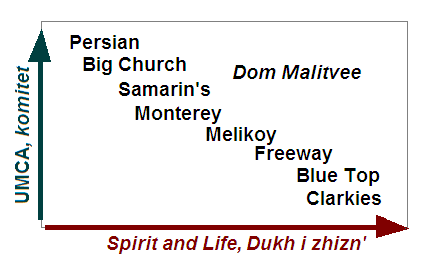
These relative positions have changed over the years and are not static due to many factors, external and internal. External, like LA-UMCA control shifting to Dukh-i-zhizniki. Internal, like dying elders replaced by people with different traits, and members changing congregations (inside or outside the faiths). External factors not discussed include affiliation with outsiders, like Doukhobors and Quakers, which diminished after WWII when COs were given positions at the table (prestol).
Two more dimensions could be used — (3) English and (4) communal cemetery — to create a 4-dimensional space. Other factors not mentioned which correlate with degree of use of the Dukh i zhizn' are amount of jumping and prophecy, personal appearance (hair styles, dress), home layout (Russian items), white handkerchief used to collect money on table, and eating communal.
After 2002, it was learned that the rouge Cowboys in Arizona are an illegal group who forged government documents, falsified notarizations, stole $911 from the bank, and are fully supported by the Re-Formed. Bill M. Shubin, Fresno CA, travels to Arizona every year and coaches them; and Bill and Kathleen Baghdanov traveled from Washington state several times to testify in Arizona courts for them, and to help steal money from the blind presbyter. Most of this phoney board operates like a gang on paper, rarely attending their own Sunday gathering and never participating with Dukh-i-zhiznik congregations in California or Oregon. They never joined in services of Arizona funerals with visiting Dukh-i-zhizniki and prevented the actual members from using their own assembly since 2002. As of 2013 they have not been arrested, yet managed to illegally control property by changing locks, lying to police and in court, while they took several million dollars in cash and fooled the LA-UMCA directory to list them as a "church."]
There have always been in-group disputes among the [Dukh-i-zhizniki] Molokans and individual congregations have distinctive beliefs and practices. Some of the differences probably come from the fact that [Dukh-i-zhizniki] Molokans came to California from widely separated communities and brought with them long established traditions and customs that were unique to their former homeland. In the early 1940s another kind of division developed from a revival that broke out in the New Romanofsky [congregation] Church in Los Angeles (nicknamed Chulok — literally "sock" for uncertain reasons*). The young people involved in the ecstasy of the revival also became zealous in keeping the [Maksimisti] Molokan-Jumper traditions and rituals. Eventually, they became the ultraconservatives elders of the group.(74) The center of the ultra conservative minority shifted to the Old [Dukh-i-zhiznik] Molokan Spiritual [congregation] Church on Clark Avenue in Los Angeles which, with the 605 North Church in Oregon, do not fellowship with other [Dukh-i-zhizniki] Molokans. These are the "New Zioners" referred to above.(75) [These nick-named "Clarkies" opened their doors to all Dukh-i-zhizniki after a decade of prayer and cleansing, but were not accepted by all in return. They also registered their own cemeteries, one each in Southern California and Central Oregon.]
* According to Wm. Wm. Prohoroff (-2016), one fellow on his knees in molodoi sobranie (youth meeting) for a prayer na krug (in the circle), reached into his pocket for a handkerchief, used to place across his face while kneeling to the floor, pulled out a chulok (gym sock).There was a revival of interest and zeal for Maksim [Rudomyotkin's]
In the 1980s the Re-Formed [Dukh-i-zhiznik] Christian Molokan Church was established in Oregon. This small group was intent to preserve their biblical [Dukh-i-zhiznik] Molokan heritage, but at the same time correct what they considered to be un-biblical doctrines and practices. One of the greatest changes was to conduct all their worship services in the English language. In 1987 an official newsletter was begun: The Christian Molokan “Besednyik." Although the Re-Formed [Dukh-i-zhizniki] Molokans are of [Dukh-i-zhiznik] Jumper background, they are now more like the [Pryguny] Constants in their rejection of many of the innovations instigated by Maksim [Rudomyotkin]
[In San Francisco, the dwindling "Holy Jumper" Pryguny merged with the Molokan congregation in the 1960s when their privately owned prayer house was foreclosed from the descendants of the man that loaned it. One Molokan who worked with the city noticed the property was up for auction and bought it for his own profit. The local Molokan and Prygun youth were outraged that he did not offer it for a community historical museum site.
About 1950, after all other Prygun congregations the US. were converted to Dukh-i-zhiznik, a Prygun congregation immigrated from Iran, the "Persians" led by presviter Ivan L. Lediaev. The "Persian" congregation was shunned by American Dukh-i-zhizniki for being immigrants and celebrating Prygun holidays, coercing Lediaev to move to Australia, and the remaining congregants to convert to Dukh-i-zhizniki — "fall in line" or be shunned or excommunicated. For most of 50 years the established Dukh-i-zhiznik congregations were reluctant to attend services at the Persian assembly, then realized they kicked out so many people that they had better support the few remaining who are trying to conform.
In 2016, the "Persian" congregation was coerced to close, because it was the last to remain in East Los Angeles among the Mexicans. Its members were told they had to join one of the "established" Dukh-i-zhiznik congregations if they wanted to continue as Dukh-i-zhizniki.
Berokoff reports about this holiday deviation dispute in Chapter 8, page 147. Berokoff falsely reported that Pryguny abandoned those holidays 100 years ago, because he did not realize there were at least 3 different faiths.
In the 1980s, Vasili Sissoyev, assistant presbyter of the "Persian" congregation, who himself was raised in the Prygun faith and first met Dukh-i-zhizniki in the US, called the last-known meeting of all presbyters in Southern California (up to 2013). He hoped to address several topics, including educating them about their roots as Pryguny and the liturgy they discarded by obeying MGR and the Dukh i zhizn'. During the meeting, the most zealous and vocal could not remain civil, became agitated and confused about his message, and ended the meeting by accusing him of heresy for telling them they should "celebrate Christmas," even though that was not his intent or broad message. Oral history about this meeting was never accurate. Taxonomy of 3 Spiritual Christian Groups expounds upon and greatly expands in detail the message that Sissoyev tried to deliver. A major contributing factor to the incivility of zealots is their heritage of shunning education.]
10. [Dukh-i-zhiznik] Organizations and Activities
The United [Dukh-i-zhiznik] Molokan Christian Association is still going after seventy-five years of existence. The U.M.C.A. moved into temporary quarters in facilities of the First United Christian Molokan Church of Holy Jumpers in 1946 then to a new large building on Gage Street in 1954. It was here that the attendance at group sponsored activities peaked to over 600 in the 1960s [due to former members of the Y.R.C.A. and B.I.O.L.A. graduates]. Eventually, however, the atmosphere of the neighborhood changed until it was no longer considered safe for youth to attend evening events.* A property was purchased much further east in Hacienda Heights in [1980-] 1982 where the U.M.C.A. is located at present.(79)[* The Mexicans lived in relative peace with the Russians for more than half a century, until a Dukh-i-zhiznik- racing car severely injured a Mexican boy at the U.M.C.A. Gave Ave. gate. The Dukh-i-zhizniki offered no apology, compensation or effort to investigate their crime. More...]In addition to the, original Sunday School, youth activities, and Wednesday night church services, there are Tuesday night adult Bible classes, Tuesday night ladies Spevka (singing practice), vacation Bible school and various seminars. [Wedding*]
[* Bride and groom attend. By year 2000, zealots began to pressure engaged couples to hold their chay zapivats ("drinking tea", endangerment, shower) in their respective meeting halls. A "chay" held at the optional U.M.C.A. became spiritually shunned.]In the 1960s an organization within the U.M.C.A., the Molokan Youth Parent Teachers Association (M.Y.P.T.A.), energetically promoted a host of activities and boosted Sunday School attendance dramatically. When the U.M.C.A. relocated further east in the 1980s to a safer neighborhood the attendance dropped drastically due to the distance from the [Dukh-i-zhiznik assembly halls] Molokan churches and the [dominant] general dispersal of [Dukh-i-zhizniki] the Molokan population.(81) [The M.Y.P.T.A. was mostly created by former members of the Y.R.C.A., hated by zealous Dukh-i-zhizniki, unless they are rich and offer well-paid work and/or donations.]
One of the currently most active facets of the U.M.C.A. is the [Dukh-i-zhiznik] Molokan Elementary School, begun in 1987 with a preschool program and expanded every year until seventh grade was added in 1993-94.(82) The school currently offers classes from pre-Kindergarten to sixth grade.(83) The enrollment in 2001 was 87, and 248 other students had attended the school since it began, including some from Oregon, Australia, and Russia.(84) The aim of the school is to provide high quality, affordable education with emphasis on [Dukh-i-zhiznik] Molokan traditions and religious practices including fluency in the Russian language. [By 2013, attendance was about 60.]
The U.M.C.A. Library and Heritage Room [, founded by Kathrine Abakumoff,] has been part of the organization since 1955. "Articles of historical significance and interest to the [Dukh-i-zhiznik] Molokan community" are housed here, including Bibles and historical books and papers, genealogical documents, recordings of singing, antique clothing and personal heirlooms. A sales area makes available a variety of books, recordings, crafts, gifts and traditional clothing.(85) [In June 2013 the UMCA board ruled that only Dukh-i-zhizniki members of "our mother churches" can enter their grounds, but few social-police enforce the orders, especially during the annual fund-raising picnic.]
The official publication of the LA-U.M.C.A. is a monthly periodical called The [Dukh-i-zhiznik] Molokan, which began publication in a very small way probably in the [1940s at the 3-Rivers CO camp] 1950s.(86) A variety of articles, announcements, and advertisements now appear in the magazine, including spiritual articles; the dates of [Dukh-i-zhiznik] Molokan holidays; a Russian vocabulary page, calendars of events; [[Dukh-i-zhiznik] Molokan Library reports; pictorial articles on community events such as benefit dinners, the annual picnic and youth basketball and volleyball games.(87) There was a children's feature with cartoons called "Billy Boarch [, a misspelling of Borshch (soup) ], The Making of a Super [Dukh-i-zhiznik] Molokan ."(88) The current regular children's page featuring puzzles, quizzes and projects is called "Molokids."
The U.M.C.A. now publishes The Russian [Dukh-i-zhiznik] Molokan Directory which began in 1952 as an individual effort to help [Dukh-i-zhizniki] Molokans stay connected who had moved from the old Los Angeles neighborhood. (Several individual [Dukh-i-zhizniki] Molokans had been responsible for this publication in the past). The names, addresses and phone numbers of people active in the [Dukh-i-zhiznik congregations] Molokan churches appear in this irregularly produced volume, as well as listings of [assemblies] churches, organizations, and advertisements from [Dukh-i-zhiznik] Molokan business's.(89)
The Heritage Club, which describes itself as the "Association of [Dukh-i-zhiznik] Molokan Businessmen and Professionals Dedicated to Service and Advancement of the [Dukh-i-zhiznik] Molokan Community," was established in 1979 primarily to award college scholarships for worthy [Dukh-i-zhiznik] Molokan youth, but also contributes to various [Dukh-i-zhiznik] Molokan institutions and programs. The Heritage News, the official publication of the organization, publishes an annual "Scholarship Edition" with profiles of students receiving scholarships. The Heritage Foundation was established in 1996 to provide funding for these projects. One of the recipients of Heritage Club support is the [Dukh-i-zhiznik] Molokan Residence Center, a home for the elderly opened in 1981 in the heart of the [Dukh-i-zhiznik] Molokan community in East Los Angeles.(90)
[The Residence Center was never fully supported by the Dukh-i-zhiznik congregations as they had initially promised. The Los Angeles congregations agreed to rotate holding services there which rarely happened after the grand opening when most attended.
Though their kids took the scholarships, Dukh-i-zhizniki shunned the liberal intermarried Heritage Club (HC) members, whom they often condemned as Jack Greeners. HC involvement with the The Resident Center may have contributed to it's failure, causing Dukh-i-zhiznik families to shun it.
In 1960s much care was taken to best locate The Resident Center in Boyle Heights close to the elderly population, their assemblies and Klubnikin's Market. After construction, the location became a major liability because the majority of Dukh-i-zhizniki, who no longer lived in their ethnic enclave — Flats, Karakala, Boyle Heights, East LA — and were not involved with the planning, feared the location. It was often said that the planners were stupid for putting it in an undesirable "Mexican" neighborhood. "Why didn't they put it in a nice area like where I live?" The 98-bed facility never averaged above about 20% occupancy, failed financially, and was quietly sold in 2005. The funds remain dormant in a Resident Center Trust.

The "Heritage Club Newsletter" was published by me (Andrei Conovaloff) for the first 5 years (1980-1985) with a peak distribution of 4,500 using my 1980 Directory mailing list updated annually. Without explanation, the HC ceased funding my publishing, and circulation was cut by 85% in 1985. Years later I learned it was due to wealthy businessmen in fear of being associated with satanic ritual abuse of kids in local news. Their newsletter circulation was cut to about 700-1000 for decades.]
11. [Dukh-i-zhiznik] Molokan Worship
[Dukh-i-zhizniki] Molokans refer to their congregations as sobranie (plural: sobraniya), which is a Russian word for gathering [meeting, assembly]. The meeting places are very simple structures since the [Dukh-i-zhizniki] Molokans believe that "the people are the church not the building."(91) [In contrast, the] The Constant Molokan [prayer halls] church buildings are identified with signs, but only one [Dukh-i-zhiznik] Jumper Molokan meeting place is so marked. Prayer meetings are often held in the homes of the members. [By 2013, in their new locations in Whittier, only the Melikoy sobranie posted a camouflaged sign: First Prochladnoye Molokan Christian Church of Whittier. The only other sign in southern California is at the new Armenian Dukh-i-zhiznik sobranie.]The [Dukh-i-zhizniki] Jumper Molokans rely on the inspiration of the Holy Spirit in the selection of officials. When a need is felt to fill a position in the leadership[,] of the church the members of the congregation wait for a sign to indicate who the right person is. The prophets play an important, but not always exclusive role in this selection.(92) The qualifications for ministry are "age, experience, efficiency, religious inspiration, and virtue."(93)
[In 2013, the successor presviter for Buchneff-Siskiyou Ave sobranie Kerman was selected from 2 volunteers who auditioned. Because complaints were made that the winner of the audition (Ledieav) was not a believer in the Dukh i zhin', the runner-up (John Gregoroff) was appointed presviter, and the winner moved to assistant (pomoshnik presviter). In the Former Soviet Union, this "assistant" position is called zamestitel' (заместитель : deputy, alternate). The most qualified member (Tim Bogdanov) did not audition, saying to me that he did not want the position, contrary to rumors that he did but was not asked.]
The following is a detailed description of a [American Dukh-i-zhiznik] Molokan (Jumper) worship service condensed from The Origins of [Dukh-i-zhiznik] Molokan Singing by Dr. Linda O'Brien-Rothe.
| Upon arrival at the [assembly hall]
church
for service, members typically wait outside until a
small group gathers. By custom, a woman must be
escorted in by a male. When the group decides to
enter, the men precede women, with the eldest male
or a visiting guest elder at the head. The group
pauses after all have entered and are facing the
congregation as it stands, acknowledging their
arrival. After the lead entering male quietly
recites a short prayer, the new arrivals seat
themselves. Recognized [Dukh-i-zhiznik] Molokan guests, especially ranking elders, are offered priority seating. Outsiders are usually seated with the congregation. Except at funerals and weddings, uninvited outsiders rarely attend a typical worship service. The service is divided into two sessions: the first seated while verses are chanted and religious thought shared, and the second standing for prayers and singing of songs. Plain, backless, wood benches, skameiki, provide traditional seating for the first part of the service. The layout of the inside of a sobraniia evolves from the Russian peasant cabin (izba), with a table lined by two long benches in the corner away from the entry door. The congregation is arranged with the women to one side and the men around a table located toward one comer of the room away from the entry. The elders who sit in the front row around three sides of the table are called prestol (literally: "at the table"). They are arranged in five groups by their functional position:
The presviter coordinates the service and recites the prayers. He rarely conducts a sermon. That function is performed by the speakers who usually read from and elaborate on the Bible in Russian, and The Spirit and Life. The use of English varies within and among congregations. Because few youth understand Russian, it is increasingly tolerated, especially during an occasion when a speaker feels that English is appropriate for the audience, or the speaker is not fluent in Russian. The worship service usually starts at 10:30 a.m. on Sundays. During the first part of the service the presviter will direct the head singer to coordinate the singing of verses. The head singer may start a verse himself or call upon another singer. When called upon, a singer will begin a verse from memory leaving it to the reader to locate and recite lines ahead of the singers. As fewer youth learn the rituals, increasingly this process requires singers to call out the location by page or number of the verse they are starting. After several verses are sung, the head speaker is asked to coordinate the religious message. The benches are stacked to the sides by the men at about 11:30 a.m. for the second part of the service, prayers and songs. The presviter stands to the readers' side of the table, where the men have cleared a large square area. The men stand on three sides, and the women stand opposite the presviter. The presviter, after listing dedication and intentions for prayer, recites the Lord's Prayer (often with vestigial Old Slavic words, as he learned it from his grandfather) followed by other prayers appropriate to the day or occasion. Some parts of the ritual require kneeling which varies among congregations. After prayer, the singers are instructed to begin. Songs are sung from memory or increasingly with the aid of songbooks brought from home or provided by the church. All members may sing. Readers do not recite for songs as they do for verses. Although songs and verses are often categorized by how appropriate they are for different services and occasions, a seasoned singer can creatively select a message in a song for an uncommon situation. Often young singers are amazed when a head singer will select a song that has not been sung for years, because he considers it the right song for that moment. As singing begins in an orderly fashion beginning with the men, the congregation will place an offering (melosteniia) on the table (in Russia money is placed under a towel* [to conceal one’s donation]), and later, perform a greeting ritual in which members give each other a "holy or brotherly kiss."** Selected songs accompany the offering and kissing. [*After all members place money on the table, one of the nearest elders lays a white handkerchief flat on the table, places the money on it and ties the opposite corners making a bundle (uzel) which remains on the table until after the service when the treasurer usually collects it. The historic tradition of uzel represents the "collective offering" (общие жертва : shared sacrifice). Recently about half of all congregations have reinstated the original practice of placing money into or onto a white handkerchief placed on the table. The motivation for change most cited is recent news that dollar bills are contaminated with harmful bacteria and illegal drugs – things which should not be placed on the altar table. A few ignore the handkerchief and place their money on the table as they did before.]Video of Doukhobors performing their holy kiss ritual in Russia, 2010. Move time to 3:20-3:40. The Brethren in the Milky Waters Area performed the "holy kiss" with neighboring Molokane, who were welcomed Sunday guests. Among themselves the Brethren only kissed "brother to brother" and "sister to sister." Though the Brethren agreed that Molokan men and women cross-gender kissing is scriptural, many of the Brethren women would not participate. To this news Scott replied: "Thanks for the info on the Mennonite Brethren and the holy kiss. I wasn't aware of this connection. Actually, all the 'plain' groups practice the holy kiss. The more modern Anabaptist groups have given it up though."] Occasions arise when members will jump and one or more may dictate or speak in Russian "in the spirit," or decreasingly "in tongues." Although any member may deliver a prophecy or spiritual message during any part of the service, this function is usually carried out by the anointed prophets in a ritualistic manner. The service usually ends with a prayer at noon. [See: Samarin, William J. Tongues of Men And Angels: The Religious Language of Pentecostalism (Macmillan, 1972) , 277 pages. When he was a teenager, Dr. Samarin was among the first of many YRCA-ers to revitalize the U.M.C.A. beginning in the late 1940s, and continued for more than 20 years through the 1960s. Three of his brothers are presvitery — two Dukh-i-zhizniki, one Molokan.] Each [assembly] church has a large kitchen to prepare obedy, meals, for special occasions. Obeying the Old Testament food laws, [Dukh-i-zhizniki and] Molokans prepare all church meals "kosher style" (see Leviticus 23). Meats are home grown and slaughtered or purchased from a kosher style butcher, preferably a [Dukh-i-zhiznik] Molokan. In greater Los Angeles, one remaining [Dukh-i-zhiznik] Molokan butcher supplies almost all church orders. After the meal is served and prayed for, and the elders have begun eating, all serve themselves. During each course, when the congregation is eating, a speaker is called. After the speaker, when most have finished a course, and before the next course is served, songs are sung, It is not uncommon for a prophet to deliver a prophecy, a timely message. Besides restrooms, the [assembly hall] church may also have a small nursery. Large congregations may have an adjacent building for funerals (a few [zealot] congregations still prohibit coffins, considered "unclean," in the main assembly hall, classes, and/or meetings.(94) |
Youth only rarely participate in the regular worship services but typically attend Bible classes on Wednesday evenings, singing classes, Russian classes, and weddings.(95) There were Sunday evening services especially for the youth, but only one congregation now has these.(96)
The prominent [Dukh-i-zhiznik] Molokan older John K. Berokoff, when asked, "what is a [Dukh-i-zhizniki] Molokan?" responded, "A [Dukh-i-zhiznik] Molokan is a person who sings the Psalms." He further elaborated that when [Dukh-i-zhizniki] Molokans no longer sang the Psalms in their worship they would no longer be [Dukh-i-zhizniki] Molokans.(97)*
[* Berokoff's reply was far too simple. He should have added: ".. only in our Los Angeles style and dress, only sung in our Southern Russian dialect by men in long beards who perform our rituals, with jumping, exactly as we do and who are accepted by us." Evidence of his social introversion and exclusion is revealed on page 97 were he says at the end of item 1: ".. such conduct .. should be stopped." The rest of the story is added to reveal what Berokoff omitted when he wrote the warning.]Certainly the singing of psalms is a vital religious activity for the [Dukh-i-zhizniki] Molokans as well as singing verses of Scripture in the Russian language, songs, and spiritual songs during religious services on Sundays and holidays and at prayer meetings, weddings, child dedications, funerals, memorials, as well as domestic and community gatherings. All singing is entirely a cappella and always in Russian. [Dukh-i-zhizniki] Molokans songs were either passed orally from one generation to the next or in handwritten songbooks. The first printed hymnal, Bogodukhnovennyi Pesennik (Divinely Inspired Songbook), was published in 1915. An expanded edition called Sionskii Pesennik (Songbook of Zion) first appeared in 1930 and had gone through six editions by 1990, the last of which was compiled by Martin P. Orloff and contains 800 songs.(98) To encourage non-Russian speakers, a songbook was published in 1933 featuring the original Russian texts in Cyrillic type, a phonetic transcription of the Russian words and an English translation for each song. [In the 2004, a new songbook was published in Armenia by Tikenov, funded mostly by American and Australian Dukh-i-zhizniki, adding about 400 hymns and the Rudomyotkin prayerbook,, bringing the total to 1,207.]
12. Literature and Language
Twenty-seven [Molokan] dogmas dating from 1803 serve as the official statement of faith for the [Dukh-i-zhizniki] Molokans [who did not have such a list. About 2000 they re-plagiarized a Molokan list first plagiarized in 1948, and added 2 items they needed to show to the California courts that they reject "oaths" for jury duty. Dukh-i-zhizniki are too uncivil, diverse and divided to attempt to compose their own confession of faith or dogmas.] This document has been translated to English and is comprised of basic statements concerning God, prayer and the church as well as objections to Eastern Orthodox practices such as making the sign of the cross, images of saints, bishops and priests, incense, and clerical vestments. Articles on baptism and communion define the view that these ordinances are to be regarded spiritually and not to be performed physically.(99) A collection of writings called The Book of Spirit and Life (Dukh i Zhizn’), consisting of Bible commentary, prophecies, prayers, songs and letters, is considered a spiritual guide for many [Dukh-i-zhizniki] Molokans. The primary authors are the 18th century [Prygun] Jumper Molokan prophets, Maksim [Rudomyotkin][Scott misinterpreted here, and proofreaders didn’t correct the last sentence above.
Berokoff published a small booklet in 1945, and more selected translations in the 1960s. In the 1945 introduction, Berokoff explains that he wanted to publish earlier, but elders insisted it would be a waste of time since all Dukh-i-zhizniki were to return to Russia soon. So he waited 15+ years. By the beginning of WWII, it was obvious to him that no one was returning to Russia, so he defied orders and published what he had to help inform his peers who wanted to know what this controversial book was about. The most zealous were furious that he revealed their secret faith in English. The protestors did not know that an English explanation with translations was previously published in Arizona during WWI for their draft court hearings.
Independently in the mid-1960s, John Volkoff translated the entire book, mostly during one summer, while he was a Russian language graduate student at the University of California, Berkeley. Volkoff donated his manuscript to the UMCA board of directors in the Summer of 1966 with instructions to publish and sell it as a fundraiser. I happened to stay late that Wednesday night and witnessed John personally hand a sample typed carbon-copy (first 3 chapters?) of the manuscript to then-president Paul Lukianov, then-vice-president Mike Planin, and former-president Alex Thomas. During the following year John Volkoff often attended LA-UMCA events and was a guest speaker. He was often acclaimed for his erudite complete translation. Volkoff was not married and probably did not have a car or a driver's license. He was an alcoholic. Often members of the Religious Committee would give him a ride to the UMCA. I sat near him often during Wednesday Night youth services and many times could smell alcohol on his breath. Within a few years after Volkoff's gift, it became clear that the UMCA was afraid to carryout this fundraising task. At first I suspect the elders judged the man's outward appearance rather than his work. But most likely, they feared excommunication, as was threatened to John K. Berekoff and others at that time. If they would publish this holy book entirely in English, American pork eaters and non-believers will understand it's secret messages.
In the 1973, the supply of the Russian Kniga solntse dukh i zhizn' published in 1928 was depleted. Two young college graduates, friends and members of the UCMA, George G. Shubin and John Korneff, volunteered to republish it. Upon completion of the project in 1975, the guys discussed how to publish a version that was a page-for-page translation of the Russian. A translation published in Australia by James M. Pivovaroff was not page-for-page and its King James style of English was awkward to read. Also some zealots rejected the accuracy of Pivovaroff, claiming he hired non-believer (ne nash) Russian immigrants in Australia. Daniel H. Shubin said he had been working on publishing the nearly little-known Volkoff translation and could use some help. Though many wanted the Volkoff translation to include over 100 pages missing from the 1928 Russian version, it was decided to limit this English edition to reflect the 1928 Russian as presented by Volkoff, edited to add interpretations of some proofreaders. Also, a major change by D.H. Shubin and assistants was to add a huge quantity of footnotes to prove to skeptical readers that the Dukh i zhizn' is from the Bible.
There is a concern that the spiritually mystical book cannot be translated, nor read and understood because it must be interpreted spiritually, not literally; and only a select few anointed elders can understand it spiritually in Russian. A proposed project to publish the missing text, or the original handwritten notes, is unlikely due to fears by those who believe the text is holy and intended only for members of their secret Dukh-i-zhiznik faiths. Many are unaware that the publishers in 1928 submitted a copy to the National Library of Congress, among other institutions (Stanford, USC, UC Riverside), if they have not researched the libraies or read this text.]
Ivan G. Samarin (1857-1948) and his son, Paul I. Samarin (1900-1976), provided most of the literature-for the [Dukh-i-zhiznik] Molokan community for many years. Ivan was a prominent Molokan leader who was largely responsible for bringing his people to America. In 1915 Ivan edited and published the first edition of the Spirit and Life. Paul, who was both a publisher and printer, joined his father in publishing a second edition of the book in 1928. Paul Samarin also produced three editions of the Sionskii Pesenik Molokan songbook, three editions of the [Spiritual Christian phone]
A number of [Dukh-i-zhizniki] Molokans have made important Molokan contributions to literature in the recent past. John K. Berokoff wrote [about Dukh-i-zhiznik]
13. [Dukh-i-zhiznik] Molokan Identity
How do the [Dukh-i-zhizniki] Molokans see themselves today? A brief, but revealing statement is made in A Stroll Through Russiantown. "A [Dukh-i-zhiznik] Molokan is a person who embraces the traditions of the forefathers handed down through the Holy Spirit as promised by our Lord Jesus Christ. They are part of a social community that upholds the heritage and culture. Those who choose to reject the faith by joining another denomination or marrying somebody of a different belief are no longer [Dukh-i-zhizniki] Molokans, but are of [Dukh-i-zhiznik] Molokan descent." In the same publication is a list of [Dukh-i-zhiznik] Molokan characteristics[, like a Confession of Faith]. To mention a few: "A good [Dukh-i-zhiznik] Molokan must not receive payment for personal services to a brother, sue a brother in court, act in a purely individual manner in matters concerning the family or group, reject the customs of the forefathers, to lose himself in the ways of the world, receive charity from an outside group." Some of the group prohibitions include intoxicating drink or drugs of any kind, dancing, playing cards, and going to the theatre. Early marriage is encouraged to preserve virtue. The simple life, simple occupations, hard work and the equality of all people are emphasized.(102)14. The Russian Language
Pauline Young reported that the Russian language was rapidly vanishing among the [Dukh-i-zhizniki] Molokans in the 1930s. The situation is certainly no better seventy years later, but Russian is still the predominate ceremonial language among most [Dukh-i-zhizniki and Molokanss even though few members can speak it fluently.(103) [Community publications in Russian were common into the the 1960s in Los Angeles, and into the 1980s in San Francisco.] The Russian language is most vibrant in the Persian [congregation] Church, composed of people who came to America over forty years after the initial major migration.(104) The U.M.C.A. conducts regular classes with some students very enthused about preserving their mother tongue. Children are also taught songs and scriptures in the [Dukh-i-zhiznik] Molokan Elementary School and there is a regular Russian vocabulary page in The Molokan [, no longer in print].[Though many can recite songs and prayers, and some read the Bible and Dukh i zhizn' in Russian with nearly full comprehension thanks to English translations and the limited vocabulary of these books, none of the practicing Dukh-i-zhizniki in the U.S.A. or Australia can read a Russian newspaper with full comprehension.]
15. Contacts with the Old Country
There has always been some communication between the [Dukh-i-zhizniki] Molokans who came to America in the early 1900s and those who stayed in Europe and Asia. A [Dukh-i-zhiznik] Molokan elder from Los Angeles [, Vassili Sissoyev,] attended the first International Congress of Molokans in Moscow in 1991. The following year 30 American [Dukh-i-zhizniki and] Molokans attended the [second] same meeting in the Ukraine. After about five years interest in the event waned among American [Dukh-i-zhizniki] Molokans, possibly because the great majority of Molokans in the old country are of the [original faith which Dukh-i-zhizniki despise] Constant faction.(105)[Zealot Dukh-i-zhizniki in America and Australia believe those who remained in the Former Soviet Union (FSU), even those who believe in the Dukh i zhizn', are non-believers (ne nash), even unclean, because their ancestors did not heed the Klubnikin prophesy to go to North America, their land of refuge. No Western (USA, Australia) Dukh-i-zhiznik has moved to the FSU, rather about 20 (by 2015) have imported spouses who converted to Western Dukh-i-zhiznik faiths.]
16. [Dukh-i-zhiznik] Molokan Dress
For religious gatherings many [Dukh-i-zhizniki] Molokans still wear a form of traditional garb. For men a long pullover shirt (rubashka) [kosovorotka] is usually worn untucked over the trousers. This garment has a high standing collar and a row of buttons running half way down the left side. A tasseled cord belt (poyas) is generally worn over the shirt. A conventional suit coat or vest* is often worn with the traditional shirt. [Dukh-i-zhiznik] Molokan religious leaders customarily wear beards, but this is not a hard and fast rule. Even in the early 1900s some [Prygun and] Molokan men were clean shaven and beards became increasingly rare toward the middle of the century, but now are enjoying a comeback [among the young Dukh-i-zhizniki]. Currently, many men, including some younger men, have very long, full beards. The practice of parting the hair in the middle is still observed by some of the most conservative [Dukh-i-zhiznik] Molokan men [, and some explain it is like the open Bible].[* The vest is symbolic dress for some Maksimist men.]The traditional costume for [Dukh-i-zhiznik] Molokan women consisted of a long, full skirt; a loose-fitting long-sleeved blouse extending over the waistband of the skirt; an apron and a head shawl (kasinka) [platok]. It was formerly a custom for women to wear a simple cap [bonnet; Russian: чепчик : chepchik; чепець : chepets] under the head shawl.(106)
When the [Brotherhodd of Spiritual Christians]
There are varying degrees of conviction concerning the traditional [Dukh-i-zhiznik] Molokan dress, but to some it is still important. One [Dukh-i-zhiznik] Molokan man is quoted as saying, "We must continue to wear the old Russian peasant clothing that our fathers wore, keep the beard, and part the hair. Otherwise, how is God to know us and who we are when the Great End comes?"(108) There has actually been more uniformity in [religious]
17. Separation from the World
There is still very much a belief among [Dukh-i-zhizniki] Molokans that Christians should be separate from the world. Their own stories of persecution and martyrdom support their conviction that true Christians are despised and hated by the secular world and by false religion. Many [Dukh-i-zhizniki] Molokans are very cautious about sharing their ways and beliefs with outsiders. Those who do make information available to researchers and students are often criticized. In 1975 a group of [Dukh-i-zhizniki] Jumper Molokan singers from Los Angeles were [invited] persuaded to take part in the Smithsonian Folklife Festival in Washington, D.C. and for the first time [since WWII][* In contrast, public performances by Prygun and Dukh-i-zhiznik choirs in schools, American churches, community halls, and on radio were common before WWII. After the war, zealots more acressivley scorned interfaith fellowship.]Concerned [Dukh-i-zhiznik] Molokan parents are fearful of the corrupting influences of public schools, colleges, jobs and non-[Dukh-i-zhiznik] Molokan friends on their children. They view their children's absence from religious meetings and their refusal to wear the traditional church garb as signs of rebellion. Drinking, drug use, and sexual promiscuity are considered very much out of order in traditional [Spiritual Christian]
In some [Dukh-i-zhiznik] Molokan circles higher education is still regarded with caution.(116) Children are taught that [Dukh-i-zhizniki] Molokans are nash (ours) or svoy (our own) and that non-[Dukh-i-zhizniki] Molokans are nye nash (not our own). Visitors may or may not be welcome in [Dukh-i-zhiznik] Molokan services depending on the mindset of the elders.(117) [In the 2000s, guests, even real Molokane, are not welcome in some Dukh-i-zhizniki congregations.] Converts are very rare and are usually limited to those who can speak Russian.(118) It is the general feeling that one has to be born of [zealous Dukh-i-zhiznik] Molokan parents to truly be [Dukh-i-zhiznik] Molokan. There are a few exceptions to the general rule. A number of Armenians converted to the [Prygun faith] Molokan Church before they came to America. Their descendants are full members of the group.(119) At least a dozen people of non-[Dukh-i-zhiznik] Molokan background have married into the group[s] and participate in the services. Most of these are at the "Big Church" in Los Angeles.(120) [And several joined Molokane in San Francisco.]
18. [Dukh-i-zhiznik] Molokans Survival
Thus we have seen that the [Pryguny were extiguished and replaced by the most zealous Dukh-i-zhizniki who] Molokans have survived into the twenty-first century [fulfilling] despite Pauline Young's prophecy of doom in 1932. Present day [Dukh-i-zhizniki] Molokans protest that Young "saw only the problems"(121) concerning their people. Indeed, present day [Dukh-i-zhizniki] Molokans have their share of problems (who doesn't?!), but if we concentrate on their many positive aspects, the future of the group looks promising. To say that [Dukh-i-zhizniki] Molokans will prosper and flourish during this new century would be overly optimistic, but to predict that there will still be [Dukh-i-zhizniki] Molokans in 2100 seems within the realm of reality. Indeed, the Molokans [Spiritual Christian Molokane, Pryguny, and Dukh-i-zhizniki] have survived very adverse conditions in Europe and Asia where there are at least 150 congregations scattered through [the Former Soviet Union —] Russia, Ukraine, Moldova, Armenia, Georgia, Bulgaria, Azerbaijan, Uzbekistan, Turkmenistan, and Kirgizstan.(122)American [Dukh-i-zhizniki] Molokans have reflected on how they could have fared better in the New World. Firstly, they realize that their biggest mistake was settling in the city. Actually, they only intended to remain in the city temporarily until they could get on their feet and purchase farms(123) [or return to Russia]. Andrew J. Berokoff, (son of historian John K. Berokoff), in his [Dukh-i-zhizniki] Molokans Making Decisions(124) expounds on why the [Dukh-i-zhizniki] Molokans have lost so many of their children to worldly society. He describes how the first immigrants were so preoccupied with there survival that older children were often unsupervised while parents put in ten-hour workdays six days a week.* After initially trying to avoid public schools the [Dukh-i-zhizniki] Molokans eventually saw that secular education was necessary. In time, however, the influence of teachers with radically different values was blamed for drawing many youth away from the faith. Religious proselytizers also attracted many [Dukh-i-zhiznik] Molokan youth, especially Pentecostal groups including the Foursquare Gospel Church of Aimee Semple McPherson. Interestingly, a Grace Brethren preacher named Jack Green worked among [Dukh-i-zhiznik] Molokan youth in the 1940s and 50s organizing the Young Russian Christian Association (YRCA). He also ministered in the [Prygun] Molokan community in Mexico.(125)
[* Women's clubs, Utah Street elementary school, and Los Andgeles City Parks cooperated to provide immigrant kids with food, bathes, clothes, and dawn to dust child care which allowed all parents to work full-time; and Home Teachers taught the mothers domestic skills.]Far more than religious enticements, Berokoff credits "plain-ol'e-sins" (drugs, sex, divorce) and apathy as the main forces which have led youth and even adults astray. It is stated that many [Dukh-i-zhiznik] Molokan girls are determined to remain true to the faith but there are not enough faithful young men for marriage partners. Many have been disillusioned with [Dukh-i-zhiznik] Molokan traditions, and have been frustrated by the continued use of the Russian language. He also describes [Dukh-i-zhizniki] Molokans who "are proud of their ‘heritage’ as long as others and not they are practicing it. They do not want to be 'tied down' with having to practice what their heritage represents."
[Dukh-i-zhiznik fatihs are the heritage of a minority of zealot clans who now dominate the congregations, by chasing out and/or ignoring most of the descendants of the variety of the immigrant "Brotherhood of Spiritual Christians." If the Molokan and Prygun faiths were allowed to flourish unobstructed in Southern California in English, participation, attendance and membership would be several times that of the existing collective count of Dukh-i-zhizniki.]
Will the [Dukh-i-zhizniki] Molokans of the future be the same as they are now? Perhaps a minority will retain the group characteristics held dearly today, but the majority will no doubt continue to adapt to the changing environment as they have since 1932. Will the change-minded party eventually give up most or all distinctive [Dukh-i-zhiznik] Molokan beliefs and practices and become absorbed into mainstream Christianity? Will the conservatives retain their young and maintain a large enough gene pool to continue indefinitely into the future? These are questions faced by all nonconformed Christian groups. We are also faced with the inescapable, ever encroaching urbanism that the [Dukh-i-zhizniki] Molokans have coped with for nearly a century.
I'm sure Pauline Young would be surprised to hear ancient Russian Psalms still being sung in East Los Angeles. She would be amazed that the "insidious penetrating corrosives of urban life" have not [entirely] obliterated the [Spritual Christians] Molokans as she predicted seventy years ago. [And, she would be facinated to learn that their survival mechanism was being accomplished by the most zealous minor faction who were conquering the Pryguny in plain sight under her nose. The original Dukhovnie kristian prygun faith examined by Young had been obliterated in the West by Maksimisty who transformed it to their image — a more strict, ritualistic, fractionated religioius family of Dukh-i-zhiznik faiths.]
END NOTE:
Since Sokoloff's census in 1918, no comprehensive population counts have been done. In the 1980s, I mapped a geo-frequency distribution from 3-digit postal ZIP-Codes of unique addresses from the 1980 directory, updated in 2010. Hardwick adapted my 1980 map for her PhD thesis and book (page 93).
Observation in 2010 indicates that the diaspora descendants of Pryguny and Molokane who have not been "obliterated" and who still self-identify with the ethnic groups or faiths which they call "Molokan," are a small fraction of the total descendants, less than 5%. No more descendants of diaspora Molokane and Dukh-i-zhizniki combined attend a regular assembly meeting, including holidays, in the USA and Australia during any year than had immigrated — 2,500 maximun, probably less. A much smaller total fraction regularly attends assembly more than once a month. 100-year diaspora growth has been zero at best, probably minus.
During 4 extensive trips to Russia (1992, 1997, 2007, 2013, about 1 year total time) it appeared to me that similar rates of attrition, assimilation, intermarriage, and Dukh-i-zhiznik congregation splitting occur, as in the West, while several clusters of Subbotniki (converted to Adventist), Pryguny, and Molokane are maintaining active congregations with youth programs and some interfaith fellowship.
19. NOTES
- Arthur Piepkorn, Profiles in
Belief, Vol. II, Protestant Denominations
(NewYork:Harper and Row, 1978), 509-517.
Serge Bolshakoff, Russian Nonconformity (Philadelphia: Westminster, 1950), 97-1 10.
Richard A. Morris, Three Russian Groups in Oregon: A Comparison of Boundaries in a Pluralistic Environment (Ph.D., University of Oregon, 198 1), 54-59.
A. I. Klibanov, translated by Ethel Dunn, History of Religious Sectarianism in Russia (New York: Pergamon, 1982), 62-66, 151-167.
- Pauline V. Young, The Pilgrims of
Russian-Town [Общество
Духовных Хрисиан Прыгунов в Америке, The Community of
Spiritual Christian Jumpers in America : The Struggle
of a Primitive Religious Society to Maintain Itself in
an Urban Environment.] (Chicago: University of
Chicago Press, 1932), 271. [Also see a graph that Dr. Waters
made from Young's data: Figure
2.2
Official Delinquencies Recorded for Prygun
MolokanRussian Boys in East Los Angeles.]
- Young, 276.
- Young, 22,30.
- John K. Berokoff, [Dukh-i-zhizniki]
Molokansin America (Los Angeles, 1969), 101.
- Berokoff,
103-106.
- Berokoff,
106.
- Berokoff,
104.
- Berokoff,
106-107.
- Berokoff,
107.
- George Mohoff and Jack Valov, A
Stroll Through Russiantown (1996), 203-205.
- Berokoff,
97.
- Moboff/Valov, 204.
- Mohoff/Valov, 213-216.
- Berokoff,
97-98;
Mohoff/Valov 203-213;
Andrew Conovaloff correspondence, 10/28/2002.
[Also see a graph that Dr. Waters made from Young's data: Figure 2.2 Official Delinquencies Recorded for Molokan Russian Boys in East Los Angeles.]
- Berokoff,
74.
- Alex F. Wren, True Believers
Prisoners for Conscience (n.p. the author, 1991).
- Berokoff,
98.
- Berokoff,
111-112.
- Berokoff,
120.
- Berokoff,
121.
- Berokoff,
133.
- Directory of Civilian Public
Service (Washington D.C.: The National Service
Board for Religious Objectors, [1947) xix. Listed as
"Russian Molokan (Christian Spiritual Jumpers)."
- Berokoff,
134.
[Also see "Federal Prison in the Fifies", MANAS Journal, (XIII:52) December 28, 1960, page 2-3, describing a Dukh-i-zhiznik CO in prison.]
- Berokoff, 128.
- The [Dukh-i-zhiznik] Molokan
Review, August 1944.
- Berokoff,
134.
- Telephone interview with Andrew J.
Berokoff, July 20,2002.
- Telephone interview with Andrew
Conovaloff, Oct. 19,2001.
- Reporter for Conscience Sake,
Nov. 1964.
- Mohoff/Valov, 13 8-140.
- Andrew Conovaloff letter, April
2002.
- Molokan HomePage,
http://www.molokane.org/molokan/index.htm
- Molokan
HomePage
- Willard Moore, [Dukh-i-zhiznik] Molokan
Oral
Tradition:
Legends
and Memories of an Ethnic Sect. Folklore Studies:
28. (Berkeley: University of California Press, 1973),
22.
- Andrew Conovaloff, "Spiritual
Christian- Molokan Obschininy", 1992. (unpublished
list).
- Moore, 8.
- Harry J. Shubin, "History of the
Russian Molokan Spiritual Christian Jumpers Faith" in
The American Molokan (Clovis, CA: Molokan Directory,
1982), 6.
Berokoff, 138-147.
- Conovaloff interview.
- Young, 251-263.
- George W. Mohoff, The Russian
Colony of Guadalupe [Pryguny] Molokans
in Mexico (1993);
Susan Hardwick, Russian Refuge : Religion, Migration, and Settlement on the North American Pacific Rim. (Chicago: University of Chicago Press, 1993) 97.
- Stephen P. Dunn and Ethel Dunn,
"Molokans [and Dukh-i-zhizniki] in America," Dialectical
Anthropology, 1978, Vol. 3, 354.
- Conovaloff, "Molokan [and Dukh-i-zhiznik] Obschiny",
Conovaloff letter, April 9, 2002.
- Mohoff/Valov, 126-128.
- Dunn, 352.
- Hardwick, 98.
Mohoff/Valov, 121-126.
- Mohoff/Valov, 121.
- Conovaloff, Molokan [and Dukh-i-zhiznik] Obschiny.
The Russian [Molokan and Dukh-i-zhiznik] Molokan Directory 2000. Hacienda Heights, CA: U.M.C.A., [2000] 155-178.
- Letter from Andrew Conovaloff, Feb.
28, 2002. [By 2013 there were 5
congregations.]
- Hardwick, 98.
- Morris, 61.
- Hardwick, 115-116.
[Also see Freedom for an Old Believer, Chapter 6 and Chapter 18, for a first hand account of how a few Pryguny from Iran invited and helped Old Believers to resettle near them in Woodburn, Oregon.]
- Shubin, 3.
- Moore, 6.
- Shubin, 35.
- The American [Dukh-i-zhiznik] Molokan
(Clovis, Cal.: Molokan [and Dukh-i-zhiznik] Directory,
1982) 14-15.
- Holidays of Molokan Subgroups, [now:
"Taxonomy
of Molokane,
Pryguny and
Dukh-i-zhizniki —
songs, holidays, prophets, communion and books."]
http://www.molokane.org/molokan/Holidays/All-Holidays.htm
American Dukh-i-zhiznik Holidays
http://www.molokane.org/molokan/Holidays/Chart.htm
American Dukh-i-zhiznik Religious Holidays 2002
http://www.molokane.org/molokan/Holidays/americanjumper-2002.htm
According to Edward J, Samarin, a former minister of the San Francisco Molokan Church, Annunciation, Ascension, Transfiguration, and Epiphany are minimally observed if at all. Telephone interview July 22, 2002.
- Conovaloff interview and Conovaloff
letter of April 2002.
- Moore, 14.
- O'Brien-Rothe, 11.
[Listen to samples of the varieties of Molokan singing:
- Russian Molokan Church Service, San Francisco, September 14, 1938
- 18 Molokan Songs by Elena Ivanova Zvigintsevna, Chebassy, Ukraine
- “Rejoice
in
the
Lord
Always”:
Chants
by
the
Spiritual
Christian
Molokans
from
the
village
Kaz'minskoe
of Stavropol' region]
- Dunn, 352.
- Moore, 9.
- Berokoff,
53.
- Conovaloff letter.
- Moore, 8-10,
Hardwick 98.
(Potrero Hill is the home community of the infamous football player, O.J. Simpson. [He lived in the projects on the north end.])
- Conovaloff letter April 2002.
- Hardwick, 98.
- Mohoff/Valov, 146;
A. Berokoff 1-2;
Molokan News.
http://www.molokane.org/molokan/NEWS/Subbotniki_dissolve.htm
- Berokoff,
203.
- Andrew Berokoff interview July 20,
2002.
- Conovaloff interview and April 2002
letter.
- Moore, 25.
- Conovaloff letter, April 2002
- Moore, 24.
- Conovaloff interview;
A. Berokoff interview.
- Clark Avenue Letter.
http://www.molokne.org/molokan/Dogma/Clark_Ave_Letter.htm
- Open Letter.
http://www.molokne.org/molokan/Dogma/Clark_Ave_Reply.htm
- Conovaloff interview.
- Mohoff/Valov. 206-213.
- The Russian Molokan [and Dukh-i-zhiznik] Directory
2000. (Hacienda Heights, Ca.: U.M.C.A., [2000]),
122. The Molokan, Feb. 1992, 1.
- Conovaloff, April 2002 letter.
- Mohoff/Valov, 66.
- Molokan Directory, 124.
- [Dukh-i-zhiznik] Molokan
Elementary
School Newsletter, Dec. 5, 2001.
- Mohoff/Valov, 223, 224,
Molokan Directory, 123.
- Conovaloff letter.
- Molokan [and Dukh-i-zhiznik] Directory,
128, 179.
- The [Dukh-i-zhiznik] Molokan,
Feb. 1922, 20-21.
- Molokan [and Dukh-i-zhiznik]
Directory.
- Mohoff/Valov, 249-56,
The Heritage News, various issues 1989-1991.
- Mohoff/Valov, 89.
[Also see Breyfogle:"Prayer and the Politics of Place: Molokan Church-Building, Tsarist Law, and the Quest for a Public Sphere in Late Imperial Russia Department of History", The Ohio State University. Paper Presented at the Conference: “Sacred Stories: Religion and Spirituality in Modern Russian Culture”, University of Illinois, February 23, 2002. (89 KB, .PDF file. Read with Acrobat Reader.) Accompanying diagram of the 1886 Kolesnikov prayer house in Baku.]
- Morris, 287-288.
- Mohoff/Valov, 89.
- Linda O'Brien-Rothe. The Origins
of Prygun Molokan
Singing, The Molokan Heritage Collection Volume IV
(Berkley, CA: Highgate
Road Social Science Research Station, 1989),7-10.
Another detailed account of Molokan worship appears in Morris 292-297.
- Moore, 17, 26, 33.
- Conovaloff interview.
- O'Brien-Rothe 1. See clarification:
Dukhizhiniki in America, page
- O'Brien-Rothe, 11-15.
Conovaloff, April, 2002 letter.
[Previous songbooks were not arranged in any order and needed an an alphabetical index of first lines to locate the song number. Orloff's version is arranged alphabetically by first line, similiar to the Canadian Doukhobor song collection, but is not uniformly accepted by all Dukh-i-zhizniki. In 2004 a new songbook was published in Armenia by Telegin which duplicated 799 songs from the American songbook and added 409 sung in Armenia (numbers 780 through 1208), and included the American prayerbook in the back section, all in one volume of nearly a thousand pages.]
- Dogmas:
Principles of the True Spiritual Christian Russian
Molokans -- Dukh-i-zhizniki
(Clovis, CA: Molokan Directory, 1982).
- Moore, 12. Conovaloff letter.
- Mohoff./Valov, 78-82.
- Mohoff/Valov, 95. Used by
permission.
- Mohoff/Valov, 100.
- Conovaloff interview.
- Conovaloff letter, April 2002.
[The disconnect between Molokane and Dukh-i-zhizniki in the Former Soviet Union and the diaspora appears broad, but is no different than the disconnect among Dukh-i-zhizniki in the US. In 1991-92 a Molokan Liasion Committee was organized to collect and distribute humanitarian aid to Molokane in the FSU. Most of the work was done by a few people and collective efforts severely declined by 1997. Some American and Australian Dukh-i-zhizniki send money to a few select individuals or for specific projects, mainly building selected new prayer houses or to print a Dukh-i-zhizniki songbook. Those who do not contribute money and/or avoid organizing aid appear to believe, or behave, as if they are "chosen" because their ancestors obeyed the prophesy for the pakhod to America. Therefore, those left behind in Russia are not "chosen", therefore outsiders. The quiet discrimination is widespread among the diaspora Dukh-i-zhizniki, though hundreds would like to help but lack information and guidance. Since 2000, most aid is being sent to Armenia via the approximately 25 who migrated to America and those who embrace them. One hopeful immigrant here reported that he earns, collects and sends $1000 each month.]
- Mohoff/Valov, 28, and numerous
photographs throughout the book.
Another excellent source of photographs showing Molokan dress is George W. Mohoff, The Russian Colony of Guadalupe: [Prygun] Molokans in Mexico (1993).
- Conovaloff letter, April 2002. [Spiritual Christian women in America
updated their Sunday peasant dresses to a higher-class
Russian fashion with inexpensive lace and material
found in the Los Angles Garment District (now, the LA
Fashion District), where some worked. Wealthy
Russian women used lots of expensive hand-crocheted
lace, as shown on Lev Tolstoy's wife Sohpia in photos
and the movie The
Last Station (2009). Copy-cat competition caused
their dresses to evolve until girls no longer learned
to sew, and would no not pay for a seamstress to make
a custom dress.]
- Moore, 19. [The
same answer is cited by Starovery/staroobratsy
(Old Believers) near Woodburn, Oregon, who have
frequent contact with many Dukh-i-zhizniki
there. But the Starovery are in Russian
peasant dress everyday, not just on Sunday like their
neighboring Americanized sectarians.]
- Mohoff/Valov, 30.
- Conovaloff interview.
- Andrew Berokoff interview, July 20,
2002.
- Mohoff/Valov, 142-144.
- Conovaloff letter, April 2002.
- Moore, 15-16.
- Moore, 18.
- Moore, 18.
Dunn 356.
- Morris, 302-307.
- Morris, 311-312,
Dunn, 356.
- Monis, 359.
- Conovaloff letter.
- Moore, 2.
- Conovaloff, "Molokan Obschichiny".
- Mohoff/Valov, 118-119.
- Andrew J. Berokoff, [Dukh-i-zhizniki] Molokans
Making Decisions, n.p. 1998.
- Homer A. Kent, Conquering Frontiers [: A history of the Brethren Church (the National Fellowship of Brethren Churches)], (Winona Lake, IN.: BMH Books, 1972), 181.
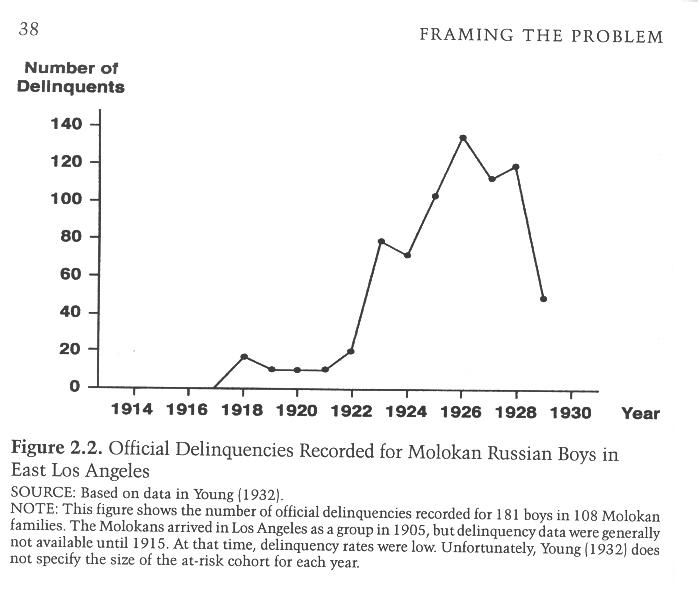
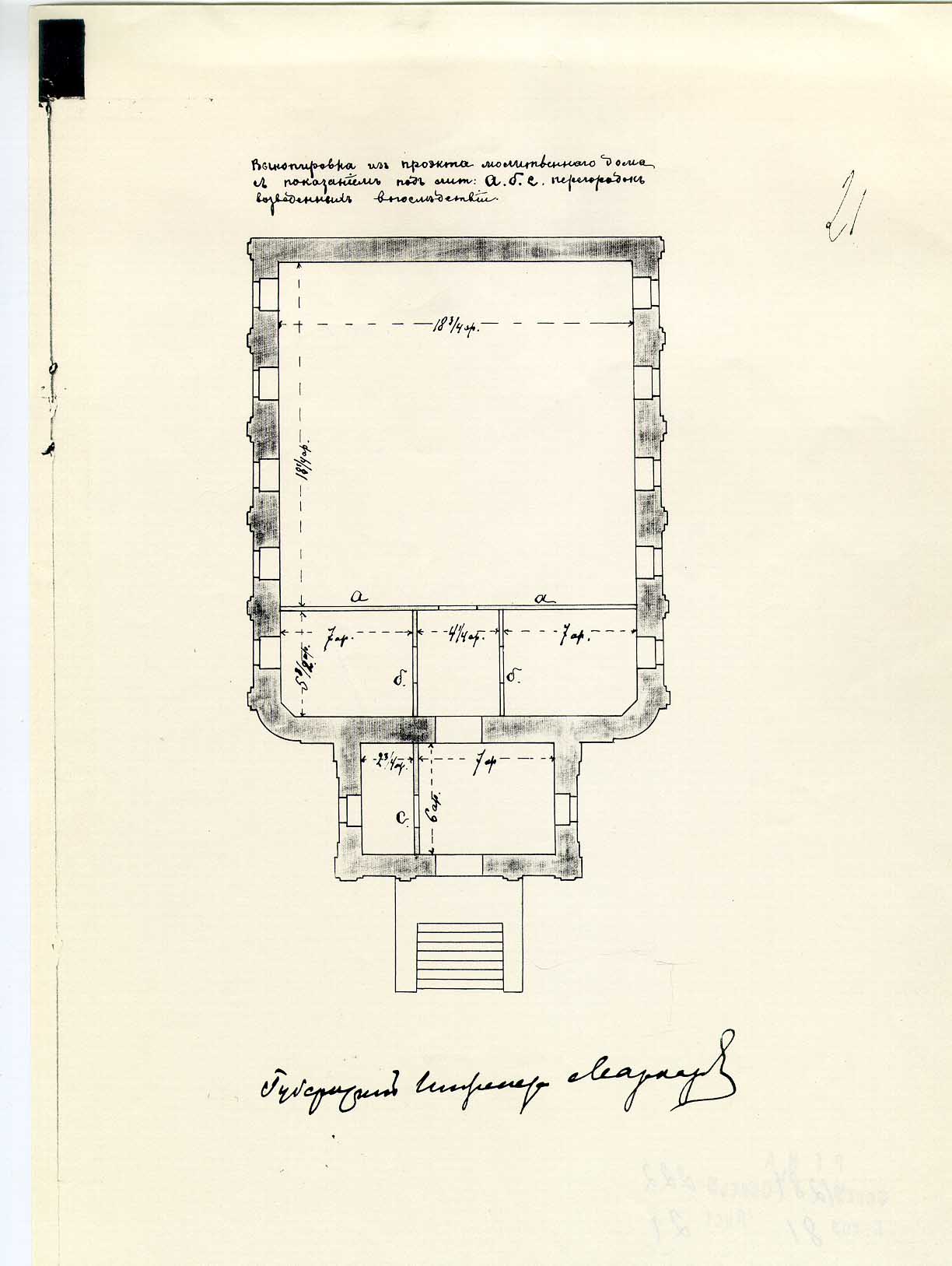
20. BIBLIOGRAPHY
[Also see: http://www.molokane.org/molokan/Reference_List.htm andhttp://www.molokane.org/molokan/news/New_Books.htm ]
A. [Spiritual Christians] Molokans in Europe and Asia
Бобров, П., Бесѣды священника с наставниками молоканскими в опроверженіе мнѣній по главным пунктам вѣроученія молокан и штундистов (Conversations of knowledgeable Molokans with priests who refute the main points of Molokan and Stundist doctrine) 1896, 78 pages (Google eBook)
Bolshakoff, Serge, Russian Nonconformity. Philadelphia: Westminster, 1950.
Breyfogle, Nicholas, Heretics and Colonizers: Religious Dissent and Russian Colonization of Transcaucasia, 1830-1890. Ph.D. dissertation., University of Pittsburgh, 1999.
Conovaloff, Andrew J., Molokan Heritage Collection Volume III: Where Molokans Lived in Russia, Berkeley, CA: Highgate Road Social Science Research Station, 1983.
Conybeare, Frederick C., Russian Dissenters. New York: Russel and Russel, 1950.
Donskov, Andrew; Ethel Dunn; L. V. Gladovka; John Wordsworth, A Molokan's Search for Truth: the Correspondence of Leo Tolstoy and Fedor Zheltov, Berkeley, CA: Highgate Road Social Science Station, 2001.
Dunn, Dr. Stephen P. and Ethel, collectors, Molokan Heritage Collection Volume I: Reprints of Articles and Translations, (Berkeley, CA: Highgate Road Social Science Research Station), 1983.
Hoover, Peter and Serguei V. Petrov, The Russians’ Secret, Shippensburg, PA.: Benchmark Press, 1999.
Klibanov, A. I., translated by Ethel Dunn, History of Religious Sectarianism in Russia, 1860s-1917, New York: Pergamon, 1982.
Klibanov, A. I., Molokan Heritage Collection Volume V: Spiritual Christian Communalists in 19th Century Russia. Translated by Dr. Stephen P. Dunn and Ethel Dunn, (Berkeley, CA: Highgate Road Science Research Station), 1983.
Miliukov, Paul. "Development of Russian Sectarianism," Chapter VI in Outlines of Russian Culture, Part 1, Religion and the Church. Philadelphia: University of Pennsylvania Press, 1942.
Piepkorn, Arthur, "Russian Molokan Spiritual Christians" in Profiles in Belief, Vol. II, Protestant Denominations, New York: Harper and Row, 1978, pp. 511-517.
Shakarian, Demos, The Happiest People on Earth. (Armenian Molokans) Old Tappan, N.J.: Chosen Books: Distributed by F. H. Revel Co., 1975.
Russian language
О молоканстве ответ на вопросы провославнаго христианина о молоканском вероучении
Тип. Г.Т. Корчак-Новицакаго, 1891 - 73 pages
B. [Dukh-i-zhiznik] Molokan History, Beliefs and Practices ([Dukh-i-zhiznik] Molokan Authors)
[Books in RED were missed or published after this article was submitted. Comments in red.]Babishoff, Bill William, Sermons of the Beliefs and Doctrines of the Christian Russian [Dukh-i-zhiznik] Molokan Faith for Church and Home, 1994.
Babishoff, Bill William, Intentions of and Instructions for the Bride and Groom Beginning and During a [Dukh-i-zhiznik] Molokan Wedding.
Babishoff, Bill William, Announcements and Petitions for [Dukh-i-zhiznik] Molokan Boys and Girls.
Babishoff, Bill William, False Accusations and Misunderstandings Concerning the Spiritual Christian [Dukh-i-zhiznik] Molokan Religion and the Book Spirit and Life, (Montebello CA). 1995. 133 pages.
Berokoff, Andrew J., [S&L-user] Molokans Making Decisions. 1998.
Berokoff, John K., Molokans in America, (Los Angeles), 1969. Updated as Dukh-i-zhizniki in America
Berokoff, John K., Selections from the Spirit and Life, (Whittier, CA: Stockton Trade Press), 1966.
Dogmas-Principles of the True Spiritual Christian Russian Molokans, Since 1803. (Clovis, CA: Molokan Directory), 1982. Edited by Dukh-i-zhizniki from Molokan sources, because Dukh-i-zhiznik had no simple written dogma.
Kotoff, Alex A., [Dukh-i-zhiznik]
Mohoff, George W. The Russian Colony of Guadalupe: [Pryguny]
Mohoff, George and Jack Valov, A Stroll Through Russiantown. 1996.
Mohoff, George W., The True [Dukh-i-zhiznik]
Orloff, Paul J., The Memiors of Paul John Orloff. Self-published 2008. 568 pages.
Prohoroff, William W., Maxsi'm Gavarilovich Rudometkin "King of Spirits": Leader of New Israel ([Dukh-i-zhiznik] Molokans), 1978.
The Russian [Dukh-i-zhiznik] Molokan Directory 2000. Hacienda Heights, CA: U.M.C.A.
Samarin, George, Marital Morality for all Seasons, 199_
Shubin, Daniel H., Selections from the Book of the Sun: Spirit and Life, 1988. 23 pages.
Shubin, Daniel H., Conflict of Ages, 1999; Attributes of Heaven and Earth. Philadelphia: Xlibris, 2000; Kingdoms and Covenants. Philadelphia: Xlibris, 2000: Monastery Prisons. Philadelphia: Xlibris, 2001.
Shubin, Harry J., A Collection of Articles and Pictures, 2003. 81 pages, 92 illustrations.
Shubin, Harry J., [Dukh-i-zhiznik]
Shubin, Harry J., "History of the Russian
Shubin, Peter P., [Dukh-i-zhiznik]
U.M.C.A., Christian [Dukh-i-zhiznik]
Veronin, Fae, Arizona [Dukh-i-zhiznik]
Wren, Alex F. True Believers Prisoners for Conscience, 1991. Arizona Pryguny jailed during WWI
C. [Dukh-i-zhiznik] Molokan Devotional Literature
Dukh i zhizn’ (Spirit and Life), Russian language American editions in 1915, 1928, 1947, 1975, 1993. Molokans in Armenia published an edition in 1985 and the Persian Church in Los Angeles published its own version in the 1990s.Pivovaroff, James Moses, Translations from the book Spirit and Life, Portions of Morning Star and Copies of Original Manuscripts of M.G. Rudometkin, Australia, 1976.
Volkoff, John, Spirit and Life (English translation of 1928 edition of Dukh i Zhizn’) Los Angeles, CA, ca.1977.
Sionskii Pesennik ([Dukh-i-zhiznik] Molokan Songbook). Eleven increasingly larger editions from 1915 to 1990.
John K. Berokoff, translator, Book of Prayer and Songs, Los Angeles, CA: Paul I. Samarin, 1944.
[Dukh-i-zhiznik] Molokan Songs/Phonetics, 1993. [Selections from the Sionskii Pesennik to teach youth.]
Molitvenik ([Dukh-i-zhiznik] Molokan Prayer Book), several editions.
Babishoff, Bill William, Prayers from the [Dukh-i-zhiznik]
D. Molokan Periodicals
1. Molokan
Spiritual Christian Molokan News, Sponsored by the First Russian Christian Molokan Church of San Francisco and the Molokan Liaison Committee, San Francisco, CA, 1990s. Featured international news about the reimerging Molokan faith and organization in the Former Soviet Union.2. Prygun
The Christian [Prygun]3. Dukh-i-zhiznik
[Dukh-i-zhiznik]The [Dukh-i-zhiznik]
Heritage News, Association of [Dukh-i-zhiznik] Molokan Businessmen & Professional dedicated to Service and Advancement of the [Dukh-i-zhiznik] Molokan Community, 1980s-. For the promotional first five years, circulation was 4500+, then suddenly limited in 1985 to less than 700 donors and with less news.
F. American [Dukh-i-zhiznik] Molokan History and Sociology (Non-[Dukh-i-zhiznik] Molokan Authors)
Dunn, Stephen P. and Ethel. "Molokans [and Dukh-i-zhizniki] in America." Dialectical Anthropology, Vol. 3, (1978).Hardwick, Susan W. Russian Refuge. Chicago: University of Chicago Press, 1993.
Hardwick, Susan W. "Religion and Migration: The Molokan [and Dukh-i-zhiznik] Experience," Yearbook of the Association of Pacific Coast Geographers, Vol. 55 (1993), pp, 127-141.
Jackson, Sidney. The [Pryguny]
Lineva, Evgeniia. "Psalms and Religious Songs of Russian Sectarians in the Caucasus," in Report of the Fourth Congress of the International Music Society. London, 1912, pp. 187-201.
Lunkin, Roman and Prokof’yev, Anon. "Molokans [Dukh-i-zhizniki] and Dukhobors: Living Sources of Russian Protestantism." Religion, State & Society, Vol. 28, No. 1, 2000.
Marco (Roosevelt High School, Grade 12), A History of [Dukh-i-zhizniki] Molokans in Boyle Heights, from Boyle Heights: America In The Mirror, the "project is to enable students to apply Social Studies skills, concepts, and themes to the study of local history and geography." May, 1998.
Mazo, Margarita. "Change as Confirmation of Continuity as Experienced by Russian [Dukh-i-zhizniki] Molokans." In Retuning Culture: Musical Changes in Central and Eastern Europe, edited by M. Slobin, 254-75. Duram: Duke University Press, 1996.
Moore, Willard Burgess. [Dukh-i-zhiznik] Molokan Oral Tradition: Legends and Memories of an Ethnic Sect. Folklore Studies: 28. Berkley, CA: University of California Press, 1973.
Moore, Willard Burgess. Russian [Dukh-i-zhiznik] Molokan Religious Legends. Masters thesis. University of California, Berkeley, 1971.
Moore, Richard Haas. Prisoners in the promised land: the Story of the [Pryguny] Molokans in World War I. Masters thesis. Arizona State University, 1972.
Morris, Richard A. Three Russian Groups in Oregon: A Comparison of Boundaries in a Pluralistic Environment. Ph.D. dissertation. University of Oregon, 1981.
Muranaka, Therese. The Russian [Prygun] Molokan Colony at Guadalupe, Baja California: Continuity and Change in a Sectarian Community. Ph.D. Dissertation, University of Arizona, 1992.
O'Brien-Rothe, Linda. The Origins of [Dukh-i-zhiznik] Molokan Singing, The Molokan Heritage Collection Volume IV. Berkeley, CA: Highgate Road Social Science Research Station, 1989.
Story, Sydney Rochelle. Spiritual Christians in Mexico: Profile of a Russian Village. Ph.D. dissertation, University, of California, Los Angeles, 1960.
Turkdogan, Dr. Orhan. Molokan Heritage Collection Volume II: Molokans in Turkey. Berkeley, CA: Highgate Road Social Science Research Station, 1983. [Accurate title : Russian Sectarians Volume II: Molokane, Pryguny, Dukh-i-zhizniki, Dukhobortsy, and Staroveri in Turkey]
Waters, Tony. Crime and Immigrant Youth. Thousand Oaks, CA: Sage Publications, 1999.
Young, Pauline V. The Russian [Pryguny] Molokans in Los Angeles 1929. American Journal of Sociology. vol. 35 (1929), pp. 393-402
Young, Pauline V. Young, Pauline V. The Pilgrims of Russian-Town : Общество Духовных Хрисиан Прыгунов в Америке, The Community of Spiritual Christian Jumpers in America : The Struggle of a Primitive Religious Society to Maintain Itself in an Urban Environment. (Chicago: University of Chicago Press, 1932), 296 pages. Reprinted in 1986 by United [Dukh-i-zhiznik] Molokan Christian Association.
Young, Pauline V. The Pilgrims of Russian-Town : obščestvo duchovnych christian prygunov v Amerikě, the Community of spiritual Christian jumpers in America : the struggle of a primitive religious society to maintain itself in an urban environment, Chicago: University of Chicago Press, 1932.
For Further Study
You can e-mail the author at: Stephen E Scott <shahcs@juno.com>See a similiar article: "Quakers and Doukhobors: Common Ground and Crossing Paths", researched and written by Joan Lowe, Assistant Archivist of the American Friends Service Committee. (Linked from http://www.doukhobor.org/stories.html)
Links to information about Old Order River Brethren, and similiar groups (Updated Sept. 6, 2013):
- "The Old Order River Brethren are a conservative group
that is neither Amish nor Mennonite but rather Brethren
in Christ in origin." [Source off-line now.]
- "Outsiders
often
referred
to
them
as
'River
Brethren'
since
they
lived,
for
the
most
part,
along the Susquehanna River"
- Old Order River Brethren, Who Are They?
- Review: Plain Women: Gender and Ritual in the Old Order River Brethren.
- Plain
Women: Gender and Ritual in the Old Order River
Brethren (Amazon.com review)
- 2003 North America Mennonite
& Brethren in Christ Churches: Members:
332.
- Brethren Groups — compare the "The Brethren Card" to "Principles of the [Dukh-i-zhizniki] True Spiritual Christian Russian Molokans, Since [2000] 1803. Comprising 27 [29] Articles"
- Church of the
Brethren
- Third Way Cafe: Who are the Mennonites? FAQs
- Mennonite
Church Canada Structure
- Adherents.com: Old Order River Brethren and Old Order (or Yorker) River Brethren
- Canadian Mennonite Encyclopedia Online: Plain People
- Reformed Reader: Chapter 24 Irregular Baptists
- "Origins
of
the Church of the Brethren and Other Brethren Groups
which stem from the Schwarzenau Brethren, 1708",
by Lois C. Byrem, Strasburg, Pennsylvania.
- Famous United Brethren — Famous River Brethren: Dwight D. Eisenhower, U.S. President (born into River Brethren, but raised mainly in Jehovah's Witnesses)
- More: Google search for "Conservative
Mennonites", Brethren, "Plain People"
- EXTRA CREDIT: Did Pryguny
adapt "leaping ... dancing ... jumping" from the
Mennonite Jumpers (Brethren) in Russia, and did the
German Brethren in Russia examine/change their "holy
kiss" after meeting Molokane and Pryguny.